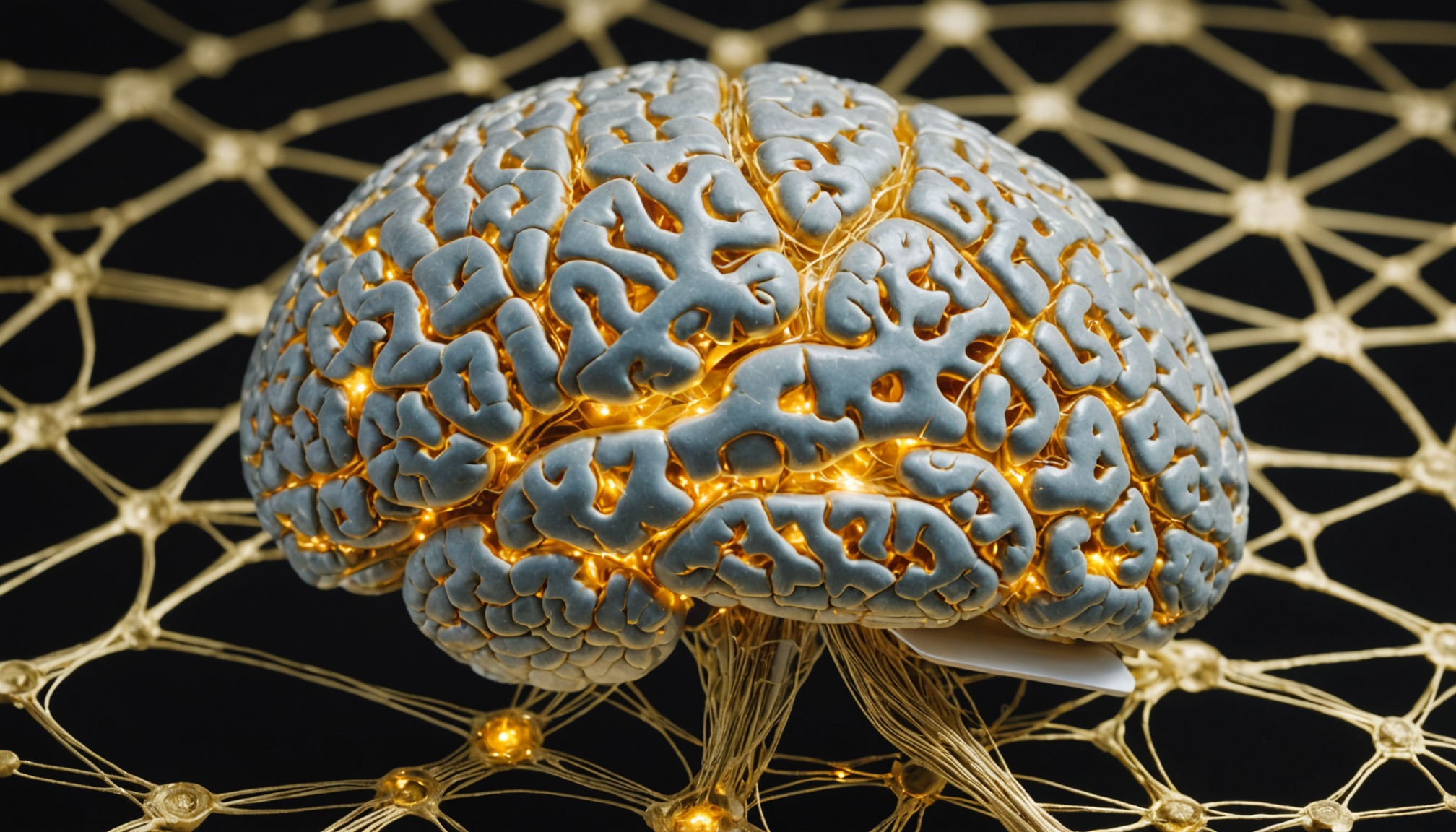


A patent application from Neuralink describes a brain-machine interface (BMI) made from living cells. Most BMIs rely on electrodes placed in or on the brain. This filing instead proposes grafting genetically modified cells onto the brain of an adult mammal, such as a mouse, so that they form a new artificial layer of tissue on top of the cortex, the brain's folded outer sheet. The inventors call this layer zero, or L0, because it sits above cortical layer 1, the outermost of the cortex's six natural layers.
According to the filing, the grafted layer goes through a developmental process after surgery. At first it shows synchronized waves of activity, which gradually recede until the layer behaves more like normal, spontaneously active brain tissue. Meanwhile, axons and dendrites grow down from the new layer into the host cortex without destroying existing tissue. There they form synapses. The patent says these connections allow bidirectional communication, meaning the layer can both send signals to the brain and receive signals from it.
Why grow an interface instead of implanting one
The filing argues that existing approaches have hard limits. Non-invasive devices record the blurred, summed activity of millions of neurons through the skull. Electrodes sitting on the brain's surface do better but still average the signals of thousands of cells. Implanted electrodes are more precise, yet stiff probes can trigger immune reactions that degrade them over time. Neuralink's better known system, laid out in a 2019 white paper, uses hair-thin flexible polymer threads carrying up to 3,072 electrodes, inserted by a surgical robot. The cell-based design takes the opposite route: rather than pushing hardware into the brain, it grows new tissue that wires itself in naturally.
If it works, such a living interface could offer a stable, very high-bandwidth link to large numbers of neurons, which the filing says is needed for future therapies for neurological disorders and for easing the bottleneck between brains and computers. That is why the patent matters: it shows Neuralink exploring biology itself, not just electronics, as the bridge to the brain. For now this is only a pending patent application based on animal experiments, not a proven medical device, and there is no public evidence the approach has been tried in humans.