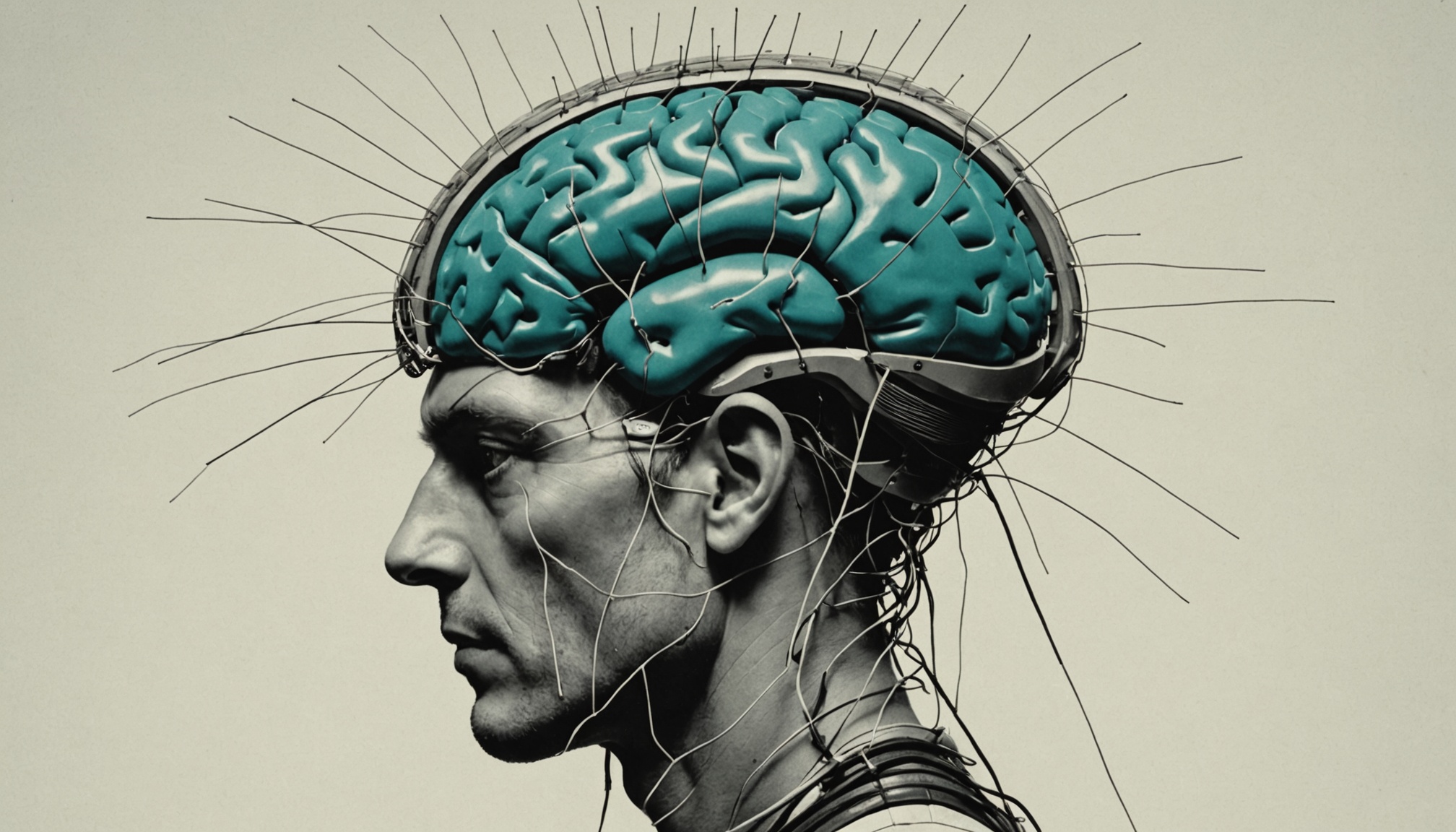


Electrical signals recorded from the brain mix two kinds of activity: rhythms, which repeat at regular intervals, and a background hum that does not. Researchers have built an artificial intelligence tool called NONOS that separates the two while keeping high temporal resolution, meaning it can follow very fast changes over time. This research is published in NeuroImage.
The separation matters because of beta waves, a brain rhythm that repeats dozens of times per second. In people with Parkinson's disease, beta waves become abnormally strong. Doctors use beta wave strength as an indicator of how well treatment is working. Older filtering methods measure beta strength without accounting for the background, so a change in the background can be mistaken for a change in the rhythm.
How NONOS separates rhythm from noise
The team used a known property of the background: its power falls off exponentially as frequency rises, following a specific mathematical shape. NONOS is trained to take brain signals recorded over time and pull out only the background component that matches this shape. Subtracting that background from the original signal leaves the pure rhythm behind, so rapid changes in either component can be detected.
In tests, the rhythms NONOS extracted from the brain signals of patients with Parkinson's disease predicted which foot a patient would step forward with at an accuracy of 0.98 on a scale where 1 is perfect, compared with 0.54 to 0.79 for conventional methods. In mice modeling Parkinson's disease, NONOS was the only method that sensitively detected the rapid drop in beta wave strength after deep brain stimulation, a therapy that delivers electrical pulses to the brain.
This work is important because it shows that rhythms and background signals mixed together in brain recordings can be separated without losing time detail. Running NONOS in real time on implantable brain devices, it could improve personalized deep brain stimulation therapy, which adjusts stimulation to each patient's condition. The method could help analyze many kinds of fast-changing biological signals.