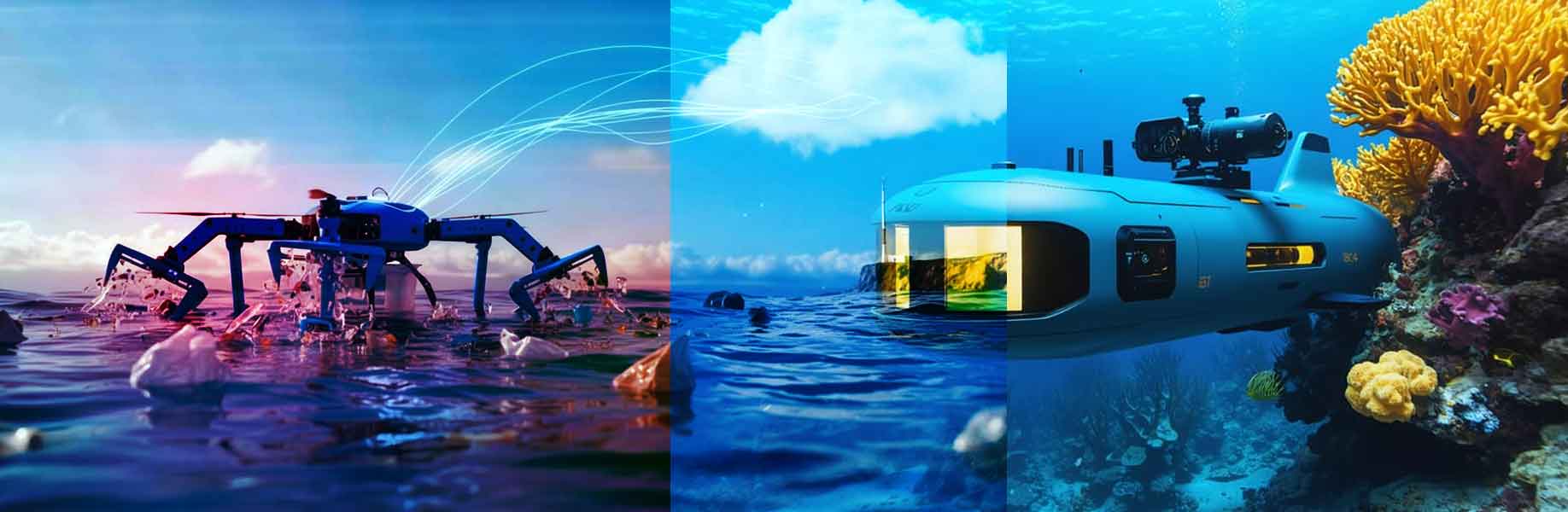

Researchers have built an autonomous aquatic robot known as the eDNA-bot. The device collects, processes, and analyzes environmental DNA, or eDNA, which is genetic material that organisms release into water through skin, waste, reproduction, or decay. It shares results in real time and uses artificial intelligence (AI) to make decisions on its own.
This invention offers a major improvement over traditional surveying methods such as netting, trapping, or electrofishing. Those approaches are expensive, labor-intensive, and can harm organisms or their habitats while providing only a limited snapshot of species presence. In contrast, the eDNA-bot can sample water continuously and unobtrusively for months, reaching remote or dangerous locations that are difficult for people to access.
The technology has particular value for environmental assessments required in hydropower licensing. It can also support detection of invasive species and monitoring of wastewater for pathogens. Oak Ridge National Laboratory has patented the eDNA-bot. Scientists there and at Pacific Northwest National Laboratory have now signed an agreement with Smith-Root, Inc., a company that produces biological surveying equipment, to help move the system toward commercial use.
Development focuses on practical field deployment
Work on eDNA technology at Oak Ridge National Laboratory began in 2020 to support monitoring at hydropower facilities, where water flow and sediment conditions create extra challenges. Early tests successfully detected species missed by conventional surveys. Researchers have created a bench-top prototype and now aim to produce a compact, battery-powered version weighing less than 100 pounds that two people can carry. Future goals include shrinking it to suitcase size for easy transport by air.
The project draws on expertise in robotics, automation, sensors, and water-quality monitoring. Additional testing will ensure the robot can operate in harsh saltwater environments. Beyond hydropower and marine energy sites, the eDNA-bot could serve academic institutions and government agencies involved in aquatic research. Overall, the system promises more comprehensive biological data at lower cost while minimizing disturbance to ecosystems.