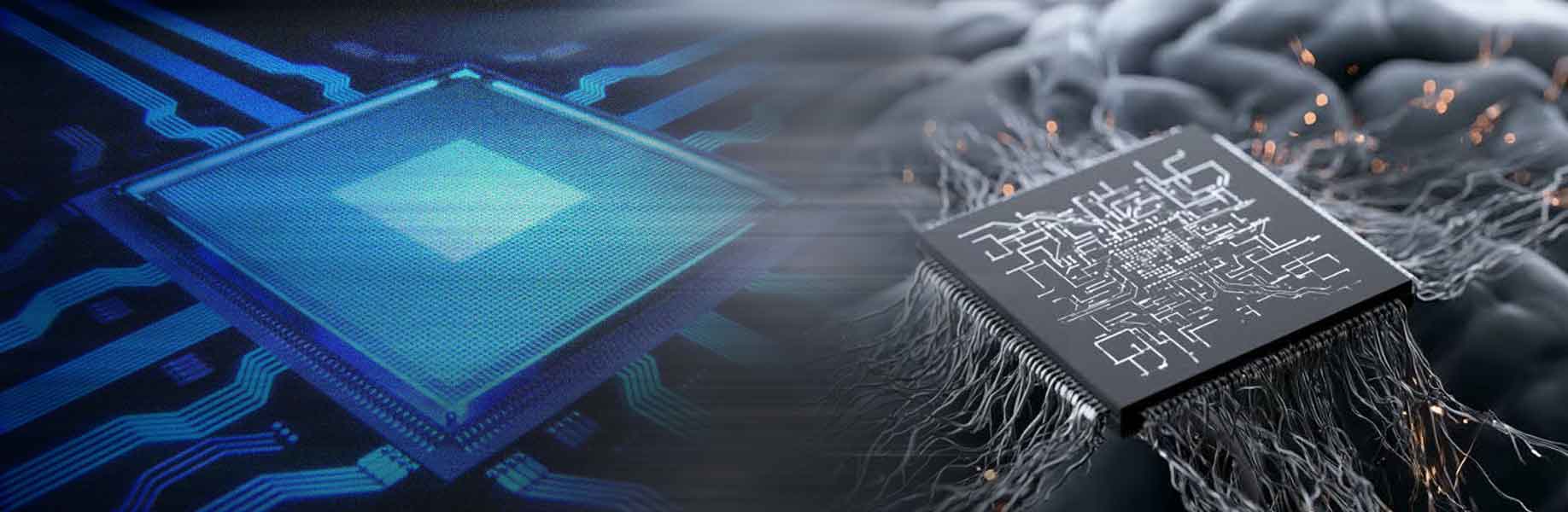

Chinese researchers have built a chip that operates at very high speeds. The work is published in Science with the title “A sub–10-millisecond neural dynamical system based on phase-change memristors.” See also the related Science Perspective "Computing in a memory with physics." This research is covered by South China Morning Post (open copy).
Neural dynamical systems are computer models that combine neural networks with mathematical equations describing how complex systems change over time. These systems demand repeated calculations, continuous error checks, and frequent adjustments to the size of each calculation step. On ordinary computers, data must move constantly between memory and the processor, which slows the process and uses more energy.
Fast and accurate computing matters for applications that must respond instantly, such as brain–computer interfaces, surgical navigation systems, and advanced medical imaging. Existing hardware often takes too long and consumes too much power for these demanding tasks. The new chip performs key operations directly inside its memory, a method known as in-memory computing. This approach sharply reduces the need to shuffle data back and forth and brings high-quality brain modeling closer to real-time performance.
Performance and capabilities of the new hardware
The chip was manufactured with a 40-nanometer process. Its in-memory computing arrays and conductance-drift arrays, which exploit a natural gradual change in electrical resistance of the special memory devices called phase-change memristors, occupy only 0.28 square millimeters. The device runs at 50 megahertz and completes each calculation step through nine pipeline stages. In neural dynamics tasks it runs 3.82 to 36.27 times faster and uses 11.75 to 24.73 times less power than the best available application-specific integrated circuits. When reconstructing the folded outer surface of the brain, the chip reaches speedups of up to 478 times compared with an NVIDIA A100 graphics processor.
Using the chip, researchers produced detailed three-dimensional models of the brain’s white and gray matter surfaces in real time. The resulting meshes were smooth, closed, and topologically consistent, accurately capturing the complex folds of the cortex while meeting strict accuracy measures.
The technology could shift complex neural modeling from slow offline processing to millisecond-scale operation. Possible future uses include brain–computer interfaces, digital twins of individual brains, real-time guidance during surgery, and tools for studying neurodegenerative conditions.