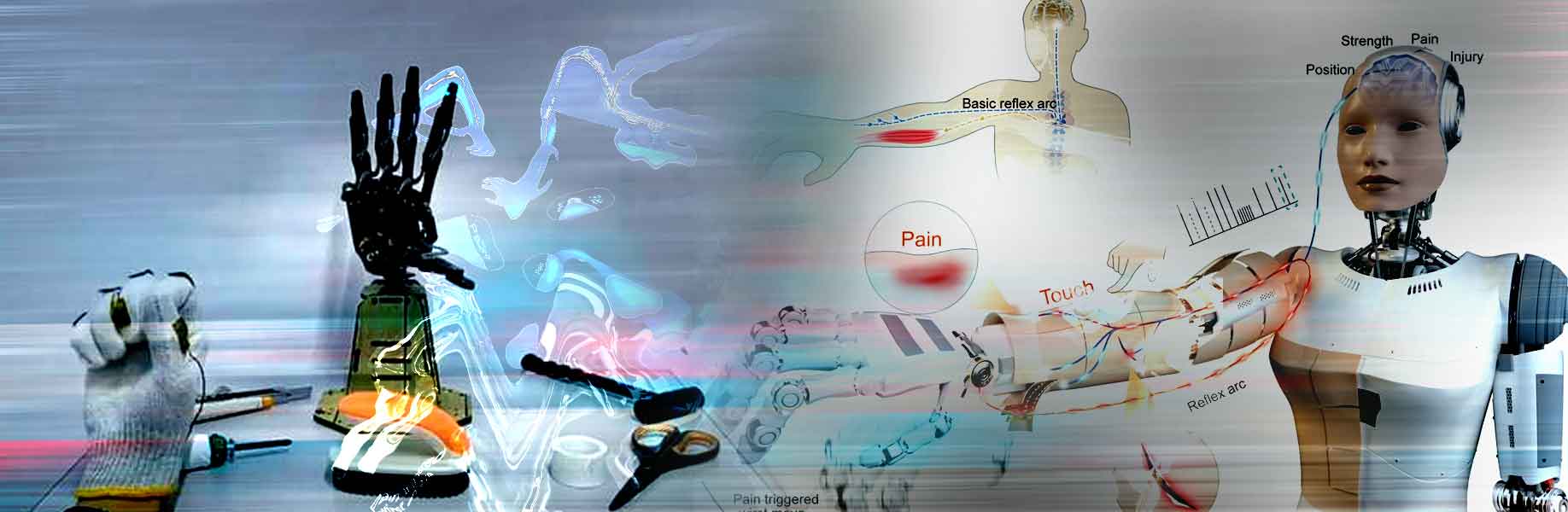

Scientists at Penn State have developed a new flexible pressure sensor that can be assembled into an artificial electronic skin for robots and prosthetic limbs. The sensors are tiny, about the size of a paperclip, and can measure very small forces applied over an area. The work is published in Nano-Micro Letters.
Current flexible pressure sensors often struggle to be both highly sensitive to light touches and accurate over a wide range of forces while remaining stable. The scientists addressed this by using graphene oxide aerogel, or rGOA, an extremely lightweight material made mostly of carbon with some oxygen. They gave the material different strength depending on the direction of the applied force. This design gives the sensors ultrahigh sensitivity, a broad detection range, and excellent long-term stability. A single sensor, only eight millimeters across, can support about three ounces of force and endure more than 20,000 cycles of loading and unloading weight.
Improved pressure sensors for artificial skin
The sensors are built by placing the rGOA between a thin plastic film with printed silver electrodes and a flexible silicon-based polymer layer. This structure ensures good electrical contact and mechanical strength. Tests showed the sensors respond to pressure changes in just over 100 milliseconds and recover in 40 milliseconds, faster than many earlier designs. They also maintain performance across different temperatures and humidity levels. When many sensors are connected into an array and linked to a microcontroller, the system can map pressure distribution in real time. It can detect the position, shape, and weight of objects, distinguish hand gestures, and even identify different types of food by texture and weight.
These capabilities make the artificial skin useful for robots that need to grasp delicate items. The sensors can also monitor pressure inside electric vehicle batteries to detect swelling early and prevent damage. Other possible uses include wearables, human-machine interfaces, and precise pressure mapping on curved surfaces.
Future work will focus on making the sensors smaller, lighter, and capable of combining pressure sensing with temperature or strain detection in one device. The researchers believe the technology has strong potential for real-world use in robotics and medical devices due to its low cost, flexibility, and high performance.