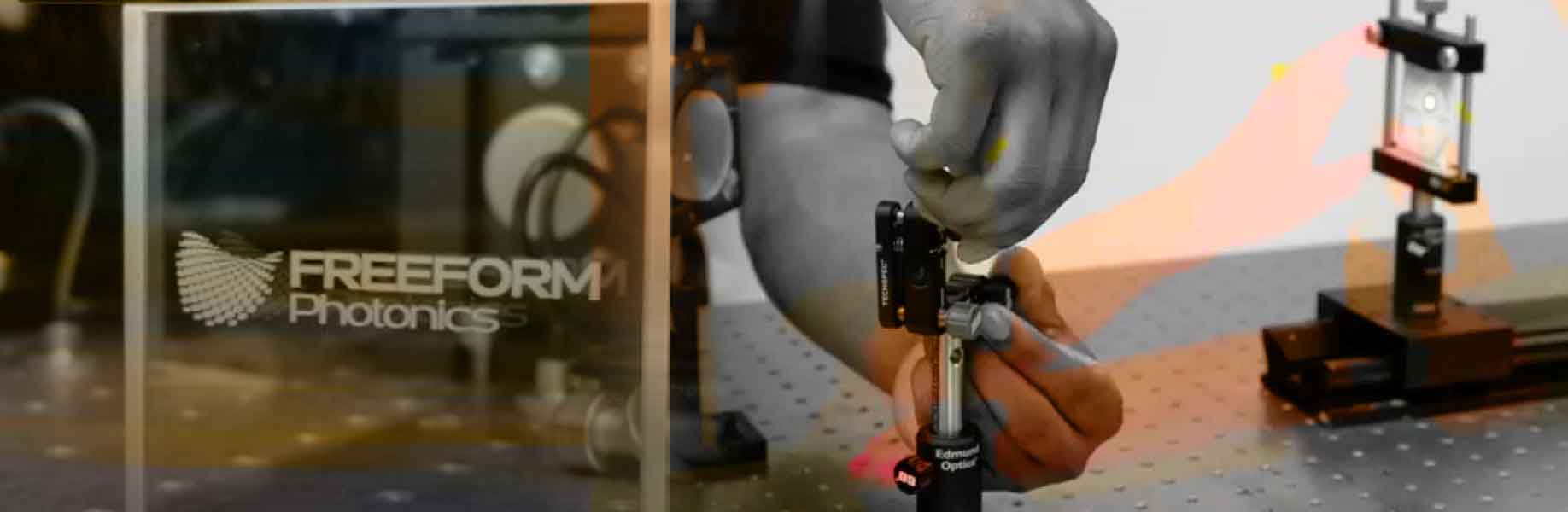

Heriot-Watt University has developed a laser-based technique that adds alignment features directly into optical glass components used in photonic devices such as lasers and sensors. The new method from the FreeForm Photonics project removes the need for most manual adjustments during assembly.
In current production, careful positioning of parts so that light travels correctly often accounts for more than half of all costs due to the time and equipment involved. The university process uses lasers to create tiny structures in the glass that guide components into correct positions automatically. This achieves accuracy at sub-micron scales, meaning precision smaller than one micrometer or roughly one-fiftieth the width of a human hair. The approach makes production faster and cheaper while maintaining high performance and reducing risks from handling.
Applications in growing technology sectors
Several key areas stand to benefit from lower costs and simpler production. Quantum computing systems need very precise photonic parts. Medical tools that rely on light for tests could become easier to make in larger numbers. The light-based networks essential to the internet would also gain from cheaper components. Those working on the technology note that adding alignment features into the glass itself changes how advanced optics can be produced. One example is fiber optic sensors. These use thin glass strands to detect conditions like temperature or pressure in difficult industrial settings. The method also aids the optical parts required for quantum technologies now under development in many places. The company FreeForm Photonics has obtained support from Scottish Enterprise via a program for promising new businesses. This assistance prepares it for growth and investment. Companies in aerospace, telecommunications, and healthcare have reviewed the technology, and test samples are being provided for medium-scale use. University officials see the work as a strong case of research leading to practical commercial results that can help technology businesses succeed on a global level. The market for photonic components was close to one billion dollars not long ago and is expected to grow quickly.