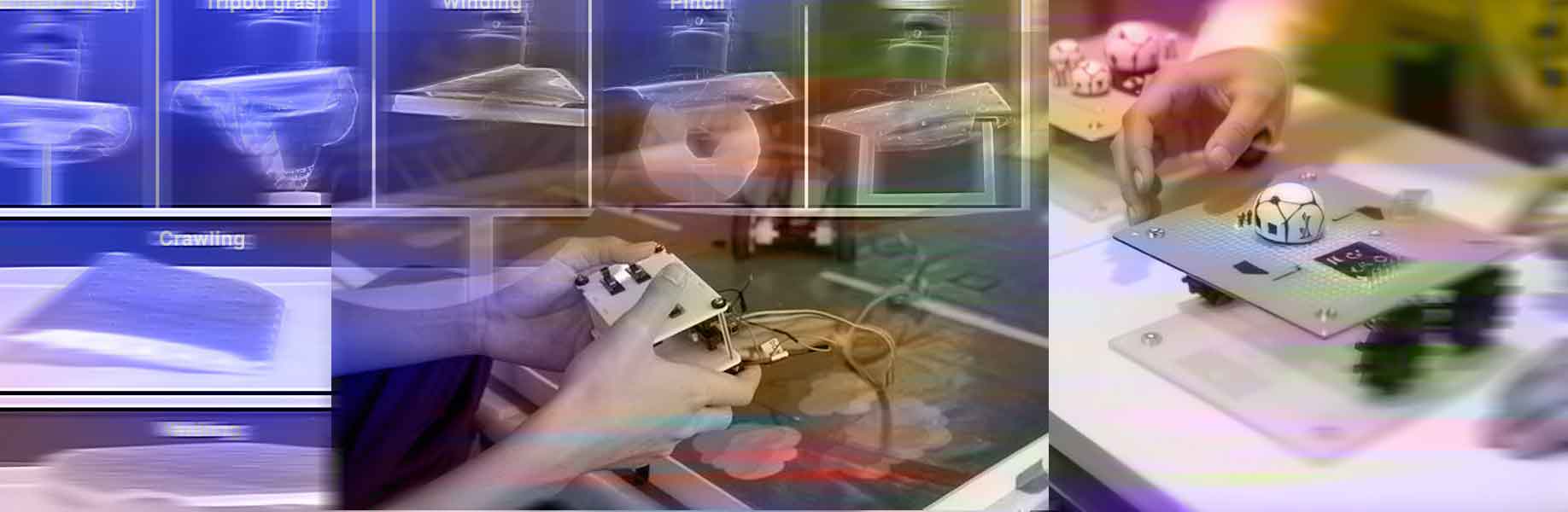

Folding structures help robots change shape easily, like in space tools, soft machines that bend, or grippers that act like hands. But older designs have set hinges and directions, so they must be rebuilt for new jobs or places. Now, scientists at The Korea Advanced Institute of Science and Technology (KAIST) have made a field-programmable robotic folding sheet that lets users set its shape right away as needed. This boosts how robots can morph and opens fresh uses in the field.
This technology brings field-programmability to folding robotic devices. The setup mixes materials and ways to program so users can pick where, how, and how much to fold, and see it happen fast.
The sheet uses a thin, bendy polymer substrate, a kind of plastic base, with tiny metal resistors inside. These resistors heat up and sense temperature at once, controlling folds without extra tools.
How the sheet folds
Software blends genetic algorithms, problem-solving inspired by nature's evolution, and deep neural networks, to take user inputs on folds. The sheet then heats and cools itself in loops to match the shape.
Closed-loop control, feedback that tweaks based on real results, keeps temperature even, fixes outside changes, and speeds up slow heat methods.
This lets robots do many jobs without new parts. For example, one sheet became a gripper that shifts to hold odd shapes. On the floor, it walked or crawled like animals, hinting at robots that sense and adapt alone.
The scientists say this nears morphological intelligence, where the shape itself contains intelligence that enables smart movements. Future work aims to strengthen materials for heavy loads, quick cooling, and no-wire designs in all sizes. It could lead to physical AI for rescue bots, custom health aids, and space probes.
The scientists have described the methods and results of this study in a paper published in Nature Communications.