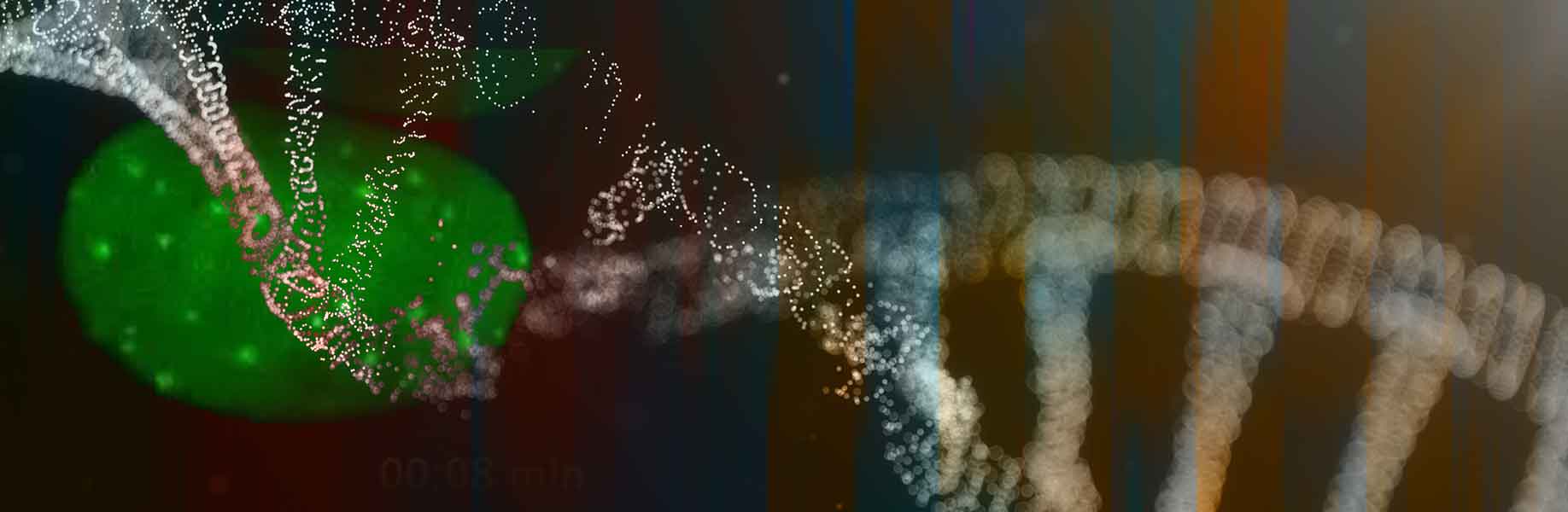

DNA often gets damaged by sunlight, chemicals, radiation, or normal body processes. Cells usually repair this damage quickly to avoid problems like aging, cancer, or other diseases. In the past, scientists struggled to observe these repairs as they happen because most methods involved killing cells at different times, giving only still images of the process.
Now, researchers at Utrecht University have created a new DNA damage sensor that lets them see repairs in living cells and even in whole organisms. This sensor uses a fluorescent tag attached to a small part from a natural cell protein. It binds lightly to a marker on damaged DNA and releases on its own, lighting up the damage without blocking the cell's repair work. This is different from older tools that stick too tightly and disrupt the process.
The sensor was tested in lab-grown cells and in a worm called C. elegans, a simple organism used in biology studies. In cells, it showed bright green spots where damage occurred, matching known methods but in real time. In worms, it revealed planned DNA breaks during growth.
A tool for deeper insights
Instead of many separate tests for snapshots, this sensor allows continuous videos of the entire repair, showing when damage starts, how repair proteins arrive, and when it ends. This gives more data and a truer picture of cell behavior.
The sensor can be linked to other molecules to map damage locations in the genome, the full set of DNA, or find which proteins gather at breaks. Researchers can also move damaged DNA inside the cell nucleus, the control center, to test what affects repairs. While not a treatment, it could improve cancer drug tests by measuring damage from therapies more accurately and cheaply. It might help study aging or detect exposure to harmful radiation. The tool is freely available online for other scientists to use right away.
This research is published in Nature Communications.