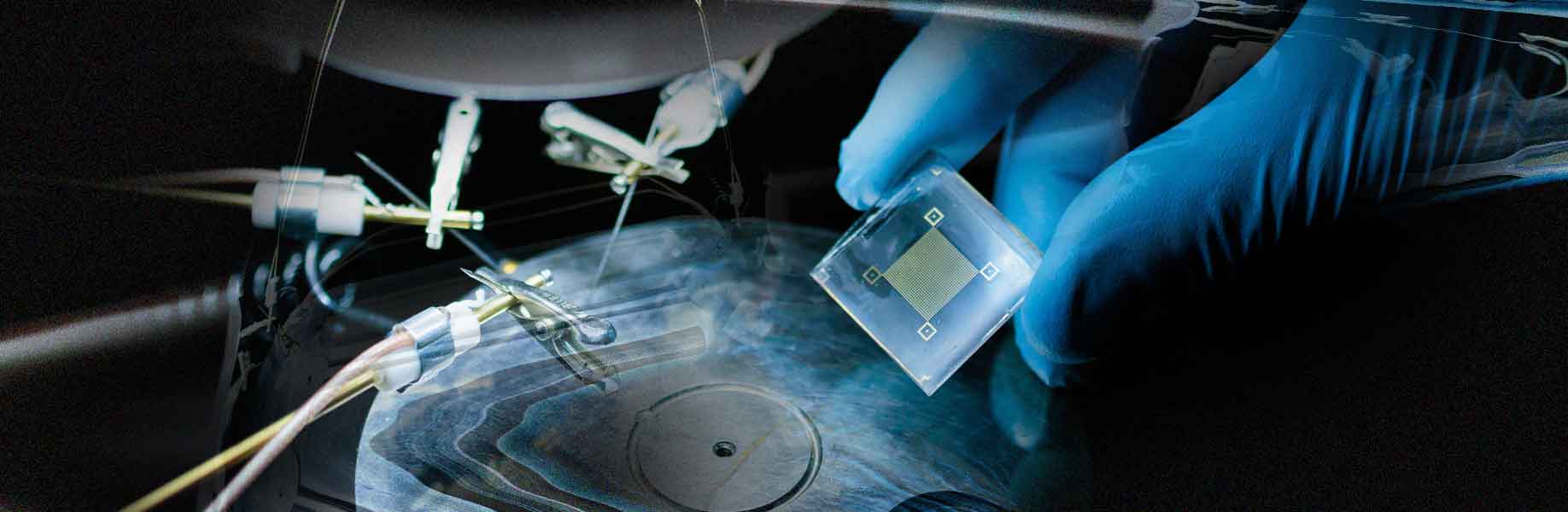

Researchers at the University of Chicago have developed a new skin-like computing patch that can run artificial intelligence (AI) calculations directly on the body. Current wearable devices usually collect information such as heart rate and send it to a distant computer or server for analysis. This new patch performs the analysis itself in just milliseconds while attached to the skin. The speed is important for emergency situations where even a few seconds of delay could be dangerous.
The device uses organic electrochemical transistors. These are flexible electronic switches that process information using both electricity and the movement of ions, which are charged particles, through a special gel layer. This design gives the transistors a form of memory similar to connections in the human brain. The researchers created manufacturing methods that allow thousands of these transistors to be printed onto stretchable surfaces using light-based patterning called photolithography.
Fast on-body analysis for life-threatening heart conditions
The new patch was tested using real data from a human heart. It successfully analyzed patterns of electrical activity linked to ventricular fibrillation, a dangerous condition in which the heart beats in a chaotic and ineffective way. The device located abnormal electrical waves with very high accuracy, even when stretched to more than one and a half times its original size. In another test, it evaluated multiple health measurements to estimate a person's risk of heart attack.
The technology represents an important step toward smarter wearable and implantable health devices that can sense, analyze, and respond to the body's signals in real time without depending on external computers. This could save time, and therefore lives, in time-critical emergency situations. Future work will combine the computing patch with better sensors and communication components to create fully integrated systems.
The researchers have described the methods and results of this study in a paper published in Nature Electronics.