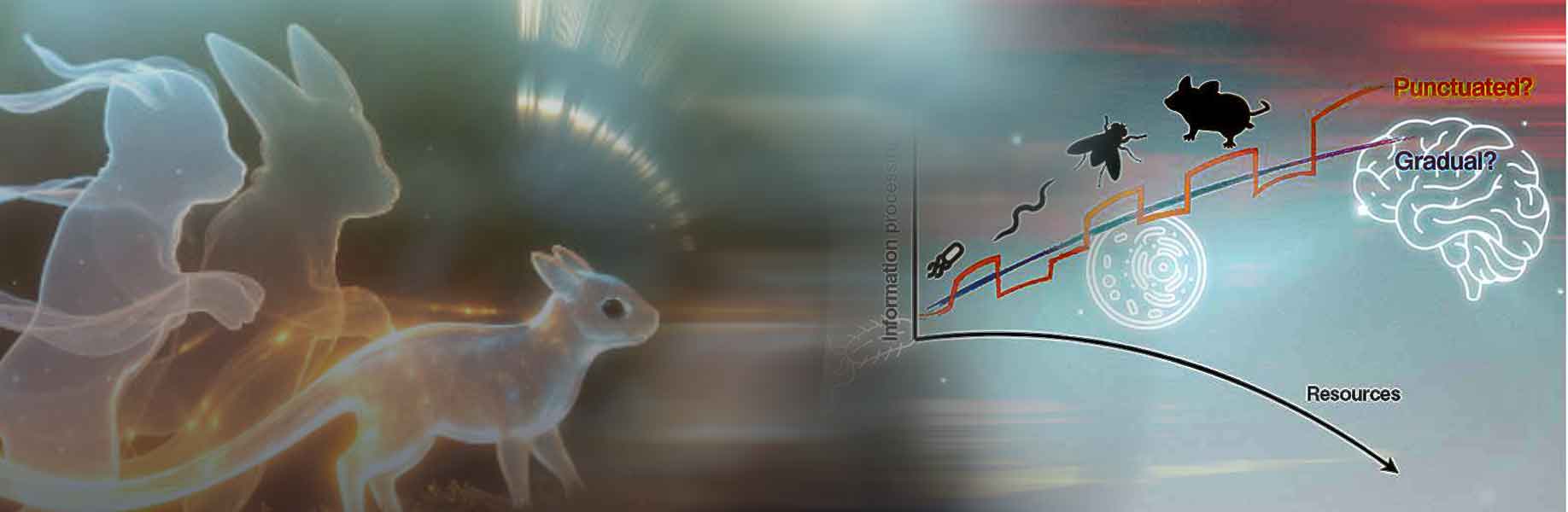

Living organisms often face a choice about whether to remember the past. Memory can improve decisions, yet storing and using information requires energy and other resources. Researchers in Japan have created a mathematical theory that examines when this cost is justified. Their work is published in Physical Review Letters.
The researchers built a simplified model of an organism that can draw on both current sensory information and stored memories of earlier observations. Because keeping memory uses resources, the model included a clear tradeoff between greater accuracy and higher cost.
When resources are scarce the optimal approach is to ignore memory entirely and react only to the information available at the present moment. Once resources pass a certain threshold, however, remembering the past suddenly becomes worthwhile and the preferred strategy shifts abruptly to one that uses memory. The researchers describe this change as dramatic.
The tradeoff between current information and stored memory
The value of memory also depends on how reliable the sensory signals are. When environmental information is very clear, memory adds little extra benefit. When the signals are extremely noisy and unreliable, storing them is likewise of limited help. Memory proves most useful in the middle range, where uncertainty is moderate and past observations can meaningfully improve performance.
These findings offer a theoretical reason why organisms do not always rely on memory even when it could in principle support better decisions. Usefulness depends on both the resources available and the level of uncertainty in the environment. The conclusions align with recent behavioral experiments showing that humans also adjust their reliance on memory according to resource limits and sensory clarity. Across biological scales, different information-processing systems require different amounts of memory capacity. The new framework therefore supplies a theoretical foundation for understanding how sophisticated memory-using systems, such as the brain, may have emerged through evolution.