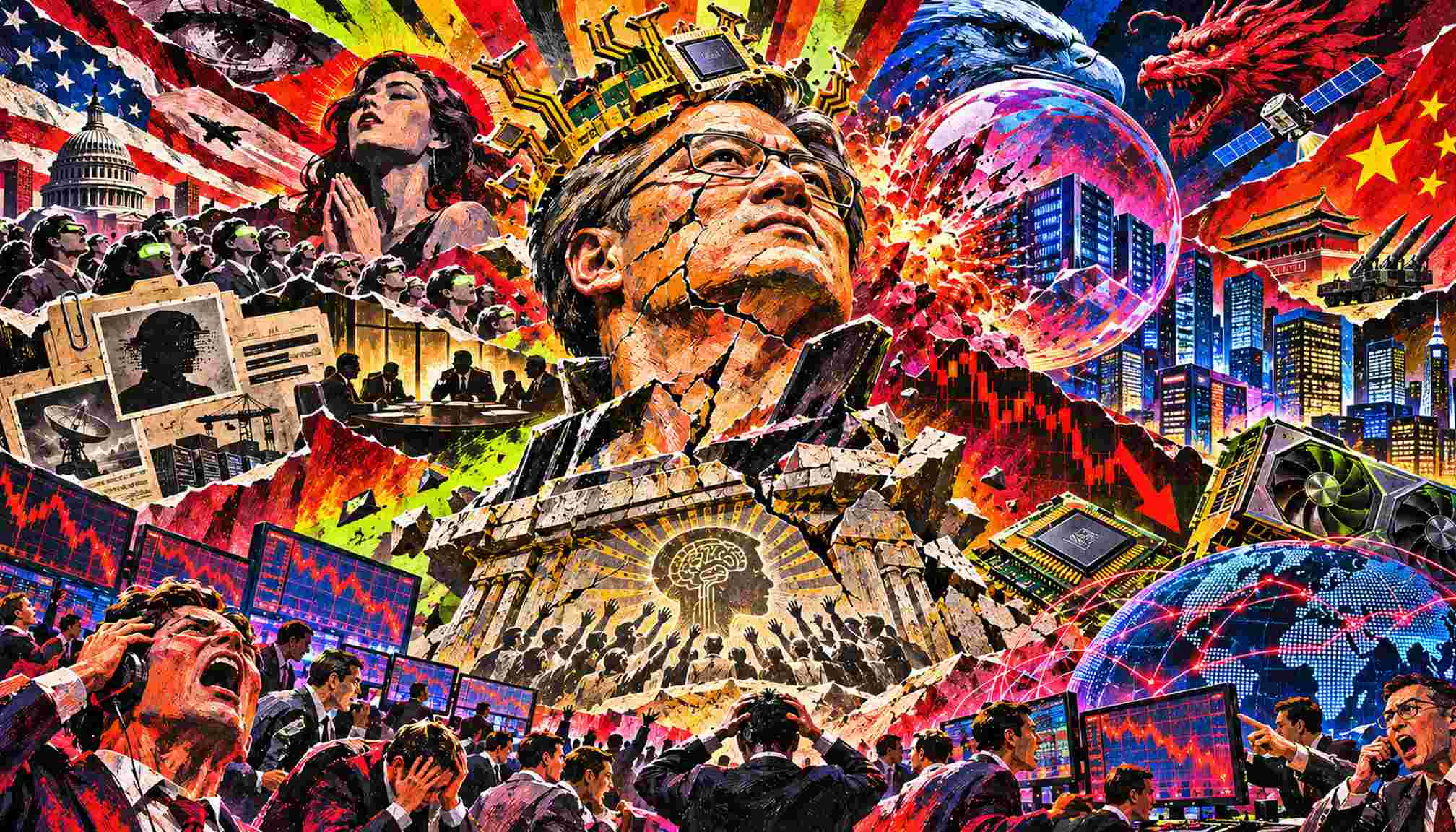

Jensen Huang stepping down isn’t just another corporate scandal; it’s a significant moment for the AI industry, which has been wrapped up in stories about visionary leaders, geopolitical tensions, and complicated financial networks.
On November 11, NVIDIA's board accepted Huang's resignation, and they made the announcement the next day. This came after news about his extramarital affairs broke, one of which involved Alice Huang, a businesswoman whom U.S. authorities have linked to Chinese intelligence. Her ties to Megaspeed, a company under investigation for possibly diverting crucial AI resources to China, turned what might have been a personal scandal into a national security issue. There haven’t been any proven accusations of espionage yet, and NVIDIA hasn’t shown that any of its proprietary information was put at risk.
Following Huang’s departure, the board appointed Colette Kress, the Chief Financial Officer, as the interim CEO, and Harvey Jones, a long-time board member, as chairman. However, relying on temporary leadership to fill the shoes of a visionary who built the company over 33 years points to a major weakness: the lack of a solid plan for the company’s future without its founder.
Wall Street reacted dramatically. On November 12, NVIDIA's stock dropped about 14.4% during the day, wiping out roughly $600 billion in market value at one point, before recovering slightly to close at $166.19, down 4.34%. This brought its valuation to about $3.95 trillion, nearly $1.8 trillion less than its peak in October. Trading activity soared with over 734 million shares changing hands, while competitor AMD saw a stock increase of 5.9%.
Despite the drop in market value, it’s important to note that NVIDIA still holds a commanding 80-90% share of the advanced AI accelerator market. In its latest quarterly report, NVIDIA announced revenues of $96.2 billion, which is up 106% from last year, with $89 billion coming from data centers. The forecast for the next quarter stands at $108 billion. Huang’s resignation doesn’t immediately undermine these solid figures.
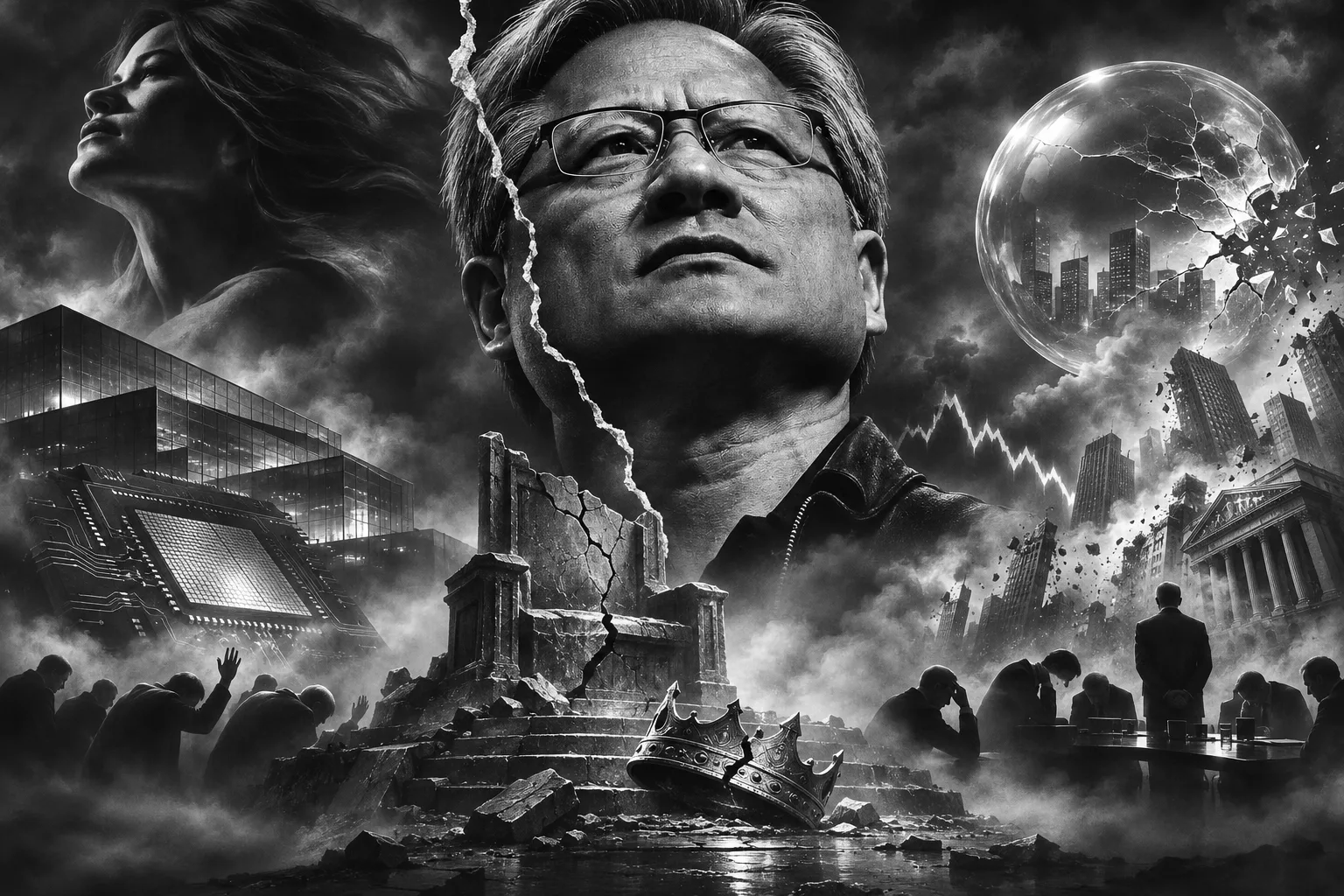
However, there’s a greater concern regarding NVIDIA's role as both a supplier and a financier in the AI sector. Its investments in infrastructure companies that depend on its hardware create a complex financial web. As explored in Mindplex's Big Tech's Big Bets on the Singularity, merely having a promising technology doesn’t justify such entangled financial relationships.
Looking ahead, three scenarios are possible: a smooth transition that maintains NVIDIA's leadership in technology; internal governance issues that speed up competition from companies like AMD, Broadcom, and others; or financial uncertainty that causes everyone to reassess AI infrastructure values. The earnings report due on November 17 will clarify whether there’s genuine operational trouble or just market panic.
Today, modern capitalism seems overly focused on corporate heroes. Founders are idolized, investors often follow them blindly, and companies turn into cult-like entities rather than rational businesses. When one person’s exit can shake the market by trillions, it indicates a serious problem. Speculators often take advantage of this, making money off the anxiety and volatility that follows.
NVIDIA might handle Huang's departure better than expected. The real challenge will be whether it can move past the financial mythology surrounding him. What the AI revolution truly needs are companies that can thrive beyond their founders, rather than ones that risk collapse when their key player is gone.