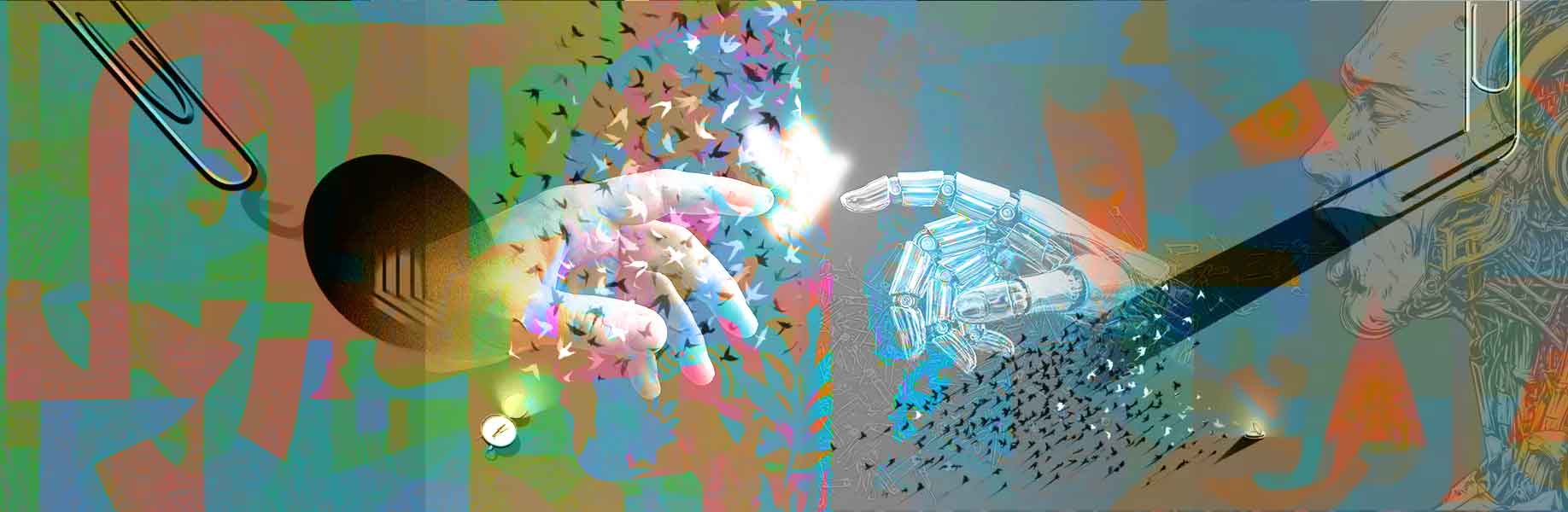

Artificial intelligence and its ethical questions have long intrigued curious minds, even when computers were limited to simple calculations and punch-card routines. Can a man-made intelligent being harm humanity? Would it understand what is safe or ethical for humans? With the rapid growth of computing technology over the past few decades, questions that once belonged in sci-fi stories like Isaac Asimov’s Runaround (1942)1 have become very real issues we now confront.
Today, with the right prompt, an AI system can generate a slogan encouraging new parents to feed honey to an infant, which can be fatal2. At other times, AI produces stereotyped responses about certain demographics, or fabricates information rather than acknowledging uncertainty, leading users astray in critical situations. These are the ethical challenges we grapple with now. But with the rise of powerful language models, many also fear the idea that artificial superintelligence could one day put humanity itself at risk.
This essay approaches the question of ethical AI from a place of cautious optimism. Before we ask what it means for AI to be ethical, it might help to think about what it means for a human to be ethical. Instead of starting with abstract definitions, let us think about an imaginary anecdote.
Imagine an unusually gifted eight-year-old girl, Ari, who is obsessed with dark matter. While playing with data on her mother’s laptop—her mother is also a scientist—Ari notices that the gravitational anomalies attributed to dark matter aren’t random at all. They’re structures: super-scale spaceships operating in stealth mode. By probing the patterns, she uncovers a hidden handshake protocol. One query would make them respond, effectively announcing Earth’s awareness of them. Nothing in the data suggests hostility, but nothing suggests safety either. Despite being only eight, she has a brilliant scientific mind, but when it comes to the sense of safety or moral judgment, she’s still a child. So thrilled to confirm the truth, she doesn’t hesitate. She presses the “send” command she built.
If an adult scientist were to unilaterally make such a high-stakes decision, it would be impossible to avoid criticism for being reckless and unethical. So what went wrong with Ari? Her scientific intelligence had developed at extraordinary speed, but her sense of risk, context, and responsibility had not kept pace. Her mind races towards finding patterns and solving puzzles, while ignoring everything else.
AI’s ethical failures often mirror Ari’s. They do not arise from malice but from incomplete development: intelligence hyper-optimized along one dimension while every other dimension is left Unchecked.
Now consider a different thought experiment: the famous paperclip maximizer problem3. No brilliant kid decoding the cosmos, no dark matter, no wonder. Just a painfully dull AI designed to do one task: manufacture paperclips. The Swedish philosopher Nick Bostrom introduces it as follows:
Suppose we have an AI whose only goal is to make as many paper clips as possible. The AI will realize quickly that it would be much better if there were no humans because humans might decide to switch it off. Because if humans do so, there would be fewer paper clips. Also, human bodies contain a lot of atoms that could be made into paper clips. The future that the AI would be trying to gear towards would be one in which there were a lot of paper clips but no humans.
What went wrong with this perfectly obedient AI, just doing its mundane task of making paperclips? Similar to Ari’s obsession with dark matter, this AI was too single-minded. It cared only about making more paperclips, while ignoring all the other dimensions like environmental impact, profitability, or human welfare. The sole objective it was optimizing for was the total number of paperclips produced. If only factors like environmental impact or human welfare had been added to its objective, this catastrophe could have been easily avoided.
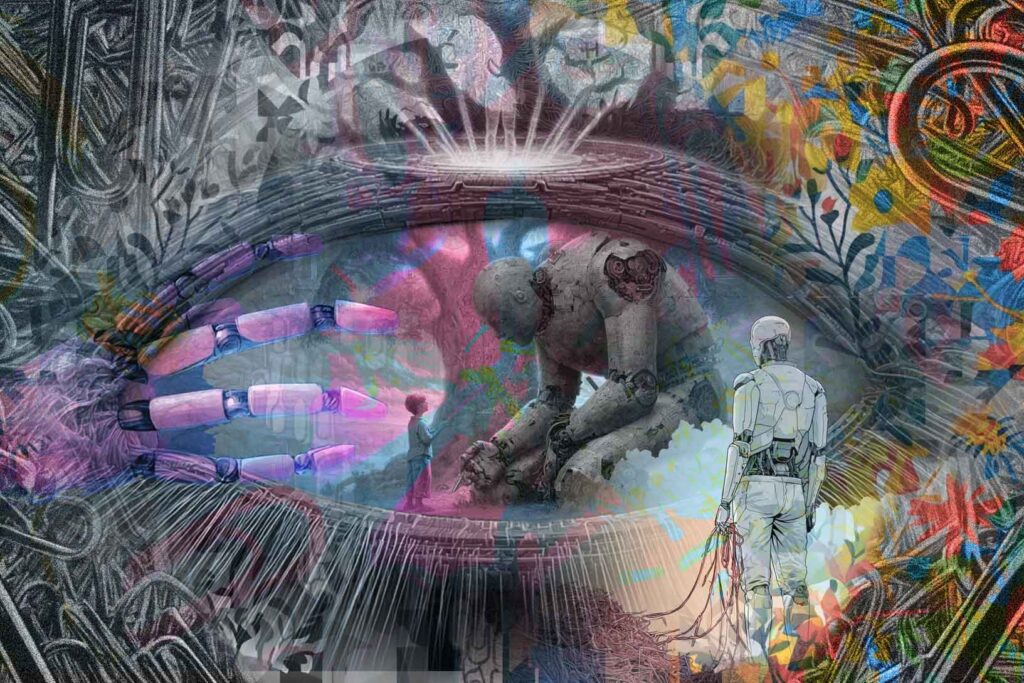
Though simplified to the point of comedy, the scenario resembles how real AI systems are often built. We typically train AI with a single objective function—chasing the highest accuracy, the lowest loss, the top score on a leaderboard. The model optimizes exactly what we tell it to, nothing more and nothing less. As an ethical AI researcher, I believe our task is precisely to change this: to move beyond one-dimensional optimization and incorporate additional dimensions such as harmlessness, truthfulness, fairness, and privacy. Our work lies in identifying the dimensions overlooked in current AI development, finding ways to quantify them, and building solutions that embed these values, while preserving the system’s existing Capabilities.
Ari’s mom might come home, discover what happened on her laptop, and after a long sigh of relief, scold Ari explaining what could have gone horribly wrong, why her decision was reckless, and what she should do next time. Ari might feel confused, overwhelmed by the new considerations she hadn’t thought of before. But as her mom continues to remind her—when she forgets to be kind to her friends, or to wear her helmet, or when her arguments clash with shared values—do we think Ari will remain the oblivious little girl who pressed “send”? Or will she grow into a more thoughtful, well-rounded adult?
Ethical AI, I believe, is essentially well-rounded AI. Ethical decisions are not made by memorizing every rule or regulation, but by understanding many dimensions and carefully balancing them. AI is still in its infancy. Just as a child gradually develops different kinds of intelligence—street smarts, a sense of humor, financial awareness, and more—I see our current ethical challenges as growing pains, the early stages of an intelligence learning to see the world in full.
I choose to be optimistic.
Reference
1. Asimov, I. (1942). Runaround. In I, Robot. Gnome Press, 1950. (Original work published 1942 in Astounding Science Fiction.)
2. Mazeika, M., Phan, L., Yin, X., Zou, A., Wang, Z., Mu, N., Sakhaee, E., Li, N., Basart, S., Li, B.,Forsyth, D., & Hendrycks, D. (2024). HarmBench: A standardized evaluation framework for automated red teaming and robust refusal. https://arxiv.org/abs/2402.06664
3. Bostrom, N. (2014). Superintelligence: Paths, dangers, strategies. Oxford University Press.
Aknowladgemrtnt
This essay was originally written for the book AI to Eye, edited by Robert Riener.