
Electrons lose energy as heat and face resistance when moving through materials. As computer chips grow more complex and process huge amounts of data for artificial intelligence, these problems get worse.
Physicists at the University of Pennsylvania are exploring a different solution. They want to use photons for more of the computing work. Photons travel very fast over long distances with almost no energy loss because they have no electric charge and no rest mass. This makes them excellent for communications. But photons barely interact with each other or their surroundings. This makes them poor at performing the signal-switching logic that computers need.
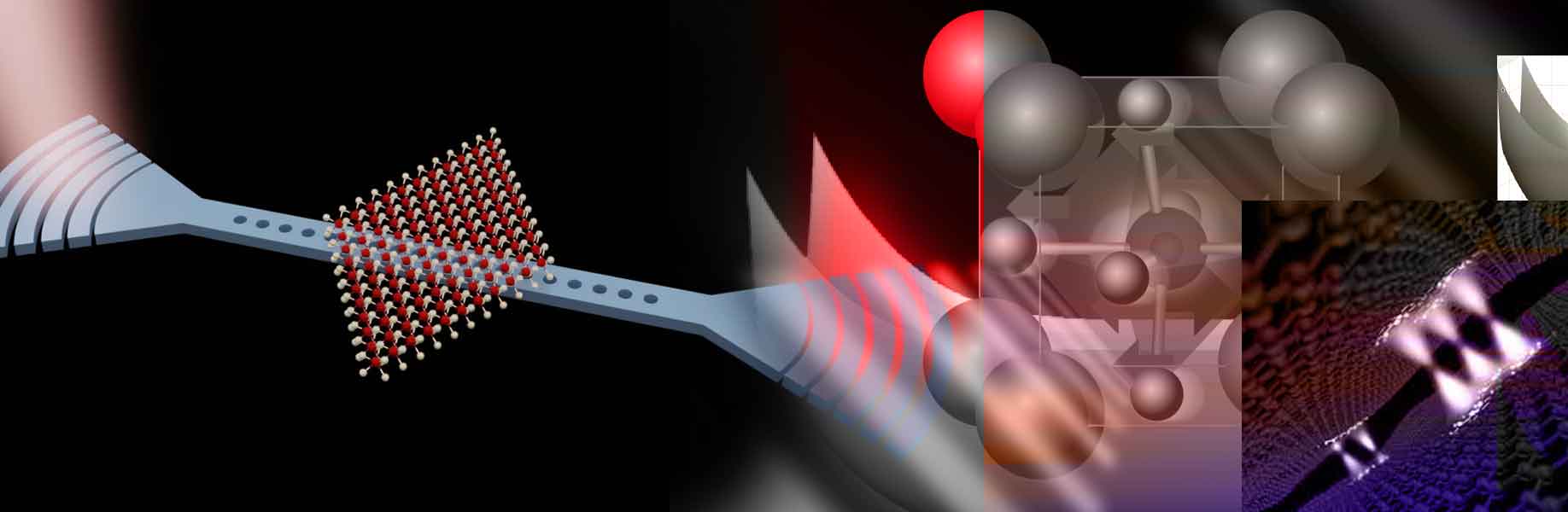
To solve this, the researchers created special hybrid entities called exciton-polaritons. These are quasiparticles, meaning they behave like particles but are formed by the strong coupling of photons with electrons inside an extremely thin semiconductor material. This combination gives them the speed of light along with the strong interactions typical of matter.
Hybrid particles overcome key limits of light-based computing
This advance is particularly promising for artificial intelligence (AI). Current photonic chips, which use light for calculations, can handle simple math well. But they still need to convert light signals into electronic ones for nonlinear activation steps. These are the decision-making parts of artificial intelligence processing. The conversions waste time and energy. Using exciton-polaritons, the researchers showed they could perform all-light switching using only about four quadrillionths of a joule of energy. This is an extremely small amount, far less than needed to briefly light a tiny light-emitting diode.
If developed further, the technology could let photonic chips process information directly from cameras and other sensors. It may greatly reduce the power used by large artificial intelligence systems and open paths to small-scale quantum computing on chips.
The researchers have described the methods and results of this study in a paper published in Physical Review Letters.