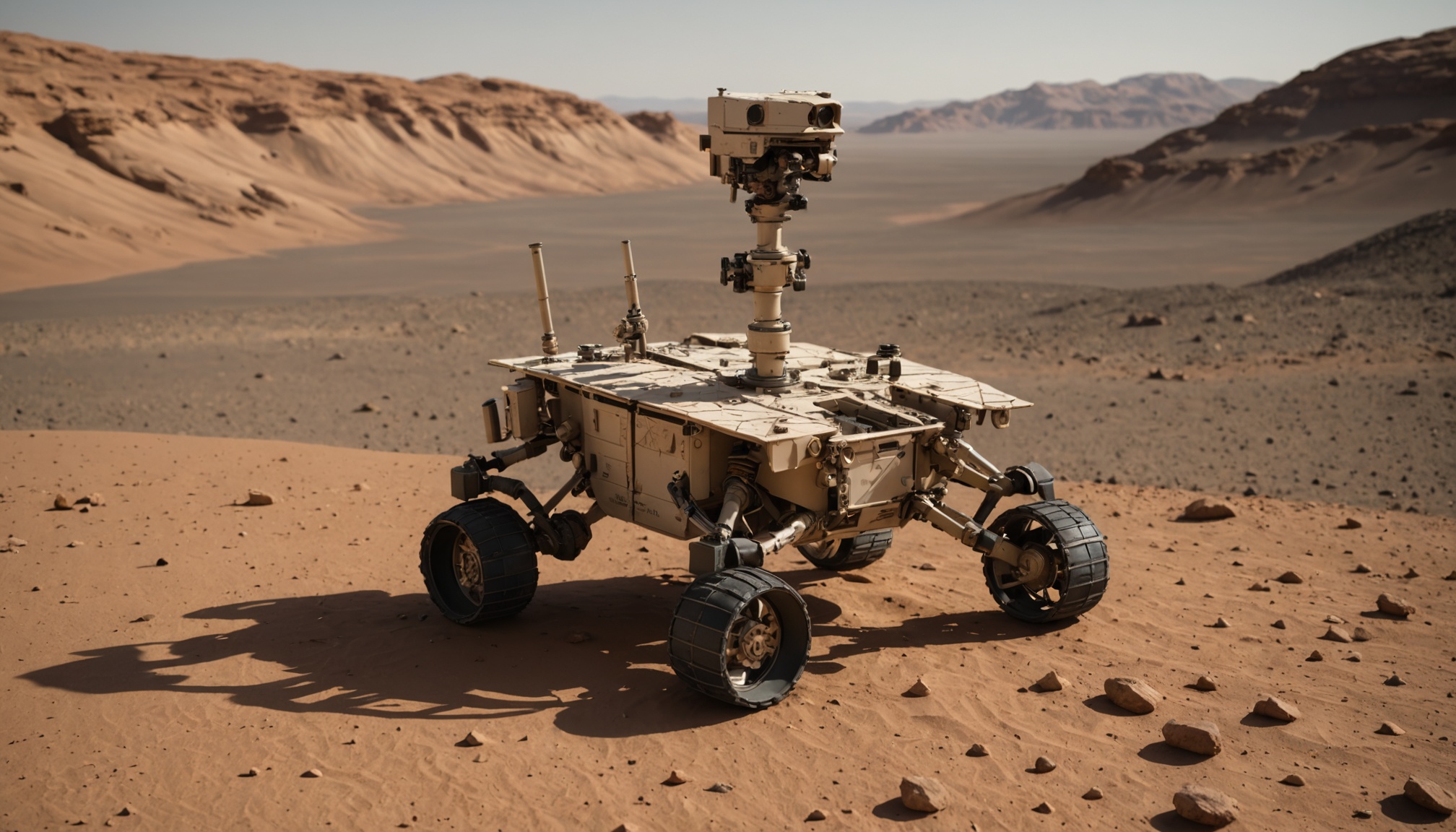


On October 11, 2026, NASA's Perseverance rover drove about 300 feet (91 meters) across rocky ground west of Jezero Crater on Mars. According to the NASA news release, that short trip pushed its total distance to 28.10 miles (45.22 kilometers), farther than any vehicle has ever traveled on another world.
What makes the record notable is how the distance was covered. Perseverance steered itself for more than 90 percent of the journey using a system called AutoNav, short for autonomous navigation. As it rolls, the rover photographs the ground ahead, builds a 3D map of hazards such as rocks and slopes, and picks a safe path between waypoints that planners on Earth still choose. The team calls this thinking while driving. Earlier Mars rovers were far more limited: Spirit and Opportunity drove only about 5 percent of their distance autonomously.
Smarter software and tougher driving
Engineers have steadily upgraded the rover. After thousands of computer simulations, they raised its tilt tolerance to 24 degrees, improved the braking software so it avoids hitting rocks, nearly doubled the electrical current limits for its steering motors, and added dynamic slip tables, which are software that predicts how much the wheels will slip on different surfaces. The team also switched on a system called onboard Global Localization. It lets the rover work out its own position by comparing surface images with pictures taken from orbit, similar to having GPS on a planet that has none. Because the extra processor was not built to survive Martian radiation, engineers added software protections against memory errors that radiation can cause. In a December 2025 test, the rover completed drives along waypoints planned by generative AI instead of human operators.
This matters well beyond a single record. Robots that can drive and locate themselves need less help from Earth, so future missions can explore faster and at lower cost. The tools proven on Perseverance, including AI-planned routes, are likely to shape how robotic explorers work on distant worlds. The rover is still climbing the rim of Jezero Crater, and its odometer keeps growing.