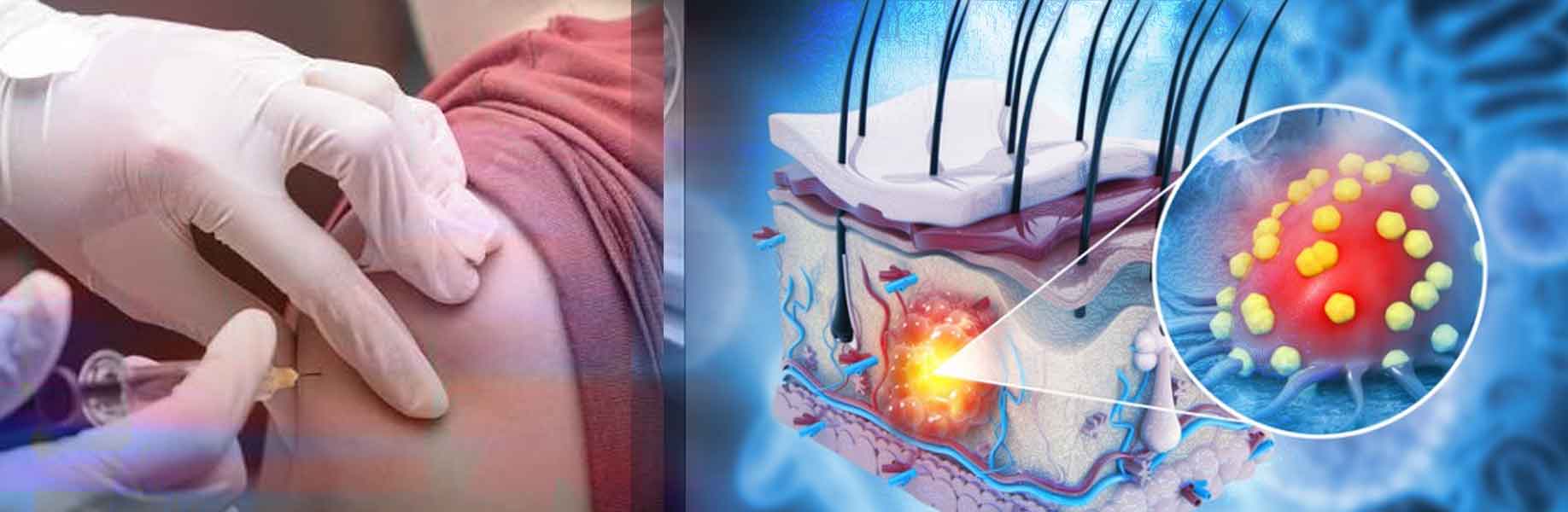

Moderna and Mercx reported positive results from the Phase 3 INTerpath-001 study of intismeran autogene, an investigational individualized neoantigen therapy, combined with pembrolizumab. The study enrolled patients whose high-risk stage IIB to IV melanoma had been completely removed by surgery. Adjuvant treatment means the medicines were given after surgery to lower the chance that cancer would return. The combination met its primary goal of longer recurrence-free survival, the time until the cancer came back or the patient died from any cause. It also met a key secondary goal of longer distant metastasis-free survival, the time until the cancer appeared in distant parts of the body. These gains were statistically significant and clinically meaningful compared with pembrolizumab alone, a current standard treatment. Safety matched earlier findings, with no new problems observed.
The vaccine is made for each patient from a sample of their own tumor. Sequencing reveals the tumor's unique set of mutations. Selected mutations produce abnormal protein pieces called neoantigens. Synthetic messenger RNA, a molecule that carries instructions for making proteins, is then designed to code for up to thirty-four of these neoantigens. Once injected, the patient's cells display the neoantigens so the immune system can learn to attack any remaining cancer cells that carry the same markers.
How artificial intelligence supports the design
Although the announcements focus on the clinical results, artificial intelligence (AI) and related computational methods play a central supporting role in building each vaccine. After sequencing, dozens or hundreds of mutations appear. Algorithms examine features such as how strongly the resulting protein pieces bind to immune presentation molecules and how foreign they look to the body. These ranking steps identify the neoantigens most likely to stimulate a useful immune response. Without such computational selection the process of choosing the most promising targets would be slower and less precise. The finished mrna construct then carries only the highest-ranked neoantigens.
The same approach is now being studied in other cancers, including lung, bladder and kidney, and at different points in the disease course. Patients in the current study continue to be followed for overall survival and other measures. The findings will be presented at a medical meeting and shared with regulators. The result is the first late-stage success for an individualized mrna cancer vaccine and shows that a treatment drawn from a patient's own tumor mutations can improve outcomes beyond standard immunotherapy alone.