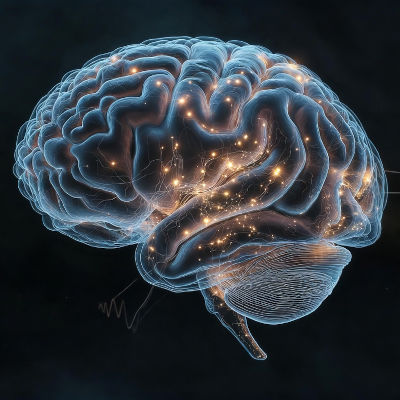

Researchers have found that psychedelic substances can help treat anxiety and depression when used with medical oversight. However, experts did not fully understand how these drugs affect perception and awareness. A new study using animals has captured detailed images of brain activity after giving psychedelics, showing that visual parts of the brain start pulling in more information from memory areas. This mixing might cause visual hallucinations, where people see things that are not there. The findings were published in Communications Biology.
Psychedelics mainly activate a specific type of serotonin receptor, a protein on brain cells that binds to serotonin, a chemical messenger involved in mood and learning. There are at least 14 such receptors, but psychedelics stick best to the 2A type, which normally quiets down visual signals from the outside world. Earlier work showed this receptor makes real-world sights less clear to the mind. To make up for the missing details, the brain adds pieces from stored memories, creating hallucinations.
Brain waves reveal the process
In this study, psychedelics boosted short-term oscillations in visual brain regions. Oscillations are rhythmic patterns of synchronized nerve cell firing that help different brain areas talk to each other. After the drugs, visual zones sent out more low-frequency waves at about 5 hertz, which triggered the retrosplenial cortex, a key brain spot that links to stored memories and associations. This shift blocks access to current events and draws more from past experiences, like a mild form of dreaming while awake.
To see these changes live, scientists used an optical technique that tracks nerve activity across the brain surface in real time. They worked with mice genetically altered to glow with fluorescent proteins in certain cell types, ensuring signals came from cells that connect brain regions. These results back up emerging therapies where psychedelics briefly rework brain states to bring up positive memories and break harmful thought habits, such as those in anxiety or depression. In the future, such treatments could become more tailored to individual needs.