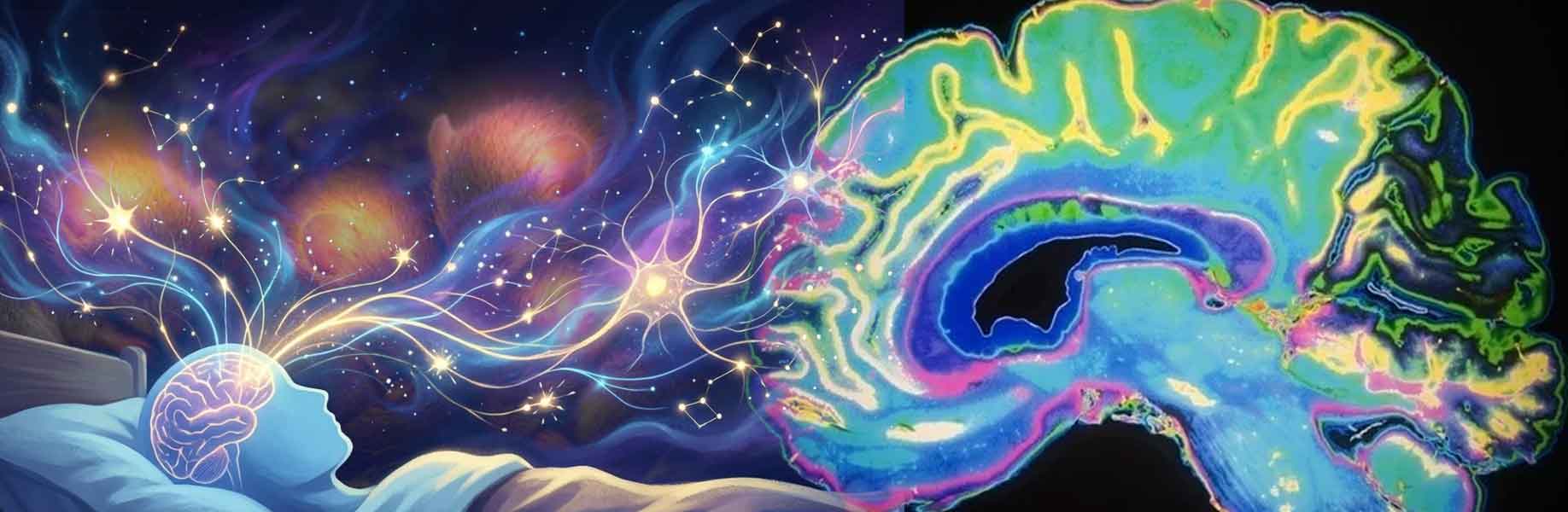

Researchers led by Mount Sinai found that a very scarce kind of cortical cell can help start and organize sleep.
Those cells are called Sst-Chodl neurons, named for molecular markers they carry. They make up about 0.2 percent of cortical neurons. Most inhibitory neurons, which dampen rather than excite other cells, talk only to neighbors. Sst-Chodl cells are different: they send axons, the long output fibers of a neuron, across wide stretches of cortex. That long reach lets a small population coordinate activity in regions that are far apart.
In mice the cells were mostly quiet during alert waking. They became active as the animals grew drowsy and entered NREM sleep, the deep, quiet stage marked by slow breathing, low muscle tone, and large, slow brain waves. The open question was whether the cells merely rode that change or helped cause it.
How these cells act, and why they matter
When the cells were turned on by experimenters, electrical activity across the neocortex, the largest part of the mammalian cortex, slowed and lined up in time, matching the pattern of sleep. The same activation made mice fall asleep more easily and sleep longer. The researchers say the cells do not only light up during sleep; they can drive the shift toward it.
Despite their rarity, Sst-Chodl neurons have been kept through evolution for hundreds of millions of years, from amphibians and reptiles to humans. That persistence suggests an important job, even though their function was poorly known. The mouse results show a role in cortical synchrony and sleep. Whether the same job exists in people is still unproven.
One hypothesis, not yet tested, is that these neurons help convert rising sleep pressure, the growing need for sleep that builds during waking, into actual sleep. Sleep is often broken in conditions such as Alzheimer disease and autism. Researchers can now ask whether this circuit is altered when sleep fails.
This study is published in Nature.