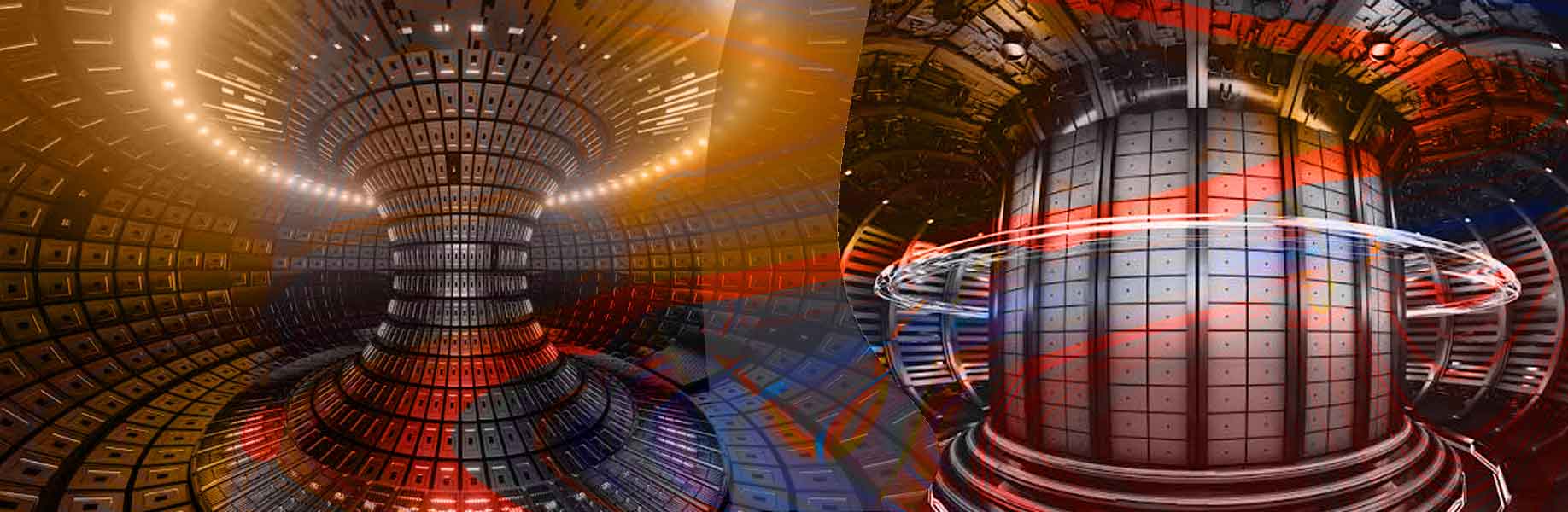

Nuclear fusion research attracts large investments because it could one day deliver clean and nearly unlimited energy, but turning it into a practical power source remains extremely difficult.
The main challenge is the extreme heat required. On Earth, fusion needs temperatures above 180 million degrees Fahrenheit. At these temperatures, matter becomes plasma. No solid material can contain plasma at such heat. Instead, researchers use powerful magnetic fields to hold the plasma in place.
Even then, turbulence inside the plasma causes rapid heat loss. Maintaining stable conditions long enough for fusion to occur requires very precise control systems. Any mistake in these systems could damage the reactor.
Faster simulations through reduced models
Because real experiments are costly and dangerous, scientists rely on computer models to test ideas before building anything. However, full simulations of plasma behavior are so complex that they can take days or weeks on supercomputers. This makes them too slow for designing real-time control systems.
Mathematicians at Virginia Tech have developed reduced models to solve this problem. A reduced model is a simplified version of a complex simulation that keeps only the most important features while dropping less critical details. This approach can shorten calculations from days to just seconds. Test runs showed that these faster models can support real-time predictions and control decisions needed for fusion reactors.
The same method has also been applied successfully to other difficult problems, such as simulating rocket engines. In one case, a full simulation took three days to model one millisecond of engine operation, while the reduced model produced results in one second.
Nuclear fusion research combines physics, engineering, and mathematics. Progress depends on bringing these different areas of knowledge together rather than working within any single field alone. Reduced models offer one practical way to make this interdisciplinary effort more effective.
This research is described in in a recent paper in Physics of Plasma, a study in Journal of Computational Physics, and an article in The Bridge magazine from the National Academy of Engineering.