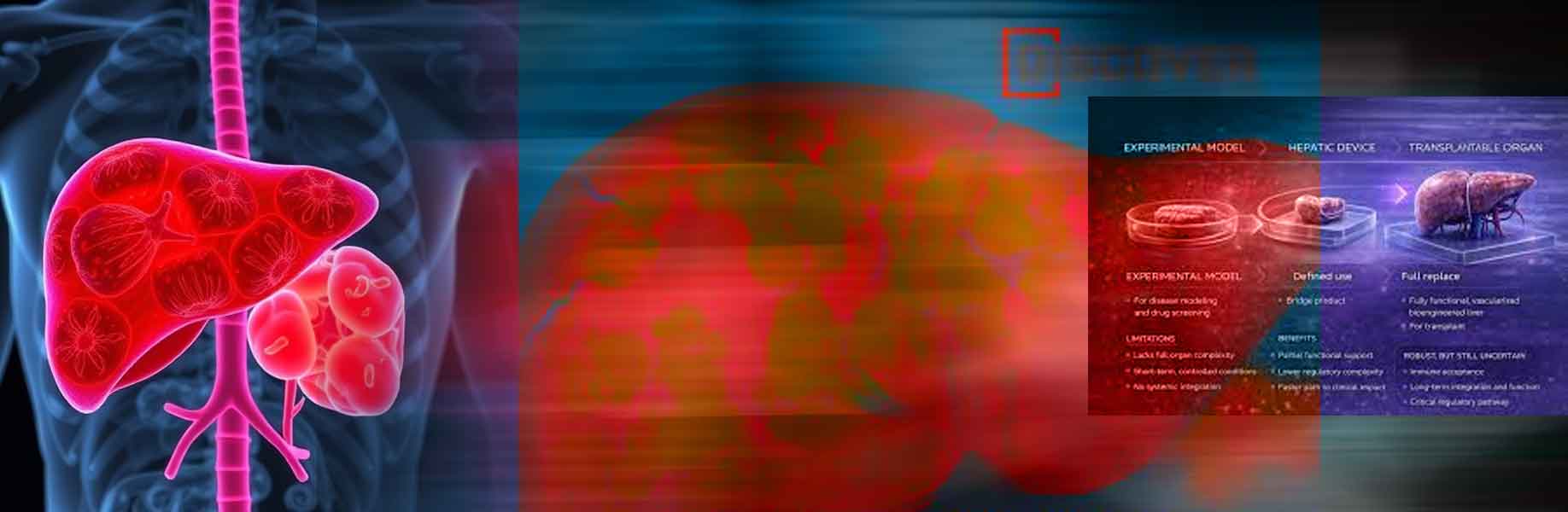

When liver damage reaches an advanced stage known as end-stage liver disease, the organ can no longer repair itself. The only current option is a transplant, but demand far exceeds supply. Thousands of people wait on the national list in the United States, and many become too ill or die before receiving one.
Scientists explored a different solution. They created small lab-grown liver tissue constructs that can be implanted and then made to grow larger inside the body on demand. This approach combines tissue engineering with synthetic biology. The strategy is called BOOST, short for bioengineered on-demand outgrowth via synthetic biology triggering.
Engineered liver tissue grows on demand inside the body
Liver cells called hepatocytes normally stop growing when packed closely together. Researchers identified that a protein named YAP, which senses mechanical pressure from neighboring cells, plays a key role in this control. They used genetic tools to make a stable version of YAP and paired it with four growth factors, proteins that encourage cell division. All these components were made inducible, meaning they activate only when a safe antibiotic called doxycycline is given.
In lab tests, adding the antibiotic for seven days caused the small tissue constructs to expand significantly in size and cell number. Removing the antibiotic stopped the growth and returned the cells to a resting state. When the engineered tissues were implanted into healthy mice and the antibiotic was given for the same period, the constructs grew by about 500 percent. New blood vessels formed to support the larger tissue, and the mice showed no harmful immune reactions, scarring, or tumors.
The expanded tissue relieved some metabolic load without needing injury to the host liver to trigger growth. Researchers noted that rapid growth temporarily reduced some liver cell functions, a common biological trade-off they hope to improve.
This method could one day provide temporary support for patients awaiting transplants by creating a functional satellite liver. The same idea might apply to other organs.
This research is published in Science Advances.