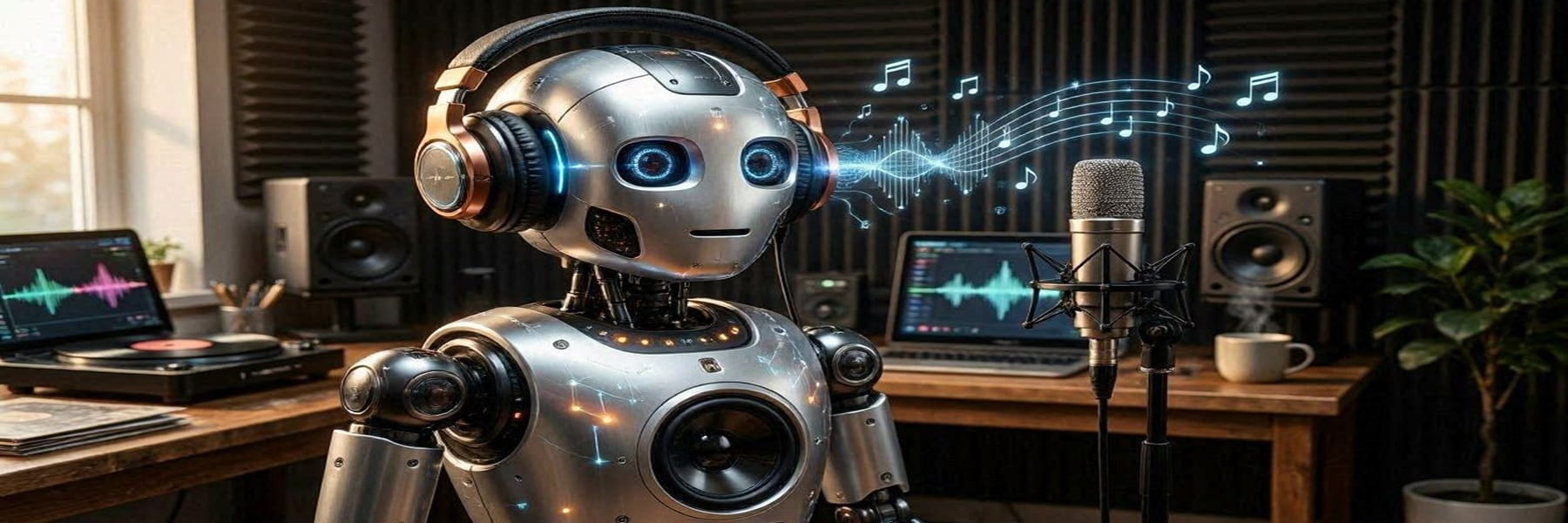

Researchers have developed a robotic system capable of teaching itself to play simple melodies by listening, marking a step toward machines that can learn physical skills through sensory feedback rather than fixed programming. [1]
The study, published in the Journal of the Royal Society Interface, describes a robotic platform that combines perception and movement in a closed learning loop. Instead of following prewritten musical instructions, the robot listens to the sounds it produces, compares them with target notes, and continuously adjusts its actions to improve performance.
According to the researchers, the system was designed to mimic aspects of human sensorimotor learning, where perception and physical action constantly influence one another. Through repeated interaction with its environment, the robot gradually refined its movements to reproduce recognizable melodies by ear. Supplemental demonstrations released alongside the paper show the machine performing learned musical sequences after iterative self-correction.
While the musical demonstrations serve as the study’s showcase, the broader significance lies in robotics itself. Systems that can adapt through real-time sensory feedback could eventually improve robotic rehabilitation devices, prosthetics, industrial automation, and assistive machines operating in unpredictable environments.
The work also points toward future robots that learn more like humans—through trial, adjustment, and interaction—rather than relying entirely on predefined instructions. Researchers suggest that integrating perception directly into motor learning may help create machines that respond more naturally to changing physical conditions and complex real-world tasks.