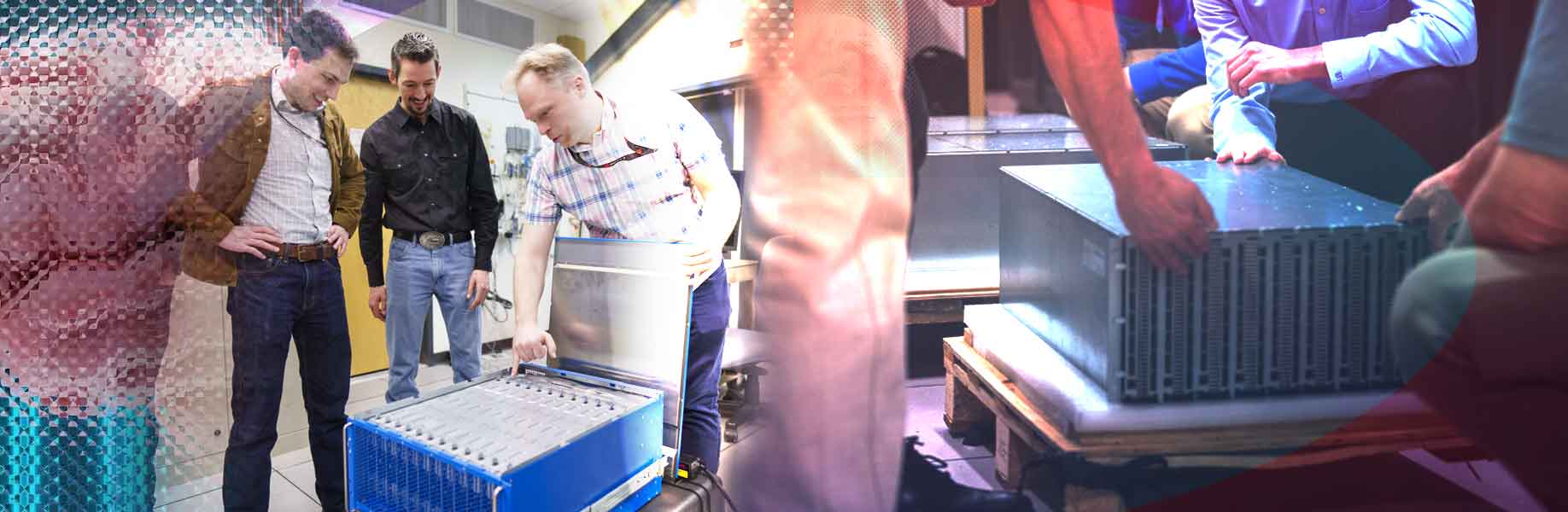

Sandia National Laboratories has introduced a new computing system called NERL Braunfels, designed to work like the human brain. This system, built with help from a German company called SpiNNcloud, is part of a project to make computers more powerful and energy-efficient. As artificial intelligence (AI) grows, it demands a lot of energy and cooling. NERL Braunfels aims to address these challenges by copying how the brain processes information, using less power than traditional computers.
The system, named after a Texas town with German roots, arrived at Sandia in March. It uses special chips called SpiNNaker2, which are much more efficient than the standar GPUs used for gaming or AI.
NERL Braunfels can simulate 175 million neurons, giving it the brain power of a small mammal. This makes it one of the most advanced systems of its kind. Researchers are excited to explore how it can solve big computing problems with real-world uses, like analyzing data or improving security.
The brains behind the machine
NERL Braunfels is a neuromorphic system, meaning it mimics the brain’s structure and function. Neuromorphic computing (brain-inspired technology) designs both hardware (physical components) and software (programs) to work like biological neural networks.
The system has three frames, each holding up to 18 boards with 48 chips. Each chip has over 150 cores, small processing units that act like neurons in a spiking neural network. This setup uses a hybrid architecture, combining different types of components, including an ARM-based system to run AI tasks efficiently.
Funded by the National Nuclear Security Administration, NERL Braunfels supports national security missions, especially in nuclear deterrence. It helps develop AI that is both powerful and energy-saving. The system also supports test beds for new computing ideas. Early tests have used it for physics simulations, like modeling heat flow in materials, which could help design vehicles or predict chemical reactions. With NERL Braunfels, Sandia wants to build the future of computing and explore new possibilities for AI and beyond.