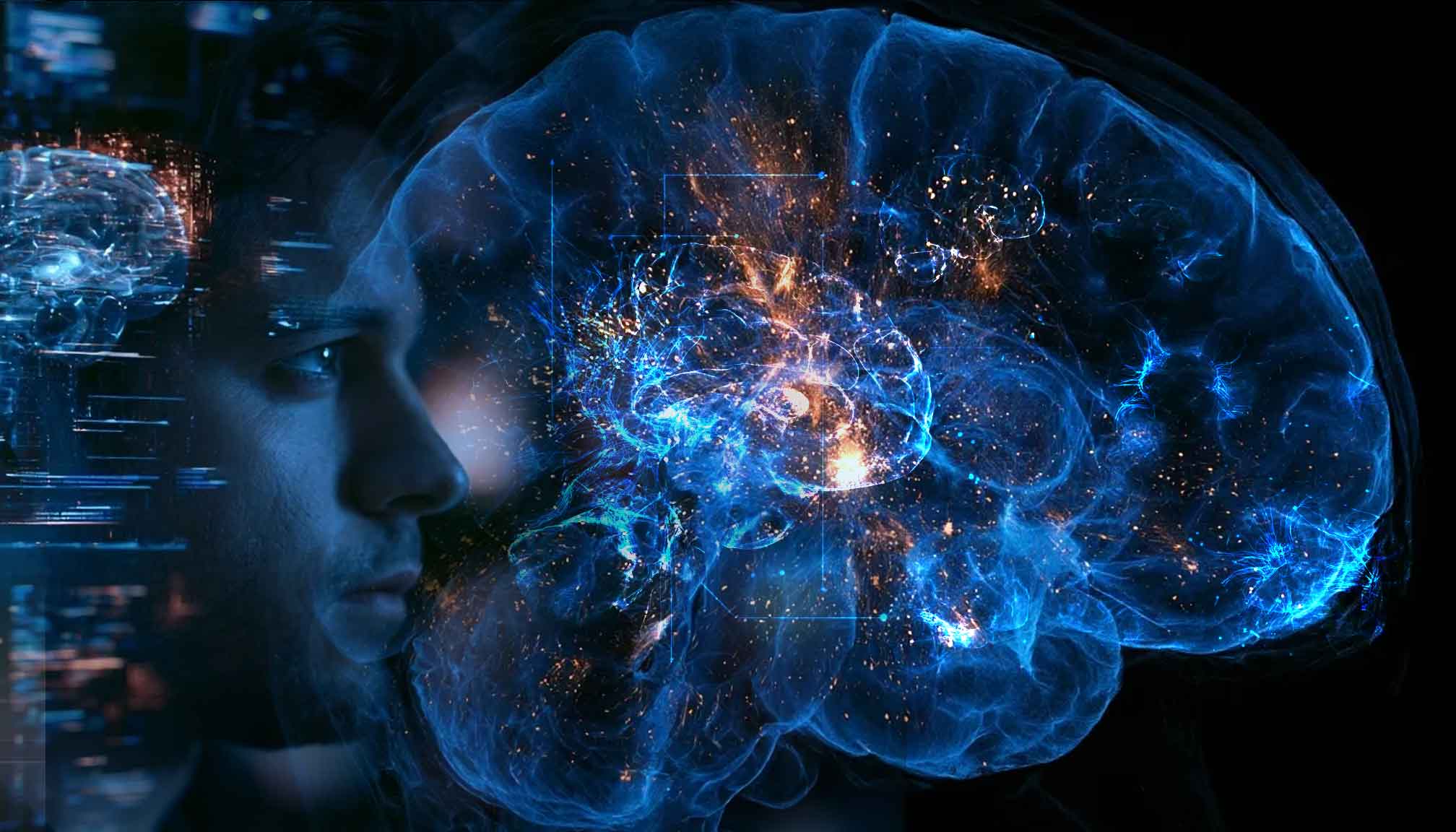
Researchers at the Weizmann Institute of Science have developed Brain-IT, an AI system that reconstructs images people are viewing by analyzing their fMRI brain scans with unprecedented efficiency. Unlike previous mind-reading technologies that required extensive personalized training for each individual, Brain-IT needs only about one hour of scan data to adapt to a new person.
How Brain-IT Works
The key innovation is Brain-IT's bidirectional architecture, functioning like a two-way bilingual dictionary. While conventional approaches used only decoders to translate brain activity into images, this system includes both an encoder and decoder working together. The encoder identifies 128 functional brain regions that are shared across all people and perform specific roles in image processing.
During training, this architecture generates synthetic brain scans for images never actually viewed in MRI machines. The system translates from a random image to a predicted brain scan, then back to the image again. This creates a massive self-supervised dataset without requiring additional human subjects - an elegant solution to the scarcity of training data that has long plagued the field. Brain-IT's approach overcomes this limitation by learning universal mappings between visual features and neural responses.
The results are striking: Brain-IT outperforms existing systems in reconstructing both image content and fine details like composition and color. Previous models often preserved semantic meaning well but made mistakes in basic features. The encoder's ability to identify functionally similar regions across anatomically different brains also enabled a significant neuroscience discovery: a previously unknown division within the parahippocampal place area (PPA), with one part responding to indoor scenes and another to outdoor scenes.
This breakthrough could make brain-computer interfaces more accessible for helping people with severe paralysis communicate. Current personalized models, while life-changing, require tens of hours of training - limiting their practical deployment. The researchers are now extending these methods to auditory decoding. Video reconstruction represents another frontier, though challenges remain: dozens of images change every second while fMRI scans take about two seconds. If these obstacles are overcome, the technology might eventually enable dream reading.