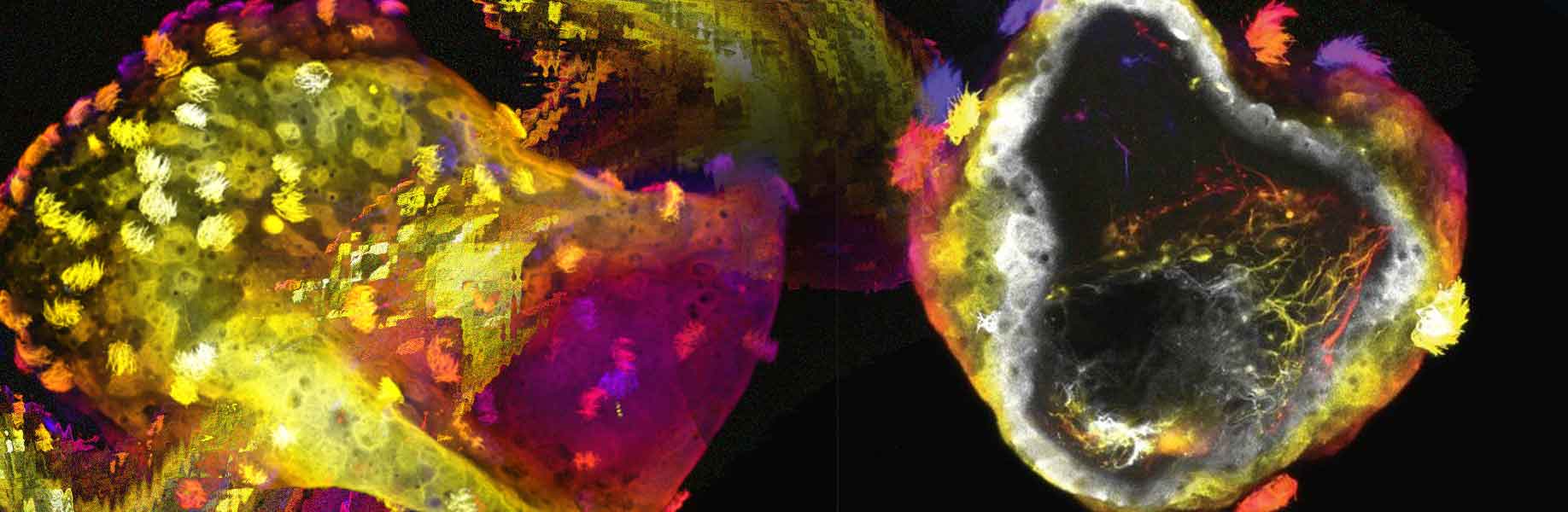

Researchers have created neurobots, living robots equipped with a self-organizing nervous system. Biobots are tiny self-powered living robots built exclusively from frog embryonic cells. These earlier versions can move autonomously in water and show abilities such as self-replication and response to sound. Neurobots advance this concept by adding neurons that transmit signals in the nervous system. The goal is to explore how such systems function in artificial biological settings and to open possibilities for future medical uses, such as repairing nerve damage using a patient’s own cells.
Creating the neurobots
To build neurobots, the researchers implant neuronal precursor cells, which are immature cells that develop into neurons, into the interior of forming biobots during a brief 30-minute healing window after the tissue is shaped into a sphere. The implanted cells then spontaneously grow into mature neurons with cell bodies, axons, and dendrites. These neurons form connections with each other and extend processes to non-neuronal surface cells, including multiciliated cells that beat like tiny hairs to enable movement, mucus-secreting goblet cells that support ciliary action, ionocytes that balance ions, and small secretory cells that stimulate movement.
The presence of the nervous system alters the robots significantly. Neurobots develop a more elongated shape, display higher activity levels, and exhibit more complex and varied spontaneous movement patterns compared with standard biobots. Analysis of gene expression, the process by which genes are activated to produce proteins, showed many genes upregulated in neurobots. These include genes linked to nervous system development and, surprisingly, to the visual system of frogs, hinting at possible light-sensing capabilities. Tests with a drug that increases neuronal activity further confirmed that the nervous system influences movement in ways not seen in non-neuronal biobots.
This breakthrough demonstrates that a nervous system can develop and function in a completely novel biological context without millions of years of natural selection. The findings carry broad implications for neuroscience, bioengineering of tissues and organs, and the creation of programmable living entities.
This study is published in Advanced Science.