
Animals such as bats, whales, and insects use sound signals for talking to each other and finding their way. Researchers have copied this idea from nature to create models of very small robots that use sound waves to form large groups, or swarms, that act smart together. These robot groups might one day do hard jobs like searching disaster areas, removing pollution, or treating illnesses inside the body.
The research is published in Physical Review X. The tiny robots can move through narrow spaces and fix their shape if something bends them. The swarms show emergent intelligence. They can sense changes around them and heal themselves if broken apart, making them good for spotting dangers or using as sensors.
How the model works
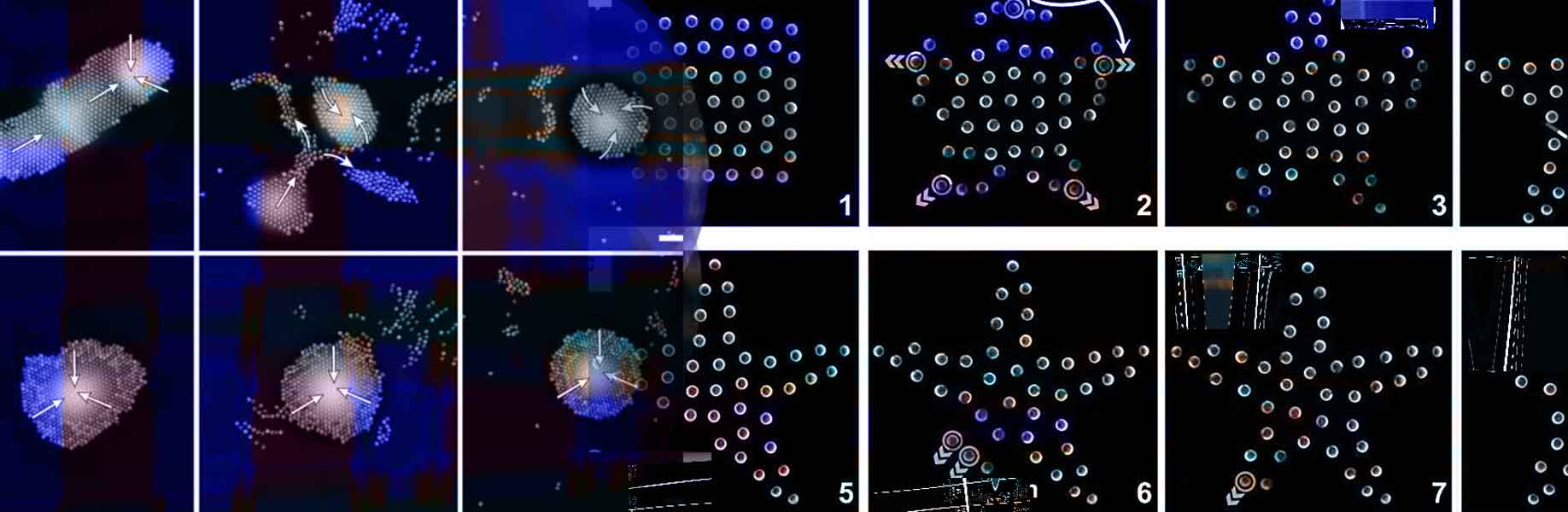
The researchers made a computer model to follow the movements of tiny robots. Each robot has an acoustic emitter and a sound detector. The model showed that sound communication lets the robots work as a group, changing shape and actions to fit their surroundings. The robots are not real machines yet but computer simulations in an agent-based model. Still, the model predicts that real robots with this design would show the same group smarts.
Each robot has basic parts: a motor to move, a small microphone to hear, a speaker to make sound, and an oscillator that makes regular vibrations. The robot tunes its oscillator to match the swarm's sound and moves toward the loudest signal. This is a big step in active matter, the study of groups of tiny living or man-made things that move on their own, like bacteria or microrobots. For the first time, it shows sound waves can control these tiny robots. Before, most control used chemical signals.
Sound waves are better for talking because they travel fast and far with little energy loss, and the setup is simple. The robots hear and find each other, leading to group organization from basic parts and sound talk. This research helps design better microrobots that are tough, react to the world, and do complex jobs with little complication.