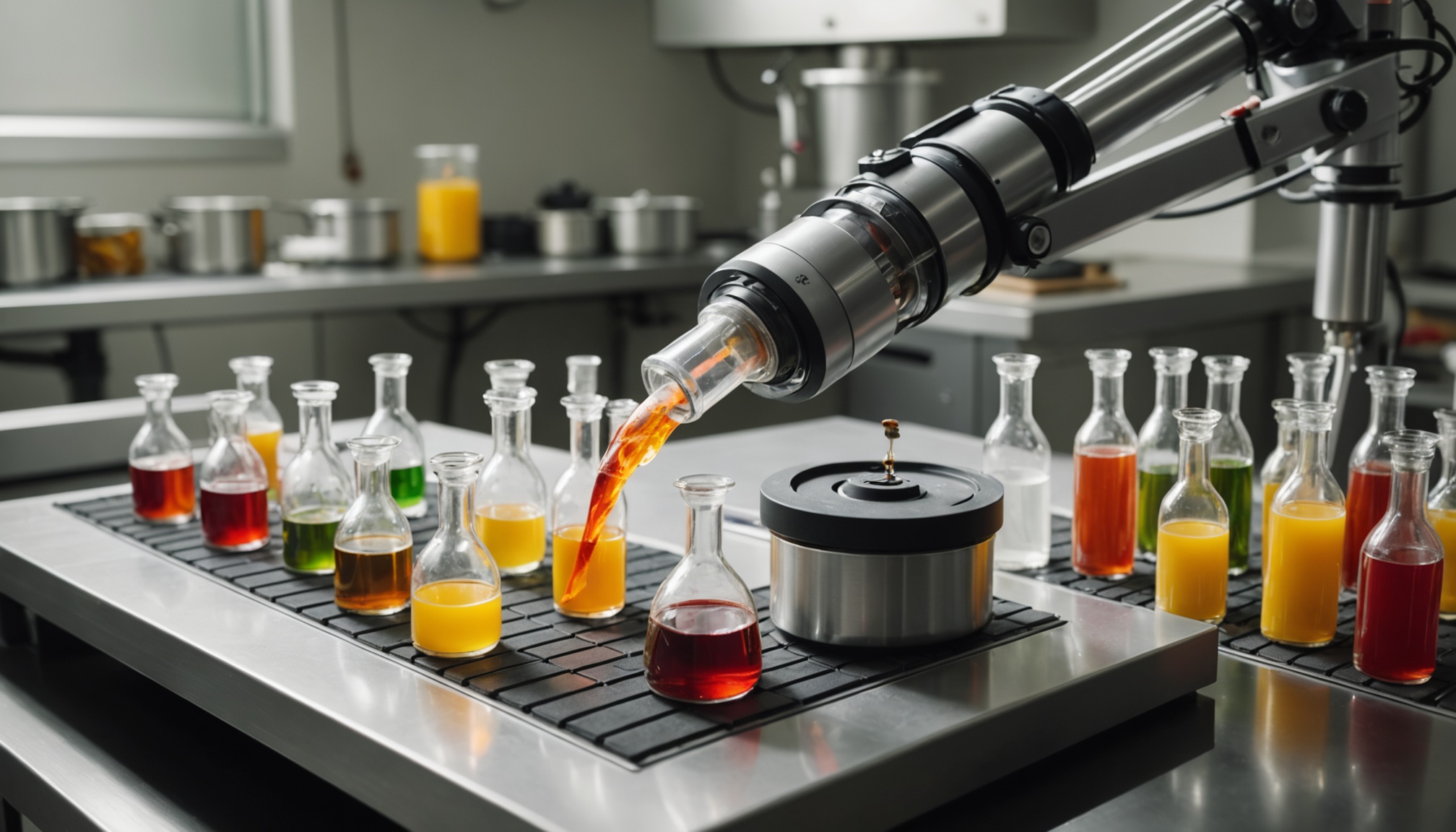


Researchers at the University of Nottingham have built a self-driving laboratory that combines artificial intelligence and robotics, according to a university announcement. The system can carry out laboratory work on its own, from measuring and mixing chemical ingredients to processing samples in a high-temperature furnace and retrieving them afterwards.
The researchers connected two robotic arms, a specially designed liquid-dispensing tool, laboratory equipment and purpose-built software into one coordinated workflow. Calibration tests showed that the system could dispense different liquids accurately. In a full demonstration, the laboratory prepared a precursor solution, a liquid mixture containing the starting ingredients for a material, moved it to a furnace, managed controlled cooling and retrieved the finished sample without human help.
The laboratory is guided by an AI method called active learning, in which software uses results from earlier experiments to suggest which material compositions are worth testing next. Using this approach, the researchers identified and prepared several candidate materials for investigation as potential coating materials.
A heat shield for engines
The candidates share a crystal structure known as pyrochlore, a family of compounds that often contains rare-earth elements. Such compounds are studied as possible thermal barrier coatings, thin layers that act as heat shields and limit how much heat reaches the metal parts underneath, for example inside aircraft engines. Materials with low thermal conductivity, meaning they do not pass heat easily, make the most effective shields.
"Self-driving laboratories have the potential to change how advanced materials are developed," said the researchers. This research is published in Engineering Applications of Artificial Intelligence and in a ChemRxiv preprint.
This matters because developing materials for extreme environments is slow work. Researchers normally prepare samples, process them and test their properties by hand, repeating the cycle many times. Linking chemical preparation, sample handling and high-temperature processing into one reliable robotic workflow has been a technical challenge, and this system shows it can be done. The researchers say the platform could improve experimental consistency, make research easier to reproduce and form a foundation for faster development of advanced materials for aerospace, energy and high-temperature engineering.