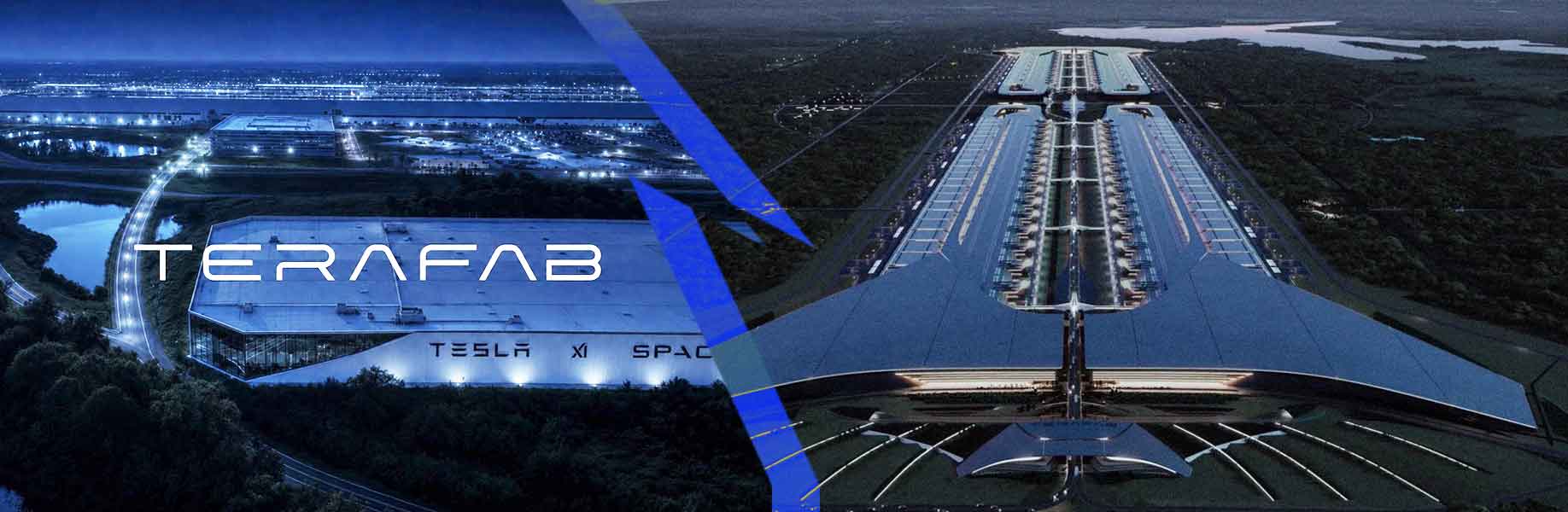

SpaceX and Tesla will build Terafab, a major new factory that will make advanced computer chips in Grimes County, Texas. The facility will bring together the production of logic chips that process information, memory chips that store data, and the packaging that prepares them for use, all in one place. This combined approach is intended to speed up improvements and increase the supply of chips.
The companies expect their combined need for computing power to exceed one terawatt. A terawatt represents a scale far larger than current global chip production can easily meet. Terafab is designed to help close that gap by manufacturing chips at a very large scale. Plans call for more than 100 million square feet of manufacturing space. The chips will support edge computing, which means processing data near the place it is used rather than in distant centers, and inference, the step in which trained artificial intelligence systems make decisions or predictions. These chips are intended for Tesla robots and self-driving vehicles as well as for high-power systems that SpaceX plans to use in space-based data centers.
Expanding manufacturing and supporting local communities
Advanced chips form an essential part of modern technology for artificial intelligence, satellites, communications, and manufacturing. Much of the world’s current production is concentrated outside the United States, and Terafab aims to increase domestic capacity. The first phase of the project is expected to involve about 16.8 billion dollars in investment and to create at least 3,000 jobs, many filled by residents of Grimes County and nearby areas. SpaceX operations already present in Texas have generated tens of thousands of jobs and substantial economic activity.
The site will use water from Gibbons Creek Reservoir rather than local groundwater, include on-site wastewater treatment, and follow practices for water reuse and the careful handling of industrial materials in line with environmental rules. The companies state that continued progress in space, artificial intelligence, and manufacturing depends on the ability to produce critical technologies within the United States.