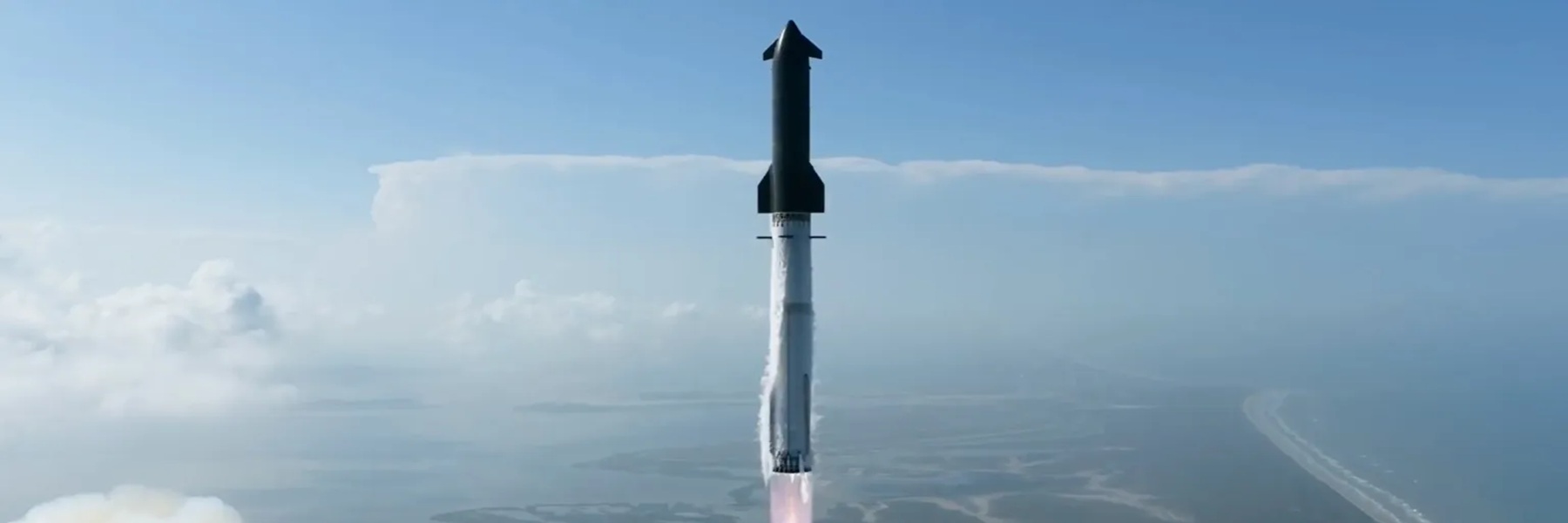

SpaceX launched the Starship V3 for the first time on May 22, 2026, in a flight that completed most of its test objectives despite several engine failures. The 123-metre-tall rocket, the largest and most powerful ever built, lifted off from Starbase, Texas, at 6:30 p.m. Eastern time, about 24 hours after a first attempt was scrubbed because a hydraulic pin in the launch tower failed to retract. [1]
All 33 Raptor 3 engines on the Super Heavy booster ignited at liftoff, but one engine shut down about 100 seconds into the flight. A second engine failure occurred on the Starship upper stage about 30 seconds after stage separation, leaving the ship with only five of its six engines for the remainder of the climb. The booster failed a planned “boostback” burn and made an uncontrolled hard splashdown in the Gulf of Mexico at high speed.
The upper stage deployed 20 Starlink mass simulators and two instrumented test spacecraft that carried cameras to inspect the ship’s heat shield while in space. After re‑entering the atmosphere, the vehicle performed a landing flip and a two‑engine landing burn before splashing down upright in the Indian Ocean roughly 66.5 minutes after launch. The ship then tipped over and exploded as planned, with SpaceX noting it never intended to recover the vehicle on this flight. Company officials called the mission “an incredible day for Starship” and said the redesigned V3 version had met nearly all of its test objectives.