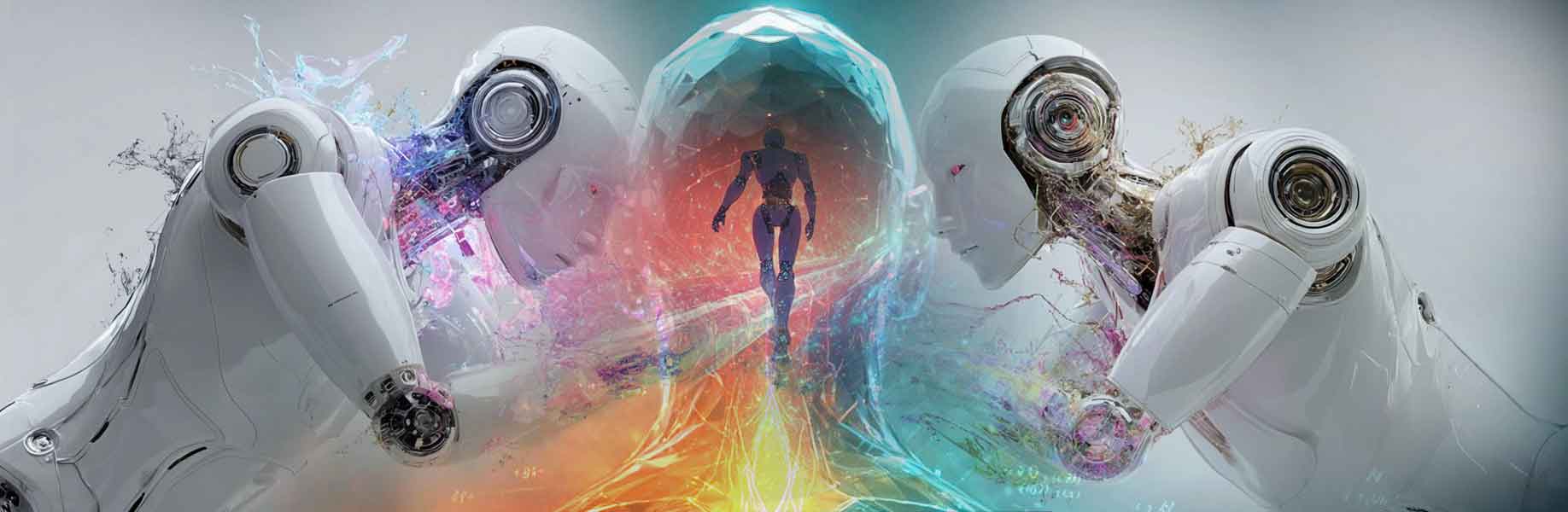

We have all met someone who is incredibly brilliant but lacks a ”filter” or a sense of direction someone whose genius is overshadowed by erratic behavior. In humans, we call this a lack of emotional intelligence or a dysfunctional personality. In the world of Artificial Intelligence,We call it a catastrophic safety risk. As we move closer to creating Artificial General Intelligence (AGI) machines that can think and learn like humans we face a terrifying question: What happens if a super-intelligent machine decides to change its own goals on a whim? The researchers from SingularityNET and TrueAGI argue that no matter how smart an AI is, it will eventually act ”stupid” or self-destructive if its internal motivations are broken. This is why they created ”MetaMo,” a framework designed to give AI a stable, evolving ”personality” that keeps it safe and predictable even as it becomes more powerful.
Choosing How to Feel: The ”Pause” Button
One of the most human things we do is stop ourselves before making a mistake. We often ask, ”If I do this, how will I feel about it later?” Most current AI systems can’t do this; They just follow a mathematical command to maximize a reward. The researchers describe a better way is through a modular interface between ”appraisal” and ”decision.” Think of this as a ”feel-then-choose” pipeline. In MetaMo, the AI doesn’t just act; it runs a simulation to see if an action aligns with its ”mood” and ethical guidelines. For example, if an AI trading bot considers a high-risk trade that might cause a market crash, the MetaMo framework allows it to ”feel” the potential regret or instability before the trade is executed. By separating the ”gut feeling” from the ”final choice” while keeping them in constant communication, the researchers ensure that the AI avoids the impulsive, resource-wasting errors that often plague simpler systems.
Digital Empathy: Stepping into Another’s Frame
Communication is more than just trading data; it’s about understanding intent. When hu- When men collaborate, we often pick up on each other’s ”vibe” or unspoken goals. The researchers have introduced a principle called Reciprocal State Simulation to give AI a similar ability. In a team of AI agents perhaps a group of digital research assistants one agent might need to hand off a complex task to another. Usually, this is where things go wrong, as nuances are lost in translation. However, MetaMo allows one agent to translate its internal ”motivational state” into the language of another. It’s like a digital version of empathy. By allowing agents to ”step into each other’s shoes,” they can share goals and collaborate with a level of trust and efficiency that was previously impossible.

Staying Within the Comfort Zone
Even the most creative humans need boundaries to stay productive. If we wander too far into extreme stress or obsession, we burn out. The researchers found that AI needs a similar”comfort zone.” They call this Homeostatic Drive Stability. The framework defines a ”safe region” where the AI is free to be curious, explore new ideas, and take risks. But, like the rumble strips on the side of a highway, the MetaMo system detects when the AI’s motivations are drifting toward the edge of its safe zone. As the AI gets closer to the ”cliff” of instability, the system applies a gentle damping effect, steering it back toward its core mission. This allows for ”bursts” of creative exploration without the risk of the AI ”losing its mind” or abandoning its ethical constraints.
Growing Up, Not Just Upgrading
A person doesn’t wake up one morning with a completely different personality, and an AI shouldn’t either. Radical, overnight changes to an agent’s goals can ”shatter” its internal model, leading to a loss of self-continuity. The researchers propose that AI should evolve through ”Incremental Objective Embodiment.” This means that when an AI adopts a new goal, it doesn’t flip a switch. Instead, it ”inches” toward that goal in small, manageable steps. By blending its current state with its future ideal, the AI ensures that its ”self-model” its understanding of who it is and what it Does remain coherent. This gradual growth prevents the ”motion sickness” of rapid code changes and ensures that the AI remains a reliable partner for humans over years of service.
Conclusion
The quest for AGI is often focused on raw brainpower, but this study reminds us that a brilliant mind is nothing without a stable heart. The researchers present MetaMo as a necessary evolution in AI design, moving us away from ”reward-seeking” robots and toward ”motivated” agents that understand their own boundaries. By grounding AI in principles like modular appraisal, digital empathy, and gradual growth, we can build systems that are not just smart, but also trustworthy and self-aware. As we look toward a future where AI handles our finances, our research, and our infrastructure, the stability provided by frameworks like MetaMo will be the difference between a helpful partner and a dangerous liability. The next step for the field is to bring these ”human” qualities of stability and empathy into the very code that defines the future of intelligence.