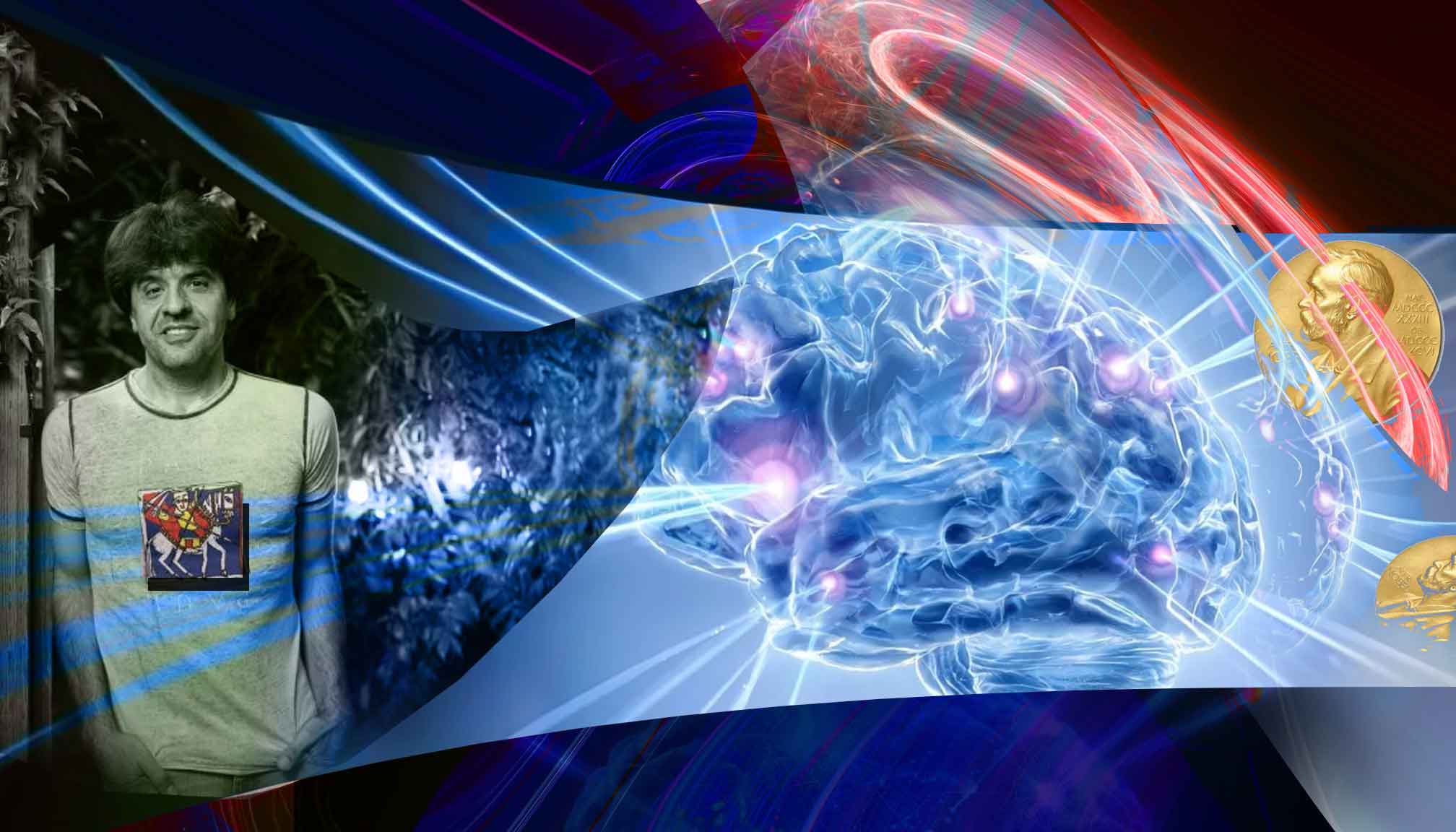


Karl Deisseroth, a professor of bioengineering and of psychiatry and behavioral sciences at Stanford University, has been awarded the 2026 Nobel Prize in physiology or medicine for his role in developing optogenetics. He shares the award with Peter Hegemann of Humboldt University of Berlin and Georg Nagel of the University of Würzburg in Germany.
How the technology works
Optogenetics is a method that allows scientists to turn individual nerve cells on or off using light. The technique works by inserting light-sensitive proteins called opsins - originally found in microbes - into specific neurons. These opsins act like molecular switches: when exposed to particular colors of light, they open to let charged particles flow across the cell membrane, either activating or silencing the neuron.
Deisseroth's lab began this work in 2004. The team figured out how to deliver opsin genes into the brains of living rodents using viruses, how to restrict the proteins to specific cell types, and how to get the proteins to the cell surface where they could function. They also developed ultra-thin optical fibers that could deliver light deep into the brain. The first demonstration was published in 2005.
Before optogenetics, researchers had only imprecise tools: electrical stimulation, which activates nearby cells indiscriminately and cannot easily turn neurons off, and drugs, which spread widely and act slowly. Optogenetics offers precise control over selected cell populations, with timing down to milliseconds.
This advance matters because it lets researchers establish cause and effect in brain circuits. Deisseroth and colleagues have used the method to identify circuits involved in Parkinson's disease, depression, social behavior, and anxiety. The work has opened paths toward understanding how healthy brains function and how to correct dysfunction.
The technique is now used in thousands of laboratories worldwide. Deisseroth has also trained numerous scientists and distributed the engineered genes globally.