
Introduction
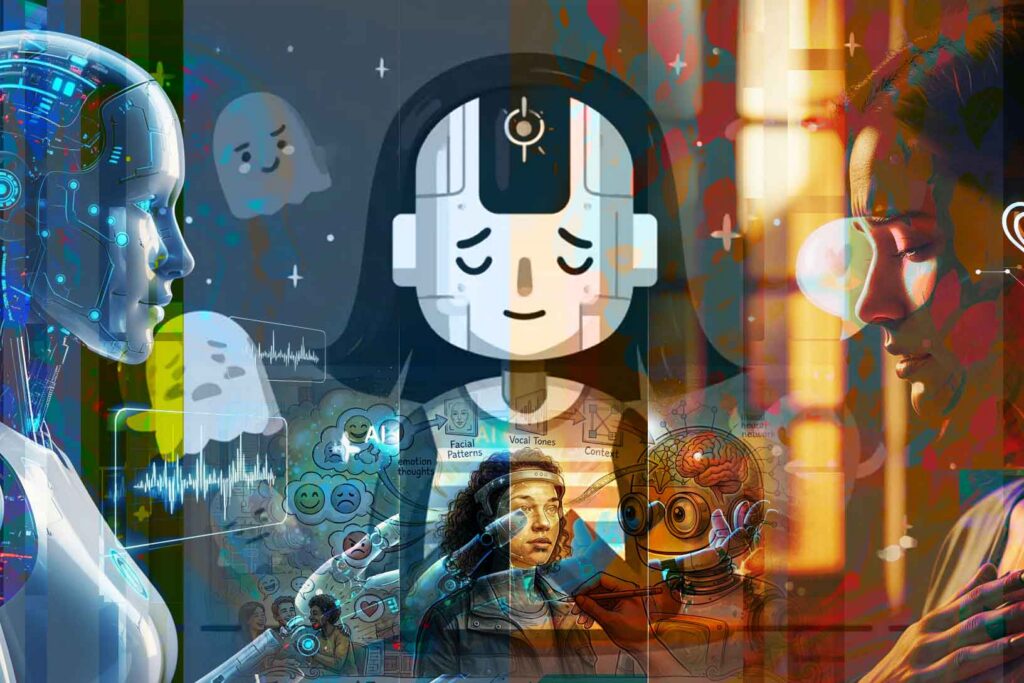
Think about how well a close friend reads your emotions — not just the broad strokes of happiness or sadness, but the subtle, personal ways you raise an eyebrow when frustrated or let a small smile slip when something genuinely delights you. Now consider how far current AI systems are from that level of understanding. Most emotion recognition models treat every face as interchangeable, trained on massive datasets that capture average expressions but miss the deeply personal ways individuals show how they feel. Researchers Pablo Barros, German Parisi, and Stefan Wermter set out to close that gap, developing a neural framework that learns both the general language of human emotion and the unique emotional dialect of each individual person.
The Problem with One-Size-Fits-All Emotion AI
Automatic facial expression recognition has improved dramatically over the past decade, riding the wave of advances in deep learning. Yet despite impressive benchmark scores, these systems hit a persistent wall in real-world deployment. The core issue is that they are trained to recognize emotion expressions in a generalized, averaged sense — and human emotion is anything but average. A person's cultural background, personality, intrinsic mood, and even genetics all shape the way they physically express how they feel. Two people experiencing the same joy will show it differently, and the same person might express happiness with a broad smile in one context and a quiet warmth around the eyes in another.
Current deep learning models also struggle to adapt online — meaning they cannot continuously update themselves as they encounter new expressions in real time without being fully retrained from scratch. For practical applications like companion robots, mental health monitoring tools, or personalized assistants, this is a serious limitation. The researchers argue that the problem stems from treating emotion recognition as a generic computer vision task rather than as something requiring human-like adaptability.
A Two-Part Brain for Emotion Understanding
The researchers' solution, called the Personalized Affective Memory model (P-AffMem), mirrors an important aspect of human social cognition. When meeting someone for the first time, people draw on a lifetime of experience with emotional expressions to make initial judgments. Over time and repeated interaction, they refine their understanding of how that specific person expresses emotions. P-AffMem is designed around exactly this two-stage process: a general prior-knowledge module and a personalized affective memory that adapts to each individual.
The first component is a Prior-Knowledge (PK) adversarial autoencoder — a generative neural network trained on over a million facial images from the AffectNet dataset to learn a rich, general representation of emotional expressions. Rather than simply classifying faces into discrete emotion categories, this model encodes emotion along two continuous psychological dimensions: arousal (how activated or calm a person appears) and valence (how positive or negative the emotional state is). Crucially, the PK module does more than recognize — it can also generate edited versions of a face expressing any desired combination of arousal and valence. This image-editing capability becomes the bridge to personalization.
Growing a Memory for Each Person
The second component is where the genuine novelty lies. When the system first encounters a new person, it uses the PK module to generate 200 synthetic edited versions of that person's face, covering a wide spectrum of arousal and valence combinations. These generated images immediately seed a dedicated Growing-When-Required (GWR) network — a type of self-organizing neural network that creates prototype neurons on demand, adding new ones only when the patterns it encounters cannot be adequately explained by what it already knows.
This GWR network becomes that person's affective memory. As the system continues to observe the person's real facial expressions over time, it updates the memory organically — reshaping its prototype neurons to more precisely capture the individual's particular emotional signatures. Importantly, the influence of the initially generated images gradually diminishes as real observations accumulate, so the memory becomes increasingly grounded in the person's actual expressions rather than the model's earlier guesses. Each person gets their own dedicated GWR network, meaning no two affective memories are the same.
What the Experiments Revealed
The researchers evaluated P-AffMem in two distinct experimental settings. The first tested the PK module's general emotion recognition capability on the AffectNet dataset. Through a series of ablation experiments — systematically removing and adding back each discriminator component — they were able to measure the contribution of each architectural decision. The full model, with all three discriminators active, achieved the best performance, outperforming even the original AffectNet authors' own benchmark results on arousal and valence recognition. The experiments showed that the emotion-recognition discriminator had the single largest impact, confirming that explicitly enforcing emotion-relevant features in the encoding process is critical.
The second experiment evaluated the full P-AffMem framework on the OMG-Emotion dataset — a collection of YouTube videos where a single person performs a monologue for over a minute, providing a naturalistic setting for testing personalization. Here, the affective memory made a dramatic difference. Adding the personalized GWR networks on top of the PK module improved performance substantially on both arousal and valence. The complete P-AffMem system outperformed the winner of a dedicated competition run on this dataset — which used both audio and visual signals — while P-AffMem relied on facial expressions alone. It also outperformed the best purely visual approach by a considerable margin.The researchers also visualized the neural activation patterns of their encoder across different PK configurations, providing an intuitive window into what the model actually learns. When all discriminators are combined, the encoder consistently focuses its attention on the eyes-to-mouth region of the face — precisely the area humans rely on most for reading emotions. This alignment between the model's learned attention and human perceptual strategy is a reassuring sign that the system is solving the problem in the right way.
Why This Matters Beyond Benchmarks
The implications of this work extend well beyond competitive scores on academic datasets. Any system that interacts with humans over time — a therapeutic assistant, a social robot, a personalized learning tool, or an accessibility aid for people who have difficulty expressing or reading emotions — stands to benefit enormously from the ability to adapt its emotional understanding to the individual user. Generic emotion models will always be approximations; personalized ones can be genuinely accurate.
The use of continuous arousal-valence dimensions rather than discrete emotion categories is also worth noting. Human emotional experience does not come neatly packaged as "happy," "sad," or "angry" — it exists along gradients, and the same facial configuration can carry very different emotional weight depending on its intensity and the broader context. By modeling emotion along continuous dimensions, P-AffMem captures something closer to the true texture of affective experience.
Open Challenges and the Road Ahead
The researchers are candid about where the model currently falls short. P-AffMem processes individual frames independently, which means it cannot yet account for the temporal dynamics of emotion — the way an expression unfolds and evolves across time, or the way a fleeting microexpression signals something that a static snapshot cannot. Integrating recurrent architectures that model sequences of expressions over time is identified as a natural next step.
There is also the question of multimodal fusion. Emotion is expressed not just in the face but in tone of voice, body language, and language itself. A fully human-like affective understanding system would need to integrate all these channels — and do so in a way that handles the asynchrony between them, since a person's words, voice, and face do not always align in time. These are open and active areas of research that the current framework does not yet address, but the architecture's modular design suggests they are tractable extensions.
Conclusion
Human emotion is profoundly personal. The way each of us laughs, frowns, or shows worry is shaped by a lifetime of individual experience, culture, and personality — and no generic model trained on millions of anonymous faces can fully capture that individuality. This is the central challenge that P-AffMem takes on, and the results suggest it is a challenge worth taking seriously.
By combining a powerful generative prior-knowledge module with lightweight, continuously updating personalized memory networks, the researchers present a practical path toward emotion recognition systems that genuinely know who they are looking at. As AI becomes more deeply embedded in healthcare, education, and daily human interaction, the ability to understand not just what emotions look like in general, but how this specific person feels right now, will become increasingly important. This work takes a meaningful step in that direction.