
Introduction
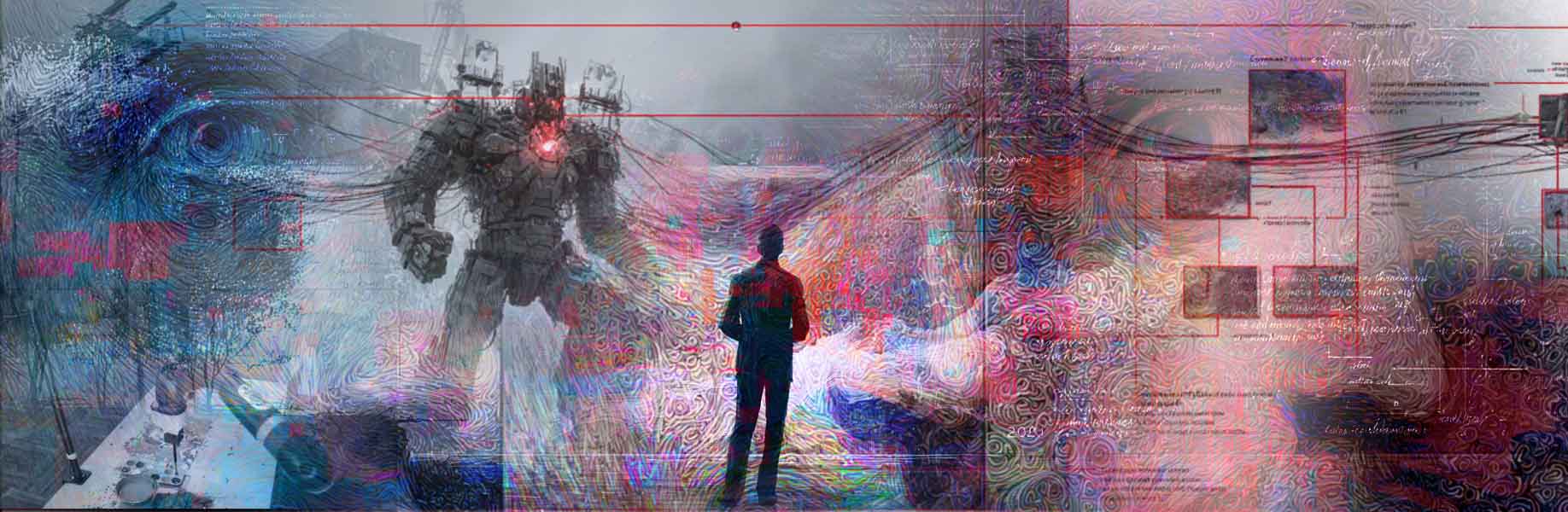
A machine is now learning to paint like a skilled artist in real time, in the physical world (outside digital cyberspace), starting with rough strokes and gradually adding details until a lifelike image emerges. This is not a “coming soon” technology or some near-future science fiction; it is happening now as the result of the latest transformative breakthrough in artificial intelligence. At the core of this innovation is the Visual Autoregressive (VAR) Transformer, a model that researchers recently proved can generate any image, as long as the transformation is continuous and smooth. This blend of theory and practice offers a powerful framework for next-generation image generation tools that combine creativity with precision.
Understanding VAR Transformers
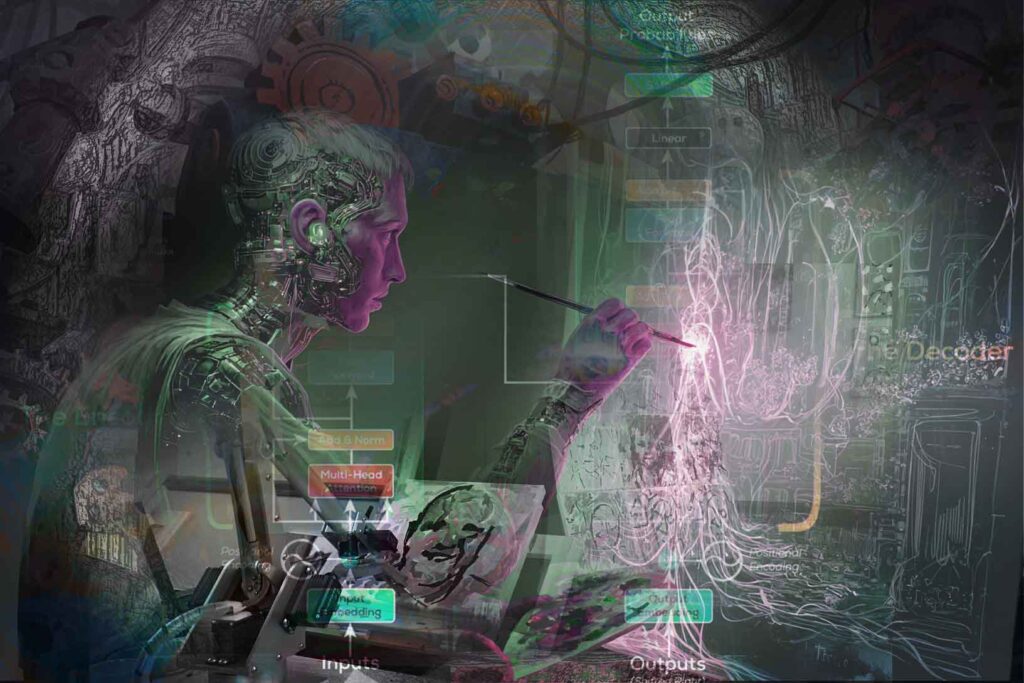
VAR Transformers generate images step by step, beginning with a tiny, low-resolution input (such as a blurry photo) and refining it through successive stages. At each step, the model enhances the image resolution using an up-sampling layer and improves content through self-attention mechanisms. This process mirrors how a human artist paints: first sketching outlines, then layering colors, and finally adding highlights and textures. The model’s layered approach allows it to capture both the fine details and the overall structure of images, producing results that are coherent and visually rich.
Why Universality Matters
Central to this research is the concept of "universal approximation," the ability of a model to closely mimic any function within a certain level of accuracy. Remarkably, the study shows that even a minimal VAR Transformer, with just one self-attention layer and one up-sampling layer, can approximate any continuous image-to-image function. This means the model is not limited to specific styles or subjects; theoretically, it can learn any image transformation, from medical image reconstruction to artistic style transfer.
Picture a VAR Transformer trained to generate detailed satellite images from simple map sketches. As long as the transition from sketch to image is smooth, the model can master the transformation with impressive accuracy.
The Role of Self-Attention and Up-Sampling
Two components power this ability. Self-attention enables the model to focus on different parts of an image based on context, understanding, for example, how the shape of a tree influences surrounding shadows. Up-sampling increases image resolution through methods like bicubic interpolation, adding detail at each stage. Together, they allow the model to construct images progressively, maintaining coherence at every level.
What sets VAR Transformers apart is the proof that even these simple building blocks can achieve universality. It is like discovering that a basic set of Lego bricks, when combined skillfully, can build an entire city.
FlowAR: A Parallel Path
The study also examines FlowAR models, which blend flow-based models with autoregressive attention mechanisms. These models support reversible transformations, capable of generating images and tracing them back to their origins. FlowAR models share VAR’s universal approximation properties, broadening the scope of where these insights apply.
Theoretical Precision with Practical Impact
What makes this research stand out is its rigorous mathematical foundation. The authors do not just claim power; they prove it, giving engineers and scientists confidence in the models’ capabilities for real-world applications such as medical imaging, satellite data analysis, and creative design.
Furthermore, these findings suggest that depth is not the only way to improve performance. Even a single-layer transformer can approximate complex functions, which highlights the importance of smart architectural design rather than brute-force complexity.
Conclusion
In a world awash with visual data, the ability to generate high-quality images from minimal inputs is both a challenge and an opportunity. This study firmly establishes VAR Transformers and FlowAR models as foundational tools in AI image synthesis. By proving their universality, the researchers validate their immense potential, opening new horizons for innovation. The elegant simplicity and expressive power of these models suggest a future where AI-generated imagery is not only efficient but also richly detailed and creatively versatile. As AI evolves, VAR Transformers remind us that sometimes less truly is more.
Reference
Chen, Yifang, et al. “Universal Approximation of Visual Autoregressive Transformers.” arXiv.org, February 10, 2025. https://arxiv.org/abs/2502.06167