
Apple filed a sweeping trade secret theft lawsuit against OpenAI in federal court in Northern California, alleging that the AI startup and its hardware chief engaged in a coordinated campaign to poach Apple employees and systematically extract confidential material. The suit, reported by The Guardian, claims that OpenAI used the stolen intellectual property to accelerate the development of its own consumer hardware device, a direct competitive threat to Apple's core business. The irony is striking. Apple and OpenAI entered into a high-profile partnership in 2024 when ChatGPT was integrated into the iPhone's operating system, a collaboration that was touted as a landmark alliance between Silicon Valley's most valuable company and the most prominent AI lab. That partnership has now collapsed into open hostility.
The lawsuit against OpenAI includes two former Apple employees in the U.S. District Court for the Northern District of California. Even though the lawsuit does not specify a monetary damages amount, leaving the financial stakes unclear, Apple is seeking multiple remedies: 1) a court order (injunction) to immediately bar OpenAI from possessing, using, or sharing any of Apple's trade secrets, 2) an order requiring OpenAI to destroy all related proprietary materials, and 3) the return of all misappropriated Apple property; and monetary damages, including compensation for OpenAI's unjust enrichment.
OpenAI has firmly denied the allegations. A company spokesperson told multiple outlets: "We have no interest in other companies' trade secrets", adding that OpenAI remains "focused on building innovative technology that empowers people everywhere". OpenAI also stated it intends to defend itself against the claims.
The global AI industry has entered a turbulent new phase. Geopolitical rivalry, corporate espionage allegations, and blockbuster litigation are reshaping alliances at a pace that would have seemed implausible even a year ago. Two developments in the span of a single week illustrate just how fiercely the competition is being waged, and how the collateral damage is spreading to employees, investors, and the broader technology ecosystem.
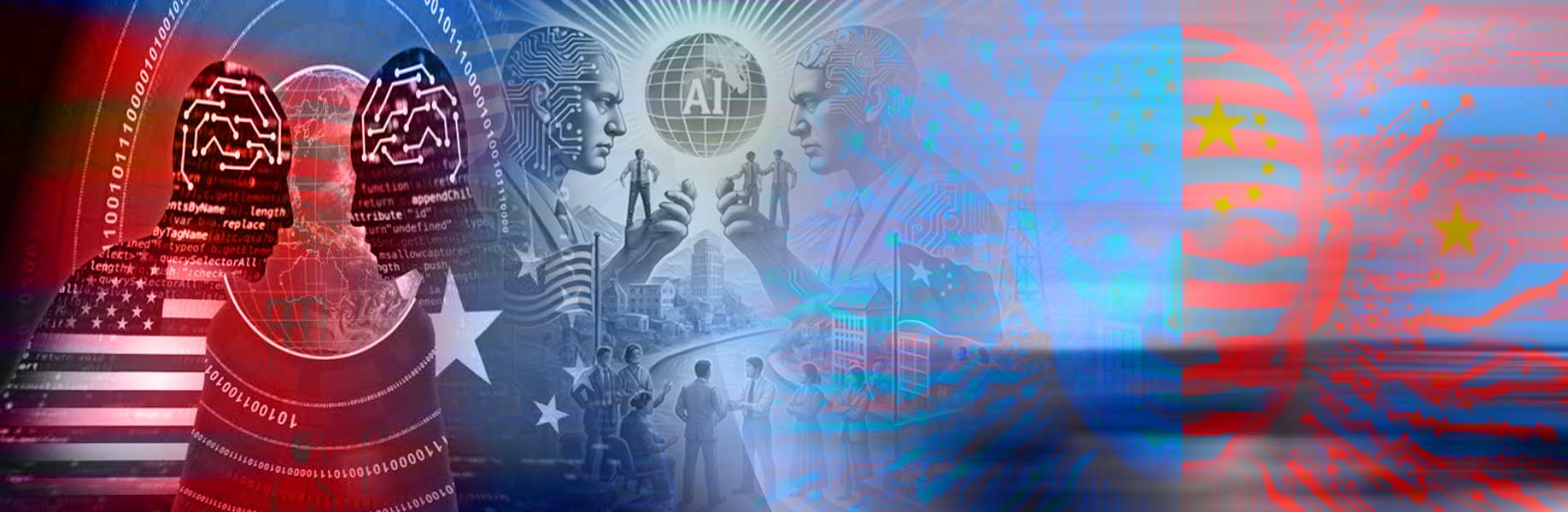
A couple of days ago, Mindplex reported that the Chinese technology conglomerate Alibaba had banned all employees from using Anthropic's Claude Code programming tool, effective immediately. The ban, later confirmed by Reuters to take effect from July 10, was described by an internal source as a response to alleged backdoor risks embedded in the software. However, the move is widely understood as the latest salvo in a deepening corporate feud. Anthropic had previously accused Alibaba of illicitly extracting its proprietary Claude AI model, a charge the Chinese firm has denied. The ban effectively severed one of the last remaining bridges between Anthropic's developer ecosystem and engineers at China's second-largest tech company. Anthropic had already imposed geographic restrictions blocking Chinese companies from accessing its services, meaning the relationship was already deteriorating. Alibaba's decision to make the ban formal and company-wide signals that the two organizations now view each other through an adversarial lens. The Mindplex coverage on July 9 captured the broader significance of this confrontation, framing it not as a simple tool restriction but as a symptom of the fracturing AI ecosystem along national and corporate lines.
Taken together, these events reveal an industry in which the line between cooperation and competition has become razor-thin. Companies are simultaneously partnering with and litigating against the same organizations. National boundaries are hardening around AI ecosystems, with Chinese and American firms retreating into separate spheres of influence. The talent wars, the battle for the engineers and researchers who actually build these systems, are intensifying to the point where legal action has become a standard competitive tool. The AI race is no longer just about who builds the smartest model. It is about who controls the infrastructure, the talent, and the legal ground on which the industry's future will be contested.