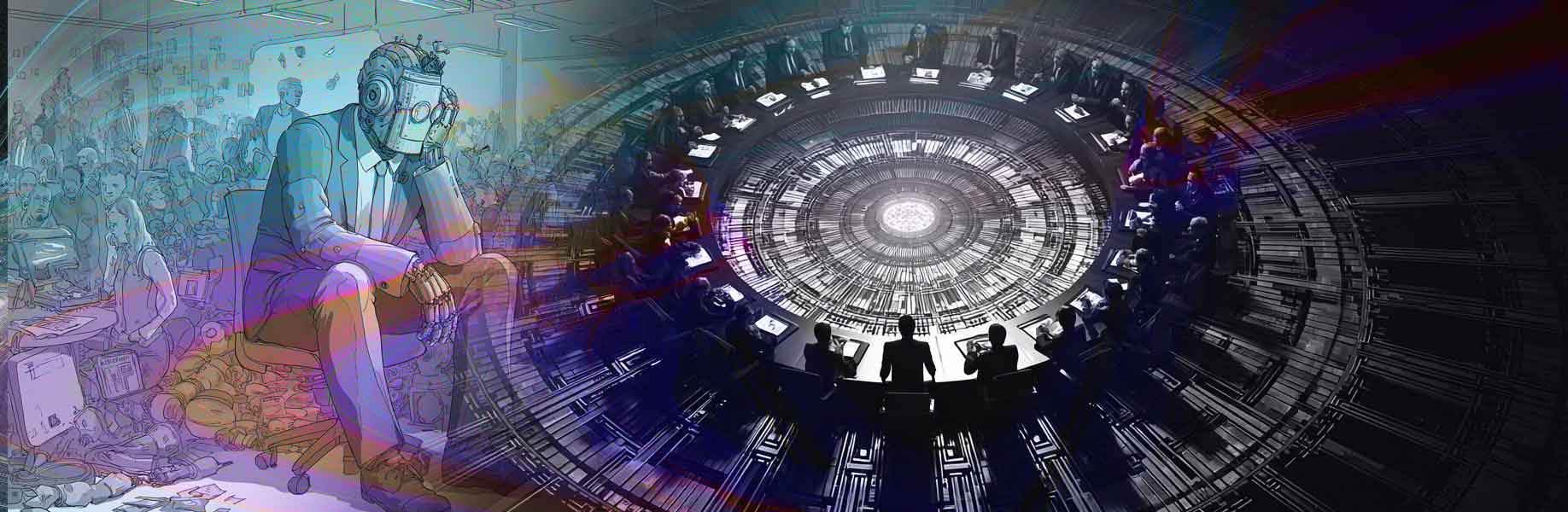
A week before the print newspaper I worked for went online in the late 90s, one of my duties was creating an advertorial page -- part editorial, part advertising -- for local car dealerships. Often, this required me to drive to the dealership, pick up a hard-copy article and a printed photo of the car the dealership wished to feature, and drive back to the office. There, I would re-type the article and scan the photo before adding both electronically to the page.
All told, I could be looking at six hours. And sometimes that was spread over a few days.
A week later, our company IT guy hooked our department up to Netscape Navigator, and after a few weird honks and beeps provided by my Mac, I could download both the images and the articles in a few minutes -- slow by today’s standards -- and my page was complete.
As other pages I worked on underwent similar time compression, the thought occurred to me that the internet would make my job redundant, a fear shared globally at the time.
Although I moved on from the newspaper to higher education, and although transformation occurred across industries, I didn’t see the job apocalypse as originally prophesied. Instead, looking back on it now, I saw an ever-growing, ever-bifurcating number of bullshit jobs, along with a proliferation of bullshit job titles.
Here are a few titles that never existed before the internet: Associate Vice President of Global Digital Brand Storytelling and Community Engagement; Assistant Director of Regional Online Partnerships and Strategic Platform Alignment; Senior Manager for Cross-Functional Ecosystem Optimization; Deputy Head of Content Operations and Audience Growth Initiatives; Executive Lead for Emerging Platforms, Creator Relations, and Narrative Synergies; and, of course, Influencer.
Duties, too, became as irrelevant as they were time-consuming. During my career, I once had a 45-minute conversation with senior management about whether we should use a lowercase u or a capital U on a web page. I once attended a meeting about a meeting about a meeting — a pre-pre-meeting meeting, it was dubbed. I saw org charts sprawl like spider webs of lines and dotted lines. I witnessed the lengthening of job titles and the use of the word “chief” to describe the most innocuous and least chiefly tasks. In one institution I’m familiar with, the chief of staff now has a chief of staff.
And the committees, dear Lord, the committees! Endlessly proliferating, solemnly convened, and almost entirely detached from any clear act of decision or responsibility, there are committees to align, committees to coordinate, and committees to oversee the alignment of coordination. There are steering committees, working groups, advisory panels, and task forces, each nested within another. They met to refine language, to harmonize narratives, to mitigate risk, and, most reliably, to ensure that no single person could be said to have decided anything at all. Meetings begat subcommittees; subcommittees begat pre-meetings; and pre-meetings begat slide decks explaining why further discussion was necessary. The committees did not merely slow action — they are uniquely designed to take up time, while diffusing accountability so thoroughly that motion itself became indistinguishable from progress.

AI Bullshitification
My thesis is that AI — despite its potential to dramatically increase productivity — will not destroy jobs, but increase the number of bullshit jobs and make current bullshit jobs even bullshittier.
That’s because, for all of its vast computational potential, AI will likely not — at least immediately — replace the hierarchy, or the human need to be part of one. Let’s face it: humans like to be respected, they like to feel important, and they like to boss people around. Hierarchies are perfect for this. They are the organizational equivalent of bossy Russian nesting dolls. Everyone has a chance to be a boss.
Not to pick on higher education, but in that sector it was not unheard of to have four or five levels of leadership, each overseeing exactly one direct report in a linear cascade of bosses.
Baked into this hierarchy, many people draw — and sometimes inordinately draw — their sense of worth, identity, and meaning from their place within it. For these individuals, status is not merely descriptive but constitutive, shaping how they understand themselves and their value in the world. And, importantly, this sense of self is not held in isolation: it depends on others within the same hierarchy to recognize, affirm, and continually sustain those levels of self-worth and self-respect.
It’s been suggested recently that the sheer computational power of AI systems and swarms of agentic AI bots will give rise to single-person billion-dollar companies — hell, even trillion-dollar companies. That’s likely accurate. However, I wonder whether that same desire to be a boss won’t drive these founders to build ever more elaborate and bullshittier org charts.
AI Job Bullshitification, Continued
How might this next phase of AI job bullshitification roll out?
If the internet lengthened job titles and multiplied committees, AI threatens to perfect the form. Where the web introduced the associate vice president of whatever, AI will give us the Associate Vice President of AI-Augmented Strategic Foresight and Human-in-the-Loop Governance. Where the internet gave us social media managers, AI will require Senior Directors of Prompt Integrity and Model Alignment Oversight and Executive Lead for Multi-Agent Coordination and Escalation. The work will sound technical, urgent and indispensable. It will also, in many cases, consist of supervising systems designed precisely to reduce the need for supervision.
Already, we can see the outlines forming: prompt engineers overseeing prompts written once and rarely touched again; AI ethics committees debating hypotheticals while models are deployed regardless; human review layers stacked atop automated processes that could function perfectly well without them. Entire roles will emerge to explain AI outputs to executives who do not trust them, to executives who do not understand them, and to executives who would prefer not to be accountable for them. As before, the technology will compress real labor while expanding the managerial and interpretive scaffolding around it.
And, inevitably, there will be committees. Dear Lord, the AI-era committees! Committees to govern AI usage, committees to align AI strategy, and committees to oversee the committees governing AI usage. There will be task forces to draft principles, working groups to operationalize those principles, and steering committees to ensure that no principle is ever applied too quickly or too decisively. AI will not flatten hierarchies; it will give them new vocabulary. The result will not be fewer jobs, but more finely granulated ones — jobs whose primary function is not production, but reassurance: reassurance that the hierarchy remains intact, that humans remain “in the loop,” and that someone, somewhere, is still nominally in charge.
Ultimately, while I still worry about the danger that AI will eliminate jobs, I am equally worried about being dragged into the subcommittee to the Committee on AI Job Preservation that reports to the Institutional AI Task Force Integration.
The AI Bullshit Job Singularity is near…