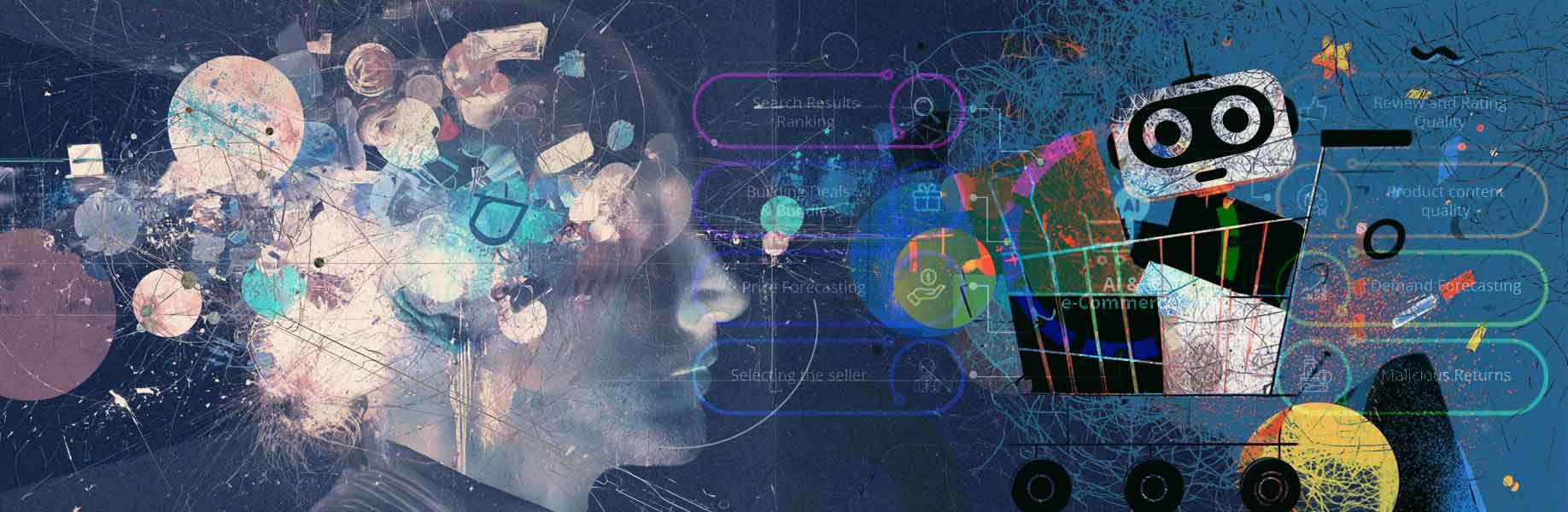
Have you ever wondered how online stores seem to read your mind, suggesting the perfect jacket or pair of headphones just seconds after you start browsing? Most of us assume these recommendations are powered by massive, complex artificial intelligence systems that track our every move over months and years. But what happens when you shop anonymously, leaving no personal profile behind? Traditionally, online shops struggle to guide guest users without historical data. To solve this, researchers are turning to a mathematical concept known as graph data modeling, where products and shopping sessions are mapped like points on a web. Surprisingly, recent experimental breakthroughs reveal that simpler, streamlined mathematical models can actually predict your next purchase faster and more accurately than heavy, slow-burning deep learning algorithms.
Decoding Anonymous Digital Behavior
When you browse an online store without logging in, the platform cannot access a long-term user profile. Instead, it has to rely entirely on your current "session data"—the rapid-fire sequence of items you view, click, or add to your cart at the moment.
To turn these anonymous digital footprints into meaningful suggestions, researchers generally structure the data as a network graph. In this setup, products and shopping sessions act as interconnected nodes. Lines called "edges" connect these nodes based on how products relate to one another.
While complex Graph Neural Networks (GNNs) have recently become the trendy academic choice for handling these networks, they come with massive practical drawbacks. They demand huge amounts of computer memory, require hours of expensive training time, and often overfit the data, meaning they struggle to suggest fresh, diverse products, choosing instead to repetitively show users the exact same item they are already looking at.
Two New Blueprints for Smarter Recommendations
To bypass the heavy computing costs of deep learning, a recent experimental study introduces two straightforward, highly efficient graph-based methods designed to run smoothly on standard computers.
Hierarchical Sequence Probability (HSP)
The first method focuses entirely on the strict sequential order of a user’s journey. The graph maps precisely out how products follow one another step-by-step. When a shopper clicks through the site, the system calculates the mathematical probability of item sequences in real time. It looks at triplets of items, then pairs, and finally single popular items to hierarchically stack a recommendation list. If you look at item A and then item B, it searches the entire graph to see what product historically follows that exact pattern.
Recurrent Item Co-occurrence (RIC)
The second method completely ignores the step-by-step sequence and focuses instead on "co-occurrence"—the simple reality of items existing together within the same shopping session. If users frequently view a specific smartphone and a particular protective case during the same visit, those items develop a strong connection regardless of which one was clicked first. The system uses a linear recurrent formula acting as a digital "memory" layer. This allows the algorithm to gracefully balance your immediate click with products you viewed earlier in your session, adjusting a "forgetting factor" to keep the recommendations fresh.
Putting the Models to the Test
The researchers evaluated these two approach variations against three state-of-the-art Graph Neural Network models across four diverse real-world e-commerce datasets, including data from a specialized leather apparel e-shop and a major electronics store.
The algorithms were measured on two main criteria: Recall (whether the item the user actually clicked next made it anywhere onto the top recommendation list) and Mean Reciprocal Rank (MRR) (how high up near the prized number-one spot the system placed that correct item).
| Dataset Structure | Best Performing Model Type | Key Performance Insight |
| Non-Repeating Items | RIC (Current-Item-Last) | Moving the currently viewed item to the back of the list secured the highest accuracy spot, proving users prefer seeing novel alternatives. |
| Repeating Items | Graph Neural Networks (GNNs) | GNNs scored highly primarily because they predicted the user would click the same item repeatedly, revealing a vulnerability to data overfitting. |
The Ultimate Winner: Speed and Simplicity
The most startling revelation of this experimental study lies in the resource footprints of the competing systems. Graph Neural Networks required highly specialized, expensive GPU hardware accelerators just to complete their training cycles. In stark contrast, the new mathematical models ran entirely on basic, standard processor units (CPUs).
As shown by the experimental data, the training and computation times differed drastically:
- The Deep Learning Grind: On the massive electronics dataset, one top GNN model required an exhausting 920 minutes (over 15 hours) to process the data.
- The Streamlined Sprint: The newly proposed methods processed that exact same electronic dataset in just 5 minutes.
This represents an unbelievable speed increase of up to 180 times, achieving equal or superior ranking accuracy without needing any specialized hardware machinery. Furthermore, the study revealed that looking at general product co-occurrence is far more powerful than obsessing over strict sequential click orders when predicting what a customer wants next.
Moving Beyond the Hype
This study presents a powerful reminder that more complex technology is not inherently better technology. While deep learning continues to dominate global tech conversations, elegant graph data modeling combined with basic probability can solve real-world industry problems in a fraction of the time. For digital businesses looking to deploy nimble, cost-effective, and privacy-friendly recommendation platforms for anonymous shoppers, turning away from heavy neural networks and embracing lightweight, co-occurrence memory systems might just be the ultimate shortcut to customer satisfaction.