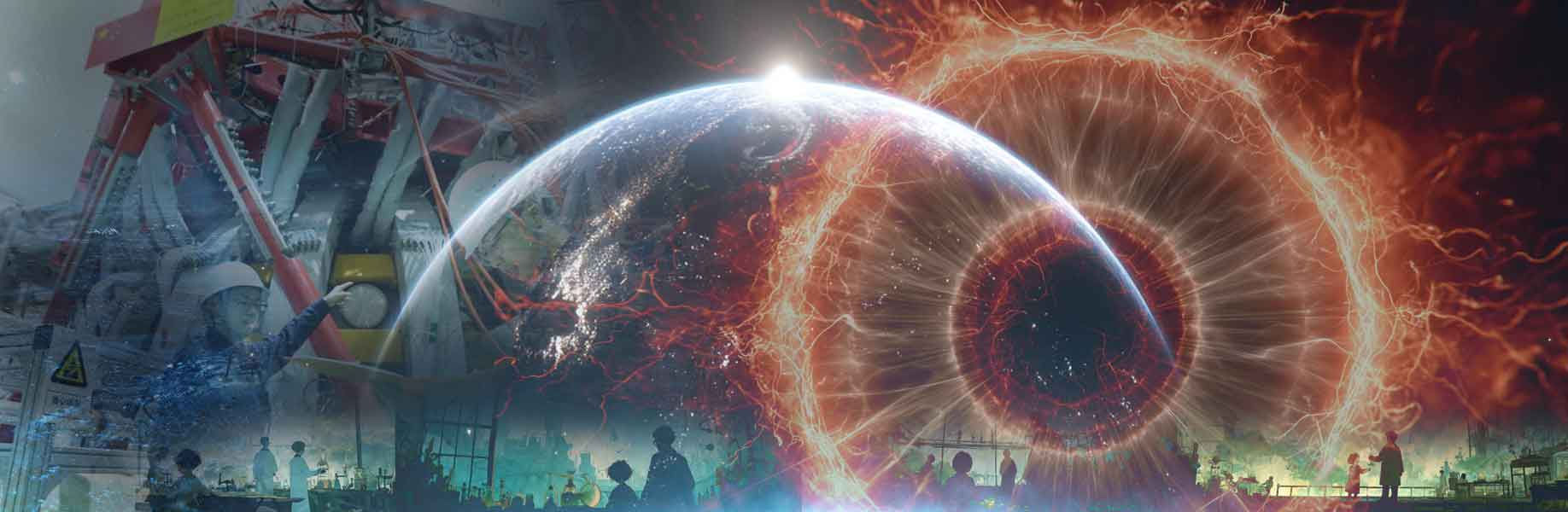

I’ve been reading “The Search for Viable Fusion Energy: In Pursuit of the Sun Gods“ by Mark Dodgson and David Gann (Springer, 2026).
This short book tells the story of humanity's century-long quest to harness nuclear fusion - the same process that powers the Sun - as a clean, virtually inexhaustible energy source. Written by two scholars with direct ties to government fusion programs, it frames the pursuit not just as a scientific challenge but as an innovation story involving scientists, governments, engineers, and private enterprise, all animated by the urgent need to develop better energy sources.
The book is highly readable. It doesn’t go into deep technical detail, but explains the science, engineering, and economics of nuclear fusion simply and clearly. It is an ideal complement to Isabelle Boemeke’s highly recommended "Rad Future: The Untold Story of Nuclear Electricity and How It Will Save the World" (see my review), which is mostly focused on nuclear fission because fusion is “still far from becoming everyday reality.”
But “we want our children and grandchildren to live in a world where there is access to cheap, reliable, and non-polluting energy,” say Dodgson and Gann. “In the book we argue the viability of fusion will depend on its economics: the cost of developing and building fusion machines and the fully accounted price of their energy provision compared to alternatives.”
The science and the machines
Fission works by splitting atomic nuclei. Fusion works by forcing light atomic nuclei - typically isotopes of hydrogen called deuterium and tritium - to combine at temperatures exceeding 150 million degrees Celsius, releasing enormous energy in the process. The most common machine design for achieving this is the tokamak, a doughnut-shaped vessel that uses powerful magnetic fields to confine the superheated plasma. Fusion's appeal over conventional nuclear fission is significant: it produces no carbon emissions, no chain reaction risk, no long-lived radioactive waste, and its fuels are effectively limitless.
A viable fusion reactor is defined as one that produces more energy than the overall energy that must be supplied as input, and does so at a competitive cost.
The book profiles three landmark tokamaks. The Joint European Torus (JET), operated at the UK Atomic Energy Authority's Culham site from 1983 to 2024, set world records and delivered foundational knowledge for all subsequent machines. ITER, currently being built in southern France, aims to produce ten times more power than it consumes and is one of the most complex engineering projects in history, facing significant delays and cost challenges. STEP (Spherical Tokamak for Energy Production), a UK prototype targeting grid-connected power by 2040, represents the transition from experimental science to commercial ambition. Other approaches - stellarators, and inertial confinement using powerful lasers (demonstrated at the US National Ignition Facility, which achieved ignition in 2022) - round out a diverse landscape of competing paths.
The people
A central theme is the human dimension: the curiosity, dedication, and occasionally flawed ambition that drive the field. The book traces fusion's intellectual lineage from Marie Curie and Ernest Rutherford through Einstein to the Soviet physicists Tamm and Sakharov, who conceived the tokamak design around 1950. A vivid episode from the Cold War illustrates the book's spirit: in 1969, a British team traveled to Moscow at the height of political tensions to verify Soviet claims about plasma temperatures in their T3 tokamak - an act of scientific bravery that, when confirmed, rapidly redirected global fusion research. The authors also recount the infamous "cold fusion" debacle of 1989, which the authors frame as a cautionary tale about hype in science (but perhaps, I suspect, the last words haven’t been said yet).
Innovation and ecosystems
The book's analytical backbone is the concept of the "fusion innovation ecosystem" - the network of research institutions, governments, and industries that must cohere for fusion to become viable. Public institutions like the UKAEA and Princeton Plasma Physics Laboratory have been the anchors, but the authors argue the next phase requires much deeper industrial engagement. Private fusion startups have proliferated, attracting billions in investment, but total private funding still amounts to a tiny fraction of what is being poured into artificial intelligence (AI) data centres. The authors examine how the UK, USA, and China are pursuing different national strategies - state-led, market-led, and hybrid - and argue that international collaboration, exemplified by ITER and the scientific culture more broadly, remains essential even as geopolitical tensions rise.
Prospects and conclusions
The authors are candid: fusion is unlikely to make a significant contribution to global energy supply before 2050. The scientific feasibility is no longer seriously doubted, but economic viability - whether plants can produce electricity cheaply enough to compete - remains unproven. Key unsolved challenges include producing tritium fuel at scale, managing extreme heat in containment vessels, and handling the degradation caused by high-energy neutrons. Yet the authors close with "cautious and contingent optimism," noting three factors that could accelerate progress: China's growing fusion capabilities and industrial supply chains; the application of AI to plasma modelling and machine design; and the quality of leadership capable of bridging scientific, governmental, and commercial worlds. The book is dedicated to the authors' grandchildren, in hope that fusion will help power their world without destroying the environment.
In essence, the book argues that the pursuit of fusion energy is one of humanity's most noble and necessary endeavours - a story still in the telling, whose conclusion remains open but whose importance could not be higher.
My commentary
After reading the book cover to cover, I remain persuaded - even more persuaded than I already was - that the pursuit of viable fusion energy is one of humanity’s most important tasks ahead - perhaps the single most important task, since other important and energy-hungry endeavors, including the deployment of AI infrastructure and the beginnings of human expansion into outer space, critically depend on the availability of energy. Clean nuclear fusion energy would very significantly help protect the environment and address climate change, and equally importantly, could be produced locally and help avoid geopolitical tensions and military escalations related to energy.
The pursuit of fusion energy “is not ‘nice to have’, but absolutely necessary,” say the authors. I agree. Therefore I recommend this book, which can help everyone understand the main issues and give solid, informed replies to common objections.
While Dodgson and Gann don’t minimize the challenge of the task, they suggest it is doable. There’s no new physics to discover, only better engineering to develop. “Despite the formidable difficulties that need to be overcome,” the authors are “cautiously optimistic.” So am I. I agree with the authors’ sober 2050 timescale for significant deployment of fusion energy. But I think we should make our best effort to get there by then, and I think we’ll see technology breakthroughs and working prototypes sooner.
A notable omission, I think, is that the book doesn’t elaborate on the possibility of aneutronic fusion (using fuels like deuterium-helium-3 or hydrogen-boron-11). This is an active area of interest, particularly among some private fusion startups, precisely because it would produce far fewer neutrons and therefore less material damage and radioactive waste.
Some scientists and space advocates have long argued that lunar Helium-3 mining could eventually supply fusion reactors on Earth, lending an additional strategic dimension to the renewed global interest in Moon exploration. The physics challenges of achieving ignition with Helium-3 fuels are considerably harder than with deuterium-tritium, and the logistics of lunar extraction remain speculative, but the vision is a compelling one, and establishes a direct link between the industrial development of the Moon and the pursuit of viable fusion energy.