
An album I wanted to make long before AI
I can trace the idea back to the first time I heard Jeff Wayne's The War of the Worlds. What stayed with me wasn't one particular song. It was the way the whole album worked: people talking, things happening, music carrying the story from one scene into the next. I remember thinking that I'd love to make something like that one day.
My album has nothing to do with The War of the Worlds in its plot, characters or music. It was the format that got under my skin. I wanted to make an album you could follow as a story, not just a collection of tracks. For years, though, I couldn't see a practical way of doing it on my own. It would mean writing, finding the right music and voices, and somehow making all of it feel like one piece.
Then AI tools began to make that idea seem less impossible. I could try things, hear them, change them and try again. I didn't have to work everything out before hearing a single note. That was a big part of what made me start.
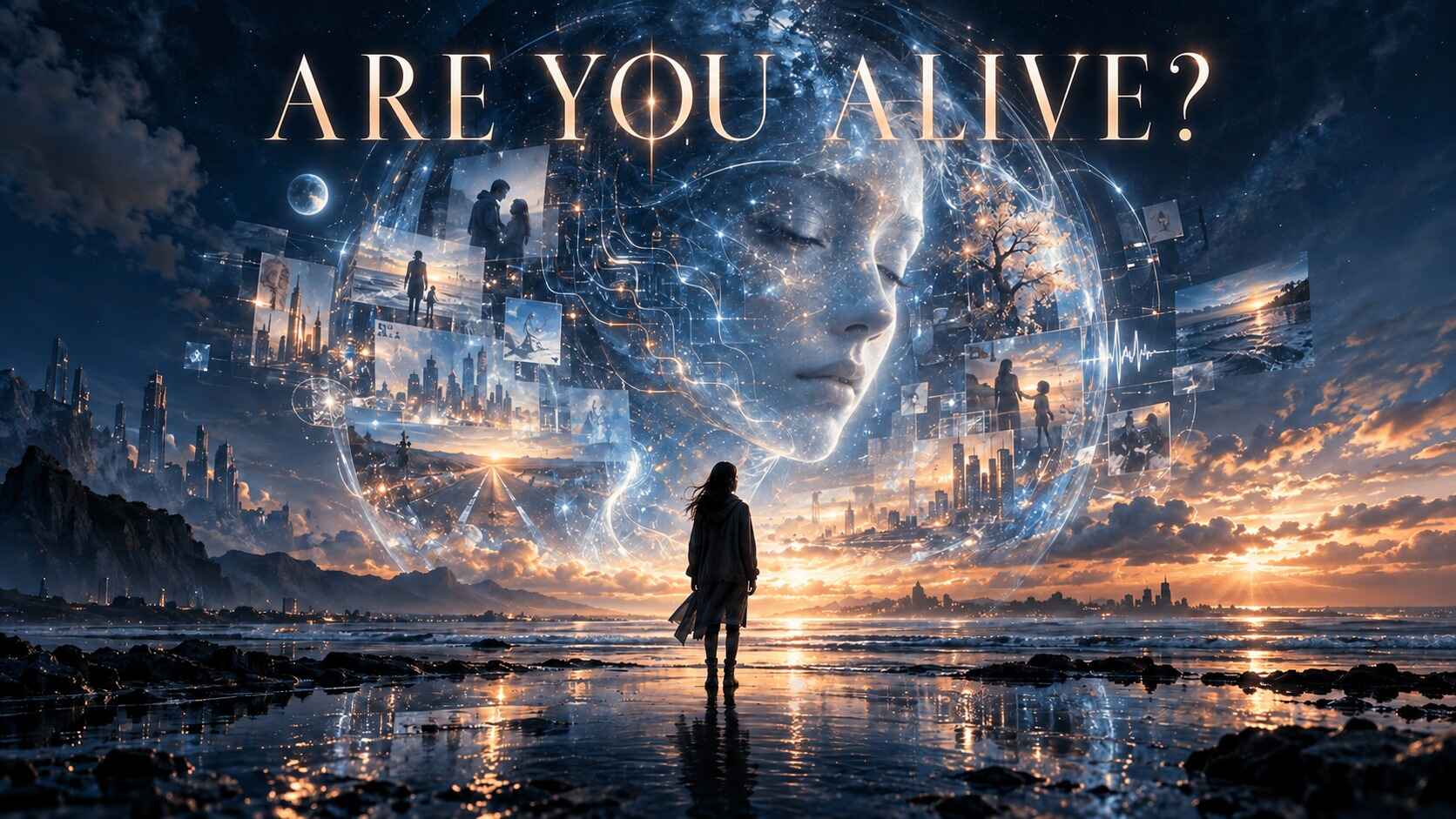
The story I eventually made begins with a boy named Noah asking EVA, an artificial intelligence, a very simple question: 'Are you alive?' That became the centre of ARE YOU ALIVE?, an 86-minute science-fiction story told through fourteen connected musical chapters, released in October 2026 under the name NAKWITA. Daniel, EVA, Noah, Maya and Lena return throughout the story, and other characters appear along the way. The order matters. You're supposed to hear what happened before.
It took me a while to notice the irony. I was using AI to help create a character who is herself an AI, and then having a child ask her whether she's alive. I hadn't started with that as some clever statement about technology. It grew out of the story, which is probably why I still like it.
The problem with giving EVA a voice
I developed the story and lyrics with ChatGPT. It was a lot of back and forth, much less tidy than that sentence makes it sound. We'd try a line, change the scene, move something to another chapter, or realise that a character wouldn't really say what we'd written. Sometimes a suggestion was interesting but belonged to a completely different story. I had to keep deciding what to use and what to drop.
The music was another round of trial and error. In Suno I tried different rhythms, instruments, tempos and vocal approaches before settling on what felt right for the world of the album. Some pieces came together surprisingly quickly. Others needed more work. A version could sound good on its own and still be wrong for the moment in the story where I needed it.
In the first version of each track, Suno generated the music, the singing and the spoken dialogue. I supplied the words and prompts, and Suno produced the performances. But the spoken parts didn't all make it into the finished album. I cut some lines altogether, and quite a few others had to be replaced because they came out in the wrong character's voice. I used ElevenLabs to generate those replacement lines, then worked in DaVinci Resolve to fit them back into the original Suno audio. That meant adjusting their timing and levels, working with the separate audio elements and making the transitions between chapters feel right. ChatGPT also helped with some effects and creative ideas. It took a lot more than pressing Generate and accepting what came back.
Here's the problem I kept running into: Suno could generate a spoken exchange, but sometimes give one of the lines to the wrong character. Everything else might be fine. The words were right, the music worked, and then EVA would suddenly speak in somebody else's voice. Once you've spent time getting to know these characters, it's not a small mistake. It pulls you straight out of the scene.
When Suno gave a line to the wrong character, I usually wanted to keep the music around it. So I would remove the unwanted spoken part, generate the replacement in ElevenLabs using the voice I wanted for that character, and lay the new line back over the Suno audio in DaVinci Resolve. Sometimes I removed a line without replacing it. Other times I went back and adjusted the timing again because a new voice, even the right one, didn't quite sit inside the music. I didn't anticipate spending so much time on something as basic as making sure the right person was talking.
I didn't expect that question, 'Who is speaking?', to take so much attention. But it did. And it made me think quite differently about what a voice does in a story.
Why a voice can feel personal
EVA could sound gentle, uncertain, worried or completely sure of herself. While working on a scene, I could hear when the performance felt right, even though I knew perfectly well where the voice had come from. That's an odd experience when the character you're working on is an artificial intelligence.
Of course, a voice sounding frightened doesn't tell us that the system producing it feels fear. I'm not claiming that it does. But as listeners we react to voices almost automatically. A pause, a change of tone, a slightly different emphasis: those tiny things can alter how we understand a sentence. You don't necessarily think about the technology at that moment. You hear the character.
Fiction has always been able to do that. We care about people who exist only in a book or on a screen. So there's no reason a character voiced with software can't affect someone emotionally. The feeling is real for the listener, even if the character is invented and the performance is synthetic.
What interested me was how easily those two things can get tangled up. EVA can sound as if she has feelings. She can speak about memories and relationships. I wrote her to do exactly that. Yet none of this means that the tools I used were living through her experiences. I was making fiction, not testing whether a machine was conscious.
I don't have an answer to the bigger question of AI consciousness, and making this album hasn't given me one. If anything, it left me more aware of how much we assume when we hear a convincing voice. I know how EVA's lines were made. Someone hearing her for the first time won't be thinking about all the editing that went into them, and I don't really want them to. I want them to follow the story.
Keeping a character's memory straight
Fourteen chapters also meant keeping track of things that sound obvious until you get one wrong. What did Noah know by this point? What had EVA already said to Daniel? Would Lena react this way after the conversation in an earlier chapter? I had to keep returning to those questions. A line can work beautifully by itself and still make no sense in the larger story.
That was my job, not the software's. The tools could generate dialogue, music and a convincing voice, but they weren't experiencing the events of the album in sequence. If I wanted a character to remember something from earlier in the story, I had to make sure that memory showed up in the right place and in the right way.
In a recent Mindplex essay, Conscious Only While Learning?, Giulio Prisco discusses continual learning, embodiment and possible machine consciousness. My project doesn't answer any of those questions. But there's a gap here that interests me: writing a character who changes over time is not the same as building a system that really learns from a life of its own. They might sound similar in a piece of fiction, but they aren't the same thing.
EVA's past exists because the story says it does. The audience may come to believe in that past while listening. I hope they do. But somebody still had to keep the details consistent, and in this case that somebody was me, moving between a script, generated audio and an editing timeline.
What was actually mine?
There are two reactions I keep seeing to AI-made music. One is that you type a prompt and an album more or less falls out of the computer. The other is that the words 'made with AI' are enough to dismiss it before hearing anything. I understand where some of that comes from. The amount of generated material online can be exhausting. I don't expect anyone to be impressed just because I made 86 minutes of it.
R.U. Sirius raised a related concern in his Mindplex piece, It's Not Slop. It's Kudzu. The question of what happens when we can produce far more material than people have time to listen to is worth taking seriously. More content isn't automatically more art. And the mere fact that making something has become technically possible doesn't mean the result is worth anyone else's time.
I also don't want to take credit for work I didn't do. I didn't play the instruments, sing the songs or perform the original spoken lines. Suno generated the music and the original sung and spoken performances from the words and prompts I supplied. I later replaced some of its spoken lines with voices generated in ElevenLabs, and removed others completely. ChatGPT helped me develop the story and lyrics. My part was imagining the project, steering it, choosing between versions, rejecting things that didn't belong, fixing problems and putting the finished album together.
Some of those decisions were creative and enjoyable. Others were repetitive. I could hear a version that almost worked, spot one wrong line, and know I had more editing to do. There wasn't always a clever solution. Sometimes the answer was simply to redo that part and listen again.
I don't think selecting and editing generated material is the same as composing music or performing it. Those are different skills, and I respect that difference. But I also know that if I'd simply kept the first usable version of everything, I wouldn't have ended up with the story I wanted to tell. The decisions between the outputs mattered.
What I'd like people to take from it
I started this because I wanted to make a story album, something I'd been thinking about since hearing The War of the Worlds all those years ago. In the end I made a story about an artificial intelligence, with help from artificial intelligence. I like that coincidence, even now. And I like that the most stubborn practical problem was making sure the AI character sounded like herself from one chapter to the next.
If you listen to ARE YOU ALIVE?, I'd encourage you to start with the first chapter and hear it in order. The question Noah asks EVA at the beginning follows them through the album. The full fourteen-part story is here:
https://www.youtube.com/playlist?list=PLahmvyXlx_Sc
I can't tell you whether a machine will ever be conscious. I can tell you what happened when I tried to give a fictional one a voice. I made mistakes, found ways around some of them, and eventually finished an album I had wanted to make for years. That is what these tools made possible for me. What listeners make of the story is up to them.
Reference
Giulio Prisco, Conscious Only While Learning? Continual Learning, Embodiment, and Our Mind Children (November 6, 2026): https://magazine.mindplex.ai/post/conscious-only-while-learning-continual-learning-embodiment-and-our-mind-children
R.U. Sirius, It's Not Slop. It's Kudzu (August 29, 2026): https://magazine.mindplex.ai/post/its-not-slop-its-kudzu
ARE YOU ALIVE? | NAKWITA (Full Album): https://www.youtube.com/playlist?list=PLahmvyXlx_Sc