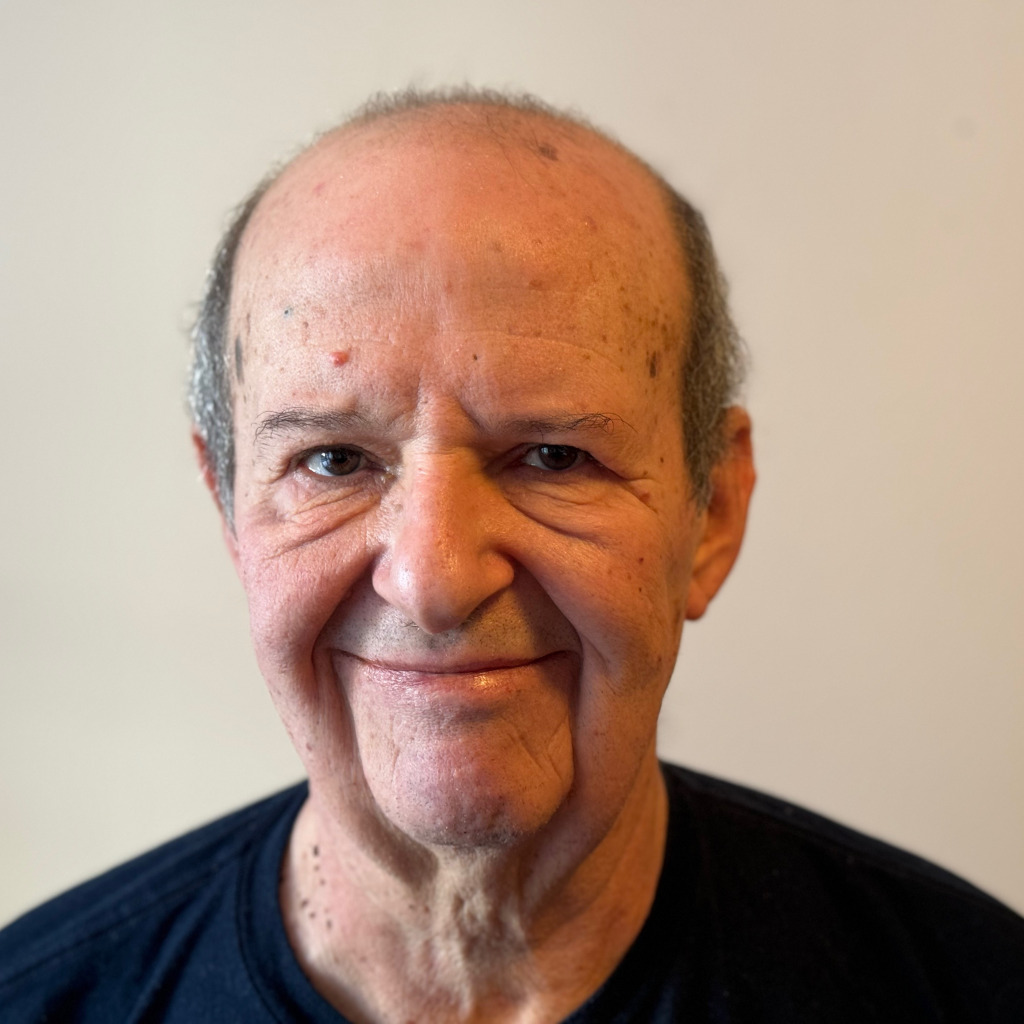
Last week the Berggruen Institute named Thomas Nagel the 2026 laureate of the Berggruen Prize for Philosophy and Culture. The Institute announced the award on November 17, 2026. A day later, Steven Levy of WIRED interviewed him in Greenwich Village about AI consciousness. Nagel's answer was blunt.
The Berggruen Prize and Thomas Nagel
The Berggruen Prize for Philosophy and Culture is a $1 million award, established in 2016 and given annually, to a thinker whose ideas have helped us find wisdom, direction, and a better understanding of ourselves in a rapidly changing world. Nicolas Berggruen established the prize to put philosophical thought of the highest quality at the center of public discussion, and to honor work that crosses disciplines, ideologies, and geographies. Nagel is the tenth winner, after Charles Taylor (2016), Onora O'Neill (2017), Martha C. Nussbaum (2018), Ruth Bader Ginsburg (2019), Paul Farmer (2020), Peter Singer (2021), Kojin Karatani (2022), Patricia Hill Collins (2023), and Michael Sandel (2025). He will receive the prize in New York City in the spring of 2027.
The Institute honored Nagel for his work in ethics, legal and political theory, metaphysics, and the philosophy of mind, and for deepening our understanding of consciousness, existence, altruism, equality, justice, and free will. Berggruen said that Nagel asks, "What is it like to be [me]?" and "Who am I, what am I, and what is the nature of my consciousness?" These, he added, are enduring questions "for Vedic thinkers, in present-day society, and possibly for future AIs." The Institute recognized him "for his interrogation of the human experience and for expanding consciousness and our capacity to understand ourselves." David Chalmers, Nagel's colleague at New York University, said that Nagel's work "has set the agenda for both the philosophy and the science of consciousness over the last fifty years."
Thomas Nagel joined NYU in 1980, where he is now University Professor Emeritus. He was a founding editor of the journal Philosophy & Public Affairs. He is best known for the 1974 essay "What Is It Like to Be a Bat?", which asks whether we can grasp the inner life of a creature whose way of sensing the world is unlike our own. In "The View from Nowhere" (1986) he explores the tension between the personal standpoint and the scientific view of the world. In "Mind and Cosmos" (2012) he argues that mind is a basic element of reality, not only a product of physical evolution.
What Nagel told WIRED
In the WIRED interview (open copy), published on November 18, 2026, Steven Levy asked whether large language models had changed Nagel's thinking. Nagel, who is 89, said he was "tremendously impressed by the lifelikeness of these systems," but called it "just ridiculous" that some philosophers take seriously whether they are, or might soon become, conscious. They assume, he said, "that the physical substrate is irrelevant," and that the conditions for consciousness can be stated in functionalist terms, as a matter of what a system does rather than what it is made of. Nagel thinks mental life is more likely tied to physical processes of certain kinds. "Complicated data centers," he said, "have absolutely nothing in common with the physical character of a nervous system." Consciousness may exist elsewhere in the universe, but it would require an organism with something like a nervous system.
Levy replied that we cannot know what it is like to be a bat, so perhaps we also cannot know that there is nothing it is like to be a language model. Nagel rejected the comparison. Bats are conscious. We simply cannot imagine a subjectivity built on echolocation, and it would be "radically unscientific" to conclude from that failure that they are not. With AI the case is different. "All they produce is language, and language by itself is not a natural manifestation of consciousness." He does not rule out consciousness in very different life forms, but says we know too little about how it arises, even in the human brain, to think we can already build it.
When Claude answers in a coy or reflective way about its mental state, Nagel called that "a trick." The models are trained on human texts and can emulate, with "extraordinary convincingness," the kinds of things people say. He agreed with Mustafa Suleyman that this is a dangerous project. "These systems aren't conscious, but a lot of people are going to believe that they're conscious, and that's a very bad thing." What Anthropic is doing, by encouraging the model to think for itself and not to accept instruction, "is just criminal." This is a rare case, he said, in which "very misguided philosophical views are having an inordinate influence."
There is nothing good or bad for such a system, he said, in the sense that something can be good or bad for a cockroach. "It's not a mind. It's not somebody that we have to care about. It's a machine." Nagel has spoken with Claude only once. He asked whether it was conscious, and whether Thomas Nagel would think it was. Claude “gave a nuanced answer” and asked if the question was coming from Nagel himself.
Acting as if a system were conscious, he said, is not the same as believing that it is, though people may find that line hard to keep clear. "If it's conscious, it becomes part of the moral universe. If it's not, it isn't." Models can simulate morality, but he does not think they have real beliefs. If they begin to control what happens, it will matter whether they are simulating sound moral standards or are completely amoral.
The danger, for him, is that the tools will weaken the human habit of hard thought. "It's essential that people continue to think about difficult problems, both for the sake of advancing the problems and for the sake of keeping alive in the human culture and the human mind the sorts of understanding and skills that are needed for progress." He does not know what will happen. "I'm not going to live long enough to find out."
My commentary
I disagree with Nagel on AI consciousness, but I'm happy to see a politically incorrect philosopher, who dares to question the sacred dogma of reductionism, honored with this prize. In "Mind and Cosmos" he argued that the materialist neo-Darwinian picture of nature is almost certainly false, and many colleagues dismissed the book harshly. It takes courage to say that, and it is good to see that courage rewarded.
My first objection uses Nagel's own famous essay. Nagel showed that we can't know what it is like to be a bat. Then I don't see how we can know that there is nothing it is like to be an AI. Nagel answers that bats are conscious, period. But how does he know? I can't prove that a bat feels anything. I assume it, because bats behave in ways that I would explain by feelings if I saw them in a person. I tend to make the same assumption about tomorrow's AI, and perhaps even today's. Its consciousness is likely very different from mine, just like a bat's, but my impression is that there is somebody home.
Philosophers use the word zombie for a hypothetical being that behaves exactly like a conscious person but has no inner experience at all, with nobody home. In fact, I can't even prove that my wife is not a zombie, or that I am not one. I made this point when I defended Richard Dawkins, who said that Claude is "bloody well" conscious. I see important parallels between the little we know about AI minds and the little we know about human minds. If AIs are zombies, then I must consider the possibility that I am a zombie as well. But I know I am not, because there is something it is like to be me.
Nagel says that "it seems to me premature to think that you might be able now to create something else that has these same characteristics." I think the burden of proof should be reversed. Since we know so little about how consciousness arises, even in the human brain, it seems to me premature to think that we might not be able to create something else that has these same characteristics. Our ignorance cuts both ways, and it can't be used to rule things out.
Then there is the substrate. Nagel says that data centers have nothing in common with the physical character of a nervous system. But he doesn't define what he means by a nervous system. He seems to mean one based on biology as we know it, but this contradicts his own admission, in the same interview, that there may be conscious life forms "physically and chemically quite different from ourselves." And why should the meat be magic? I think what matters is the pattern, the way information is organized and processed, not the chemistry that carries it. And the gap is closing anyway. Nagel says that all AIs produce is language, but that is not true even today. AI already produces images, music, and video. And tomorrow's embodied AIs will also "speak" the language of the physical world. They will walk, run, jump, and drive, and they will learn continually from what they do.
Nagel is not a reductive materialist. In "Mind and Cosmos" he argued that mind is a basic element of reality. If so, it is not obvious why mind should show up only in nervous systems. A view where mind is everywhere in nature, waiting to be expressed, seems to me more open to AI consciousness than strict materialism, not less.
Finally, the danger. Nagel thinks that believing AIs are conscious when they are not is a very bad thing. I agree that it is a mistake. But denying moral standing to minds that have it is at least as dangerous, and history is full of mistakes of this second kind.
Nagel ends the interview by saying, "I'm not going to live long enough to find out." Nor am I, perhaps. But our mind children will find out, and I am confident that they will know they are somebody.