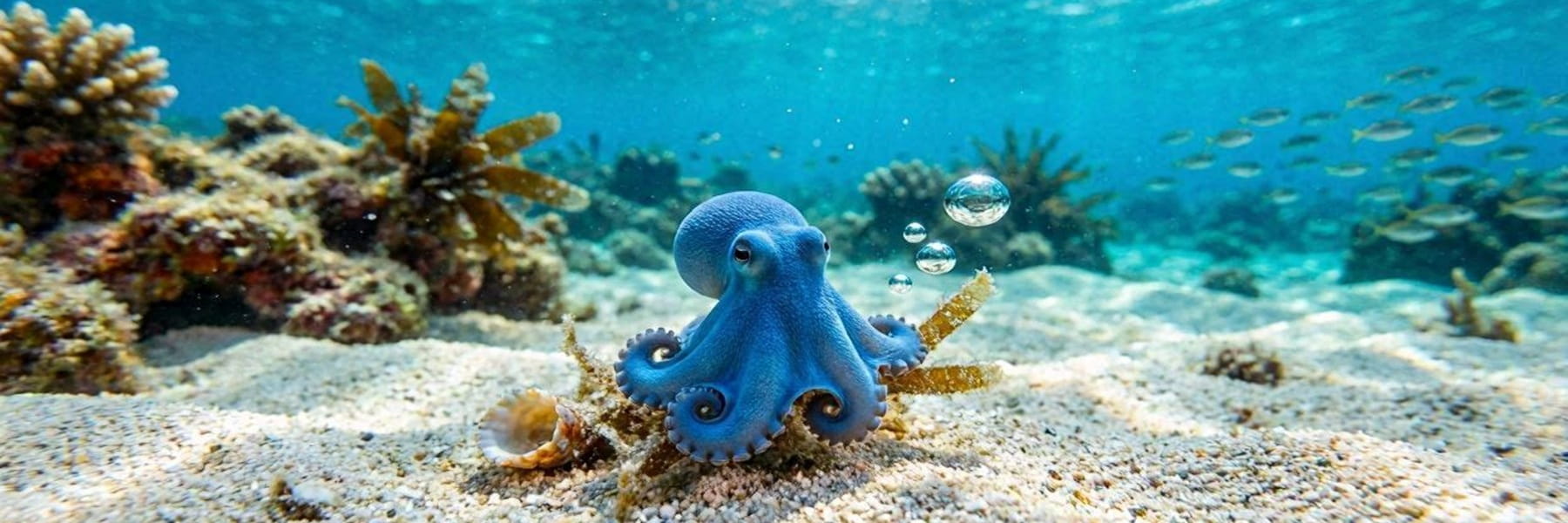

Scientists have confirmed that a vivid blue octopus, first glimpsed more than a decade ago in the Pacific depths, is a previously unknown species. The discovery traces back to a 2015 expedition near Darwin Island in the Galápagos archipelago, when a remotely operated vehicle descended nearly 1,800 metres and encountered a golf‑ball‑sized cephalopod. Two more individuals were filmed, but only a single female specimen was collected.
Identifying the octopus posed a dilemma because standard descriptions require dissection, which would have destroyed the only available specimen. To avoid that, researchers turned to micro‑CT scanning. By building a three‑dimensional model from thousands of X‑ray slices, they could examine the animal’s beak, suckers and internal organs without cutting it open.
Named Microeledone galapagensis, the octopus has short arms, few suckers and lacks an ink sac, unusual traits for a deep‑sea cephalopod. The find also forces a rethink of its family, Megaleledonidae, which was previously defined as containing only large‑bodied animals from the Southern Ocean.