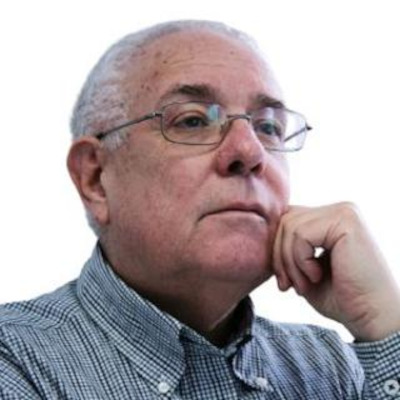
Last week, Hartmut Neven, Director of Google Quantum AI, delivered the Vienna Gödel Lecture 2025 beneath a title that captures perfectly where we stand: Beyond the Threshold: Entering the Era of Error-Corrected Quantum Computing. As he explained, we are not yet discussing superintelligent machines that "conquer" artificial intelligence. Rather, we have crossed a technical threshold that seemed unreachable mere years ago—a clear step in that direction.
For two decades, Neven has concentrated on combining machine learning algorithms with quantum hardware. He was the figure who coined the terms "Quantum Machine Learning" and "Quantum AI" nearly two decades past. And he was the one who executed the first image recognition algorithm on a quantum computer in 2007.
The Problem
The genuine obstacle: qubits—units of quantum information—are extraordinarily fragile. Decoherence—environmental interference—destroys them relentlessly. The deeper a calculation runs, the more errors accumulate, rendering these machines useless for any practical purpose. For fifteen years, this represented a fundamental barrier.
In 2023, Neven and his team demonstrated that quantum error correction functions in practice: by adding qubits to verify errors rather than enlarging calculations themselves, they halved the error rate each time they scaled the architecture. It was a paradigm shift.
A year ago they unveiled Willow: 105 superconducting qubits that executed 10 billion error-correction cycles without a single failure. Qubit coherence times have improved from the order of just a few tens of microseconds to around 70 microseconds in Willow, representing roughly a threefold improvement over the previous generation. For the quantum world, this is a monumental breakthrough.
The Innovation
The innovation Neven underlined in Vienna: we are constructing specialised tools for problems where quantum physics provides an advantage that classical computing can never attain. This approach is hybrid. Classical machines handle the heavy lifting. Qubits manage specific tasks where they might hold advantage. Then results return to classical systems.
Practical applications remain in the research phase: logistics route optimisation, molecular simulation for drug discovery, high-dimensional data analysis. No quantum AI product can be purchased today. There exist no production cases demonstrating unquestionable advantage.
Clear Trajectory
Yet Google aspires to possess processors with hundreds of logical qubits by 2030, capable of solving problems with verifiable quantum advantage. Will it unfold precisely so? Likely not. But the direction stands clear.
Neven is solving problem after problem—a technological transition through which we shall accomplish things once computationally impossible. And that is something real which could ultimately lead to the much-vaunted quantum artificial intelligence.
This article is republished from Futuribles. The original article in English and Spanish is here.