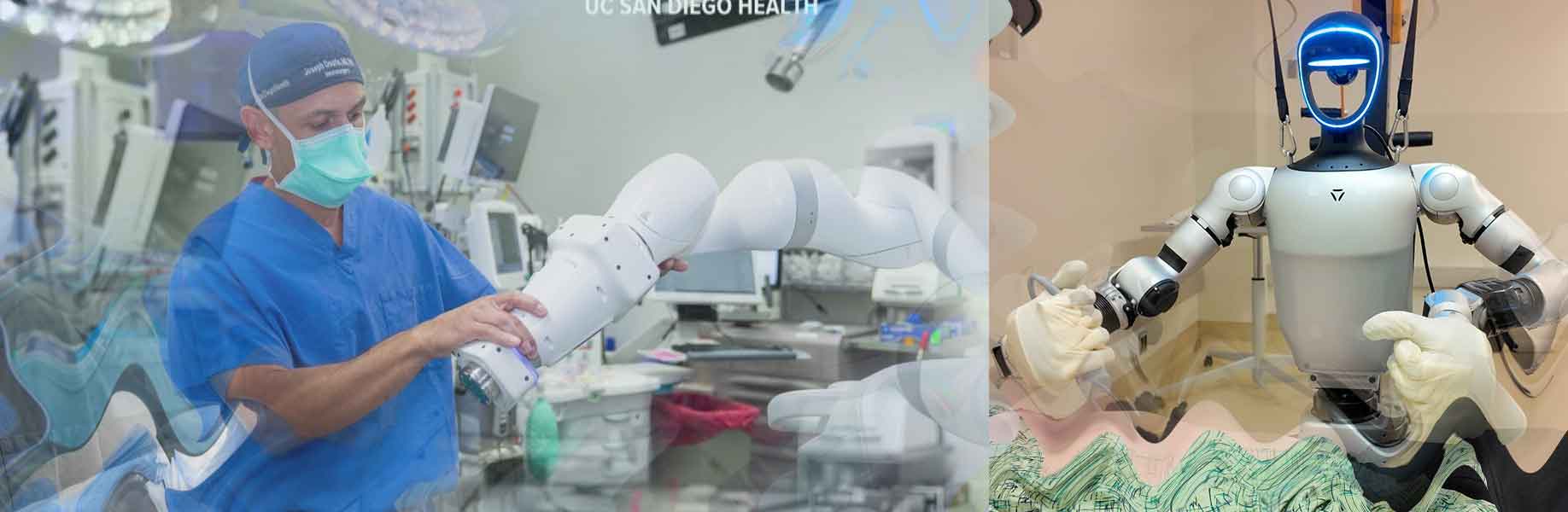

UC San Diego Health has become the first health system on the West Coast to carry out spine surgery with a new robotic system that uses advanced imaging and computer guidance. Neurosurgeon Joseph Osorio led the first operation. Osorio serves as chief of spine surgery at the University of California San Diego School of Medicine. He has extensive experience in complex spine procedures and in introducing new treatments to patients.
The new system brings together several modern tools in one platform. Artificial intelligence (AI) is used to analyze data and support decision-making in ways similar to human thinking. The system also includes data-driven planning for spinal alignment, custom-made implants designed for each patient, navigation tools, and robotic assistance for placing screws. During surgery, the robot provides a detailed three-dimensional view of the patient's spine. This helps surgeons work with greater accuracy and adds safety measures when inserting implants.
This launch marks an important step in surgical care. The combination of AI-driven planning and patient-specific implants allows doctors to create personalized surgical plans. Real-time imaging and robotic guidance then help carry out the procedure with high precision. As a result, surgeons can achieve their technical goals more consistently while reducing risks.
Expected improvements in patient care
Surgeons at UC San Diego Health believe the new platform will lead to better results for patients who need spine fusion operations. Spine fusion is a procedure that joins two or more vertebrae to stabilize the spine. The technology improves consistency and tailors the spinal alignment to each person's unique body structure. It also makes operating room workflows smoother, which can shorten procedure time and support faster recovery.
Patients are expected to benefit directly from the increased precision and safety. Osorio noted that the platform changes how surgeons approach these operations and matches the complexity of the conditions they treat.