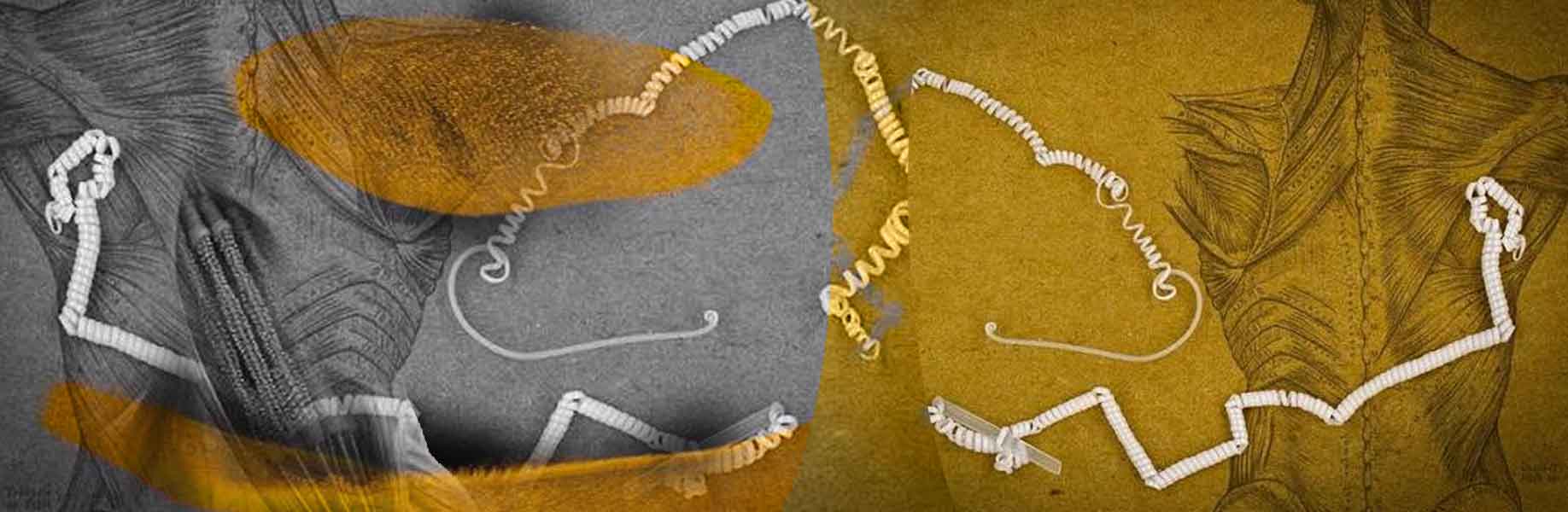

Researchers have found that a tiny, water-dwelling organism called Spirostomum ambiguum can shrink to a quarter of its length in under five milliseconds. This is hundreds of times faster than a human blink. This creature is a ciliate, meaning it has tiny hair-like parts called cilia that it uses to swim. It can shorten at a rate of about 100 body lengths per second. The creature may use this fast shrinking to escape predators or to communicate with other similar creatures. Human muscle fibers can shorten by similar fractions, but they take about ten times as long to do so.
Instead of using muscle fibers, this single-celled organism uses thread-like structures called myonemes to move. These myonemes are made of special proteins called centrin and Sfi1, and they form a fishnet-shaped web. When calcium ions enter the cell, they act like an electrical current. This causes a specific protein in the net to lose its stiffness and clump up like a ball of wet spaghetti. The fishnet then pulls tight, making the organism shrink uniformly. This uniform shrinking protects its organelles, which are the tiny organs inside a cell. Human muscles use a molecule called ATP, which stores and releases energy in cells, and this fuel gets burned up like gasoline. In contrast, the organism uses calcium, which acts more like electricity.
The fishnet structure and its reset process
Scientists are still studying how this electrical current starts and how the organism resets itself to repeat the contraction so quickly. They expected calcium reactions to be a single event, but this creature can do it over and over. Understanding this fast movement could help researchers build artificial muscles that do not rely on ATP. This knowledge might lead to faster synthetic cellular machinery.
The study, which involved researchers from several universities, is published in PNAS.