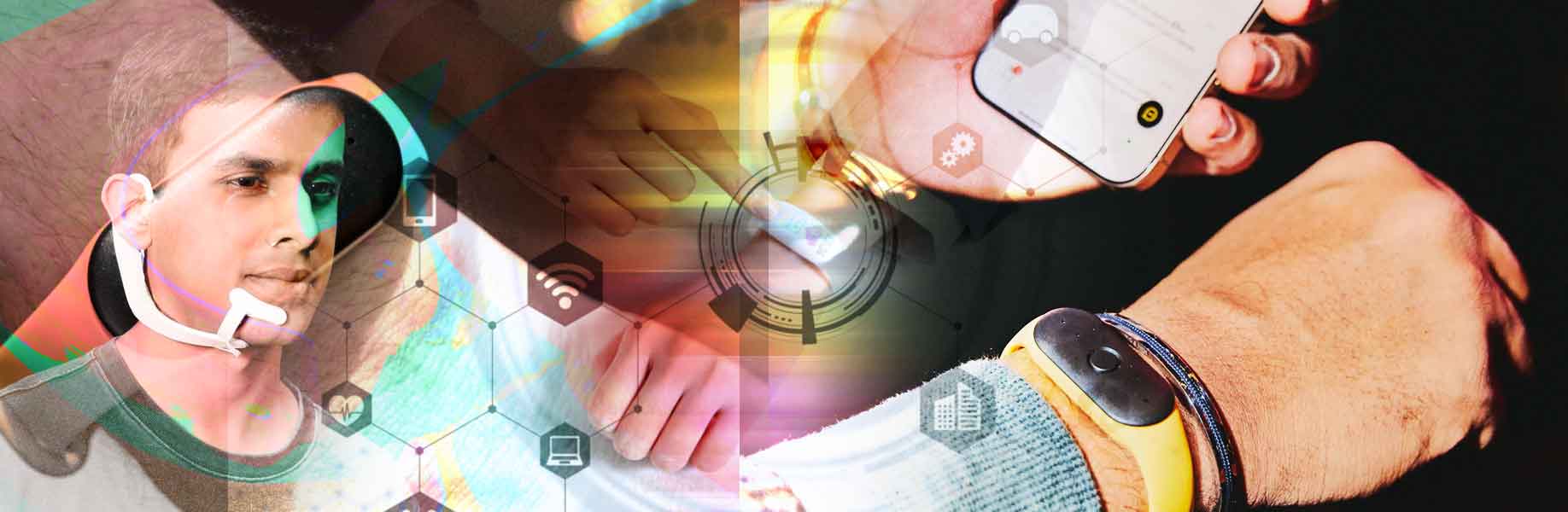

A new wearable device called AlterEgo could change how people interact with technology by allowing silent communication through thoughts, Nature News reports (open copy). The device sits over the ear like a headset and uses artificial intelligence (AI) to detect what users want to say without speaking aloud.
The device picks up faint electrical signals from muscles in the face and jaw that are involved in forming words, even if no sound is made. These signals come from the brain's instructions to speak, sent via cranial nerves - nerves in the head that control movement. AI models then analyze the patterns to predict the intended words or commands, such as asking the time or searching the internet. Responses come back as audio through bone-conduction headphones, which send sound vibrations directly to the inner ear without blocking outside noise.
The technology avoids reading brain activity directly and does not require surgery, unlike some brain-computer interfaces. For example, implants from companies like Neuralink involve placing electrodes inside the brain to capture neuron signals, the cells that transmit information. AlterEgo is non-invasive, reducing risks like infection.
How the device works
It started as a project at the MIT Media Lab in 2018, with an early version that was bulky and limited to basic tasks like web searches. Advances in AI for speech recognition have improved it, leading to a new company formed this year. Ongoing trials test the device for people with amyotrophic lateral sclerosis (ALS), a disease that progressively weakens muscles, including those for speech, and multiple sclerosis (MS), a condition affecting the nervous system and causing similar issues. AlterEgo detects even weak muscle signals in later stages of these diseases, though it may not work for fully immobile patients.
Beyond medicine, the creators see potential for everyday use, like silent dictation or conversations via linked devices. Experts note it poses fewer privacy risks than voice assistants, as it does not listen constantly and is hard to overhear. However, questions remain about whether people will adopt it commercially, given resistance to wearing visible tech. No release date or cost has been set yet.