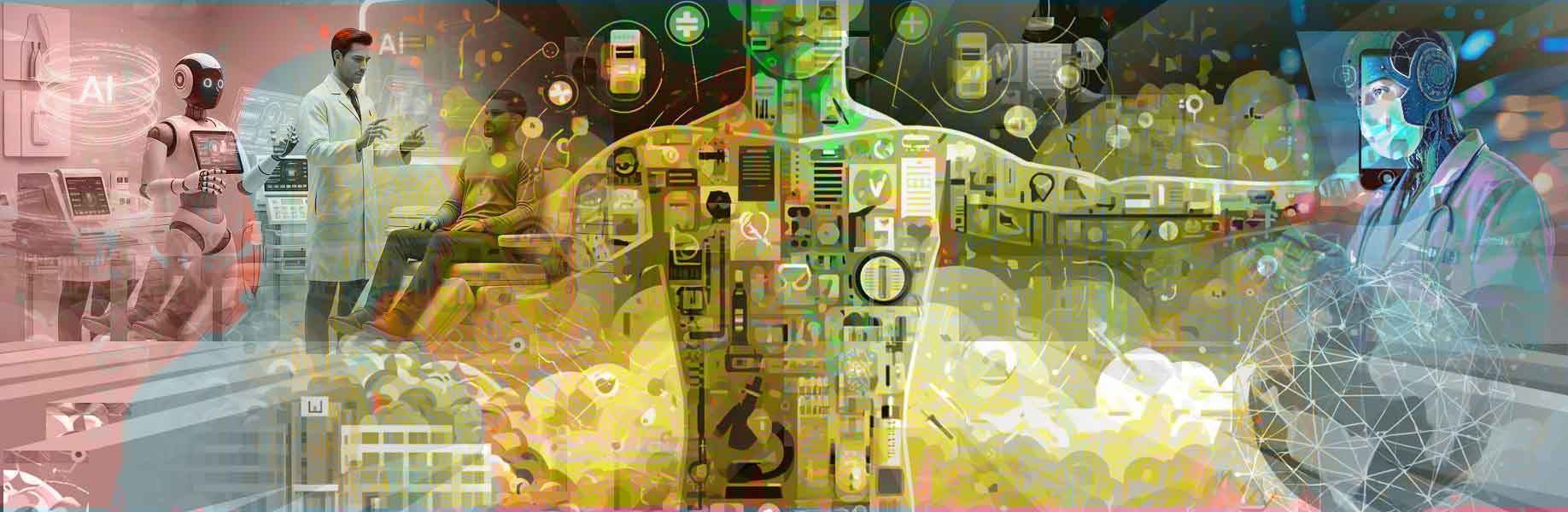

Half the world lacks reliable access to essential diagnostic services.
In many regions, illness is not deadly because treatments do not exist—but because diagnosis arrives too late or never at all. AI-driven diagnostic systems now promise to compress decades of medical expertise into portable software, raising a radical possibility: medical deserts may disappear not through more hospitals, but through intelligence itself.
Healthcare inequality has long been constrained by geography. Rural communities, low-income regions, and rapidly growing cities often face severe shortages of physicians, radiologists, and laboratory infrastructure. Training specialists requires years; building hospitals requires billions. The supply of medical expertise has historically scaled slowly.
At the same time, artificial intelligence has made rapid advances in pattern recognition. Deep learning systems can detect subtle anomalies in medical images, speech patterns, vital signs, and patient histories—sometimes matching or exceeding expert-level performance in narrow diagnostic tasks.
The tension lies in a fundamental question: is diagnosis a human judgment or an informational problem? If disease detection primarily involves recognizing patterns in data, then AI may democratize healthcare access. But if diagnosis depends on context, empathy, and social understanding, automation risks creating a new form of medical abstraction detached from lived reality.
Diagnosis as Information Compression
Medical diagnosis historically depended on accumulated human experience. Physicians learn to identify patterns across thousands of patient encounters, synthesizing symptoms, tests, and intuition into clinical decisions.
AI systems approach the same challenge differently. Neural networks compress massive datasets—medical images, lab results, and electronic records—into statistical representations capable of identifying disease signatures invisible to human perception.
A smartphone-connected ultrasound or camera can now feed images into models trained on millions of examples, transforming diagnostic expertise into a scalable digital resource.
Why this matters: When diagnosis becomes data-driven rather than location-dependent, access to expertise no longer requires proximity to specialists.
Portable Intelligence and the Rise of Edge Medicine
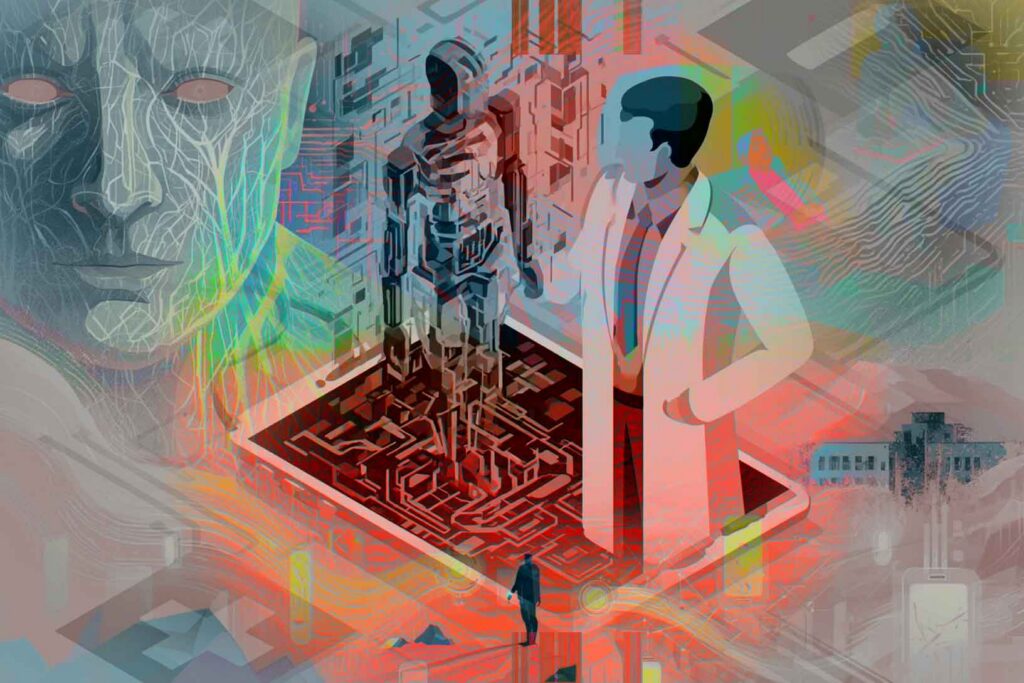
AI diagnostics increasingly operate on portable devices rather than centralized hospital infrastructure. Edge computing allows models to run locally on smartphones, tablets, or compact medical equipment.
This shift is critical in regions with unreliable internet connectivity. Offline diagnostic tools can analyze chest X-rays for tuberculosis, screen retinal images for diabetic complications, or evaluate skin lesions without cloud access.
Healthcare delivery begins to resemble distributed computing: intelligence travels to patients instead of patients traveling to intelligence.
Why this matters:
Medical access expands dramatically when expertise becomes mobile and infrastructure-light.
The Hidden Role of Non-Physician Health Workers
One overlooked consequence of AI diagnostics is the empowerment of community health workers. In many regions, frontline caregivers lack advanced training but maintain deep trust within communities.
AI systems can guide structured examinations, suggest follow-up questions, and flag urgent conditions. Rather than replacing doctors, algorithms act as cognitive scaffolding for non-specialists.
This hybrid model may prove more scalable than physician-centric healthcare systems developed in wealthy countries.
Why this matters:
The future of medicine may depend less on increasing doctors and more on augmenting distributed human networks with machine intelligence.
Bias, Data Gaps, and Algorithmic Blind Spots
AI systems learn from historical data—and medical datasets are unevenly distributed globally. Many models are trained predominantly on patients from high-income countries, limiting accuracy across diverse populations.
Differences in genetics, environmental exposure, nutrition, and disease prevalence can produce diagnostic errors when models encounter unfamiliar contexts.
A system optimized for urban hospital data may misinterpret symptoms common in rural or tropical environments.
Why this matters:
Without inclusive datasets, AI risks reproducing healthcare inequality under the guise of technological neutrality.
From Reactive Medicine to Continuous Diagnosis
Traditional healthcare operates episodically: patients seek care after symptoms appear. AI-enabled diagnostics open the possibility of continuous monitoring through wearable sensors and ambient health tracking.
Algorithms can detect early deviations in physiological signals—heart rhythms, sleep patterns, respiratory changes—before disease becomes acute.
Healthcare shifts from treatment to prediction, transforming diagnosis into an ongoing process rather than a discrete event.
Why this matters:
Preventive medicine becomes viable at scale when early detection operates continuously rather than reactively.
The Economic Rewriting of Healthcare Systems
Diagnostics account for a substantial portion of healthcare costs because they require specialized labor and infrastructure. AI reduces marginal diagnostic costs toward near zero once systems are deployed.
This economic shift may allow low-resource regions to leapfrog traditional healthcare models, similar to how mobile banking bypassed physical banking infrastructure.
However, it may also destabilize existing medical professions, raising questions about credentialing, liability, and institutional authority.
Why this matters:
AI diagnostics could restructure not only access to healthcare but the economics underlying entire health systems.
Ethics & Societal Implications
AI diagnostics challenge the philosophical foundation of medicine: trust. Patients historically place confidence in human judgment shaped by empathy and accountability. Algorithms, however accurate, lack moral agency.
There is also a governance dilemma. If AI provides diagnoses in underserved regions where physicians are scarce, lower regulatory standards may emerge by necessity. The risk is a two-tier system where automated medicine becomes acceptable primarily for the poor.
Yet refusing AI deployment also carries ethical weight. Delaying adoption may perpetuate preventable suffering where human expertise is unavailable. The ethical question shifts from whether machines should diagnose disease to whether denying accessible intelligence becomes morally defensible.
Conclusion
AI-driven diagnostics may not eliminate medical deserts by replicating hospitals everywhere, but by dissolving the geographic boundaries of expertise itself. Intelligence—once concentrated in elite institutions—can now exist wherever computation travels.
The deeper transformation may be conceptual rather than technological: healthcare evolving from a place people visit into an intelligence that surrounds them.
If diagnosis becomes universally accessible, will the next frontier of medicine be curing disease—or redefining what it means to be a patient at all?