
When Machines See but Cannot Think
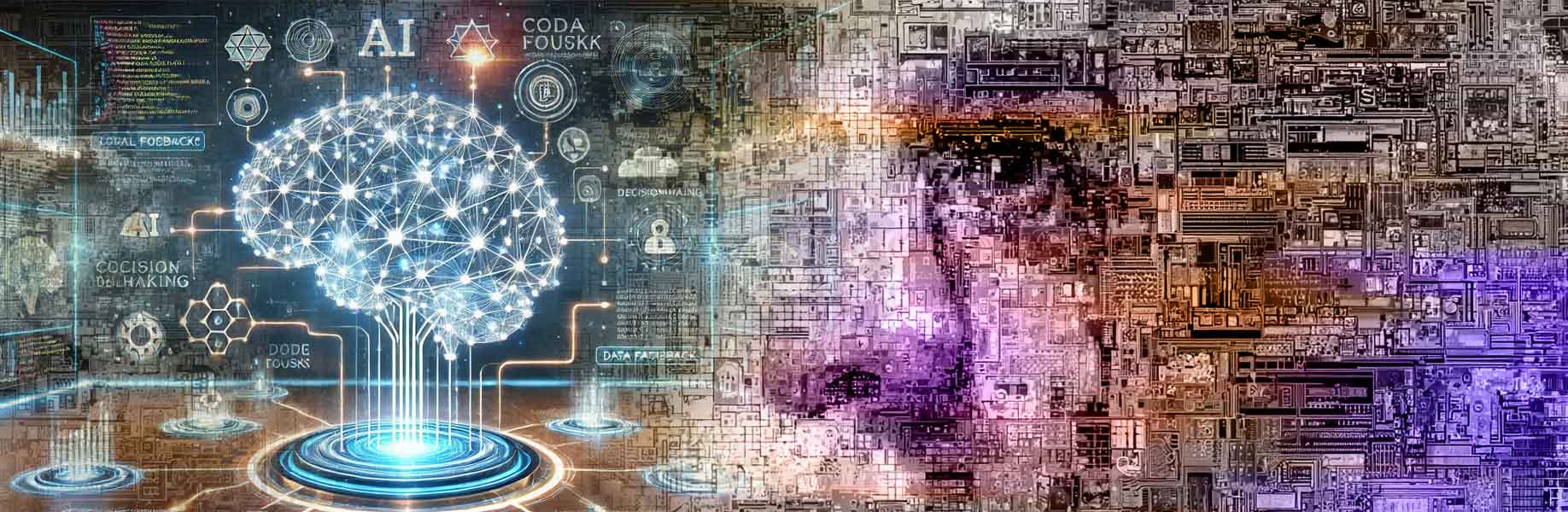
Artificial intelligence has made remarkable progress in recent years. Machines can now recognize faces, translate languages, and even generate human-like text. Yet, despite these achievements, a fundamental limitation remains: AI systems still struggle to reason.
Neural networks, the backbone of modern AI, excel at perception. They can detect patterns in images, audio, and data with impressive accuracy. However, they lack the ability to apply structured rules, perform symbolic reasoning, or explain their decisions in a meaningful way.
On the other side of the spectrum, logical systems are powerful at reasoning. They can follow rules, draw conclusions, and operate with clarity and structure. But they cannot interpret raw data like images or speech.
This divide—between perception and reasoning—has long been one of the most persistent challenges in artificial intelligence. Researchers have attempted to bridge it for decades, but a complete solution has remained elusive.
Now, a new approach is changing that narrative.
A Different Way to Combine Intelligence
Instead of forcing neural networks to mimic reasoning, the researchers took a fundamentally different approach. They started with a logical system and extended it to include neural capabilities.
This shift in perspective is what makes the framework so powerful. Rather than blending everything into a single black-box model, it preserves the strengths of both worlds:
- Neural networks handle perception
- Logical systems handle reasoning
- Probabilities connect them under uncertainty
The result is a system that can both interpret and think—a combination that has long been considered a key step toward more advanced AI.
Inside DeepProbLog
At the center of this innovation is DeepProbLog, a framework that integrates deep learning into probabilistic logic programming.
The idea behind DeepProbLog is elegant. Neural networks are embedded into logical rules as “neural predicates.” These predicates behave like standard logical components but are powered by neural models.
This means that instead of treating neural networks and logic as separate modules, they become part of the same system. The logical program can call a neural network when it needs to interpret data, and then use that information in reasoning.
For example, consider a simple task: adding two handwritten digits. A traditional neural network would try to learn this task end-to-end, mapping images directly to a result. But this approach often struggles with generalization and interpretability.
DeepProbLog handles it differently:
- A neural network recognizes each digit
- Logical rules perform the addition
By separating perception from reasoning, the system becomes more flexible, more interpretable, and often more accurate.
Learning Without Direct Supervision
One of the most fascinating aspects of this framework is how it learns. The system does not require explicit labels for every component. Instead, it learns from the final outcome.
Imagine training a system to add numbers without ever showing it labeled digits. The model only sees pairs of images and their sums. From this, it must:
- Learn what each digit looks like
- Understand how addition works
- Combine both into a correct prediction
This is possible because the system is trained end-to-end. Errors from the final prediction are propagated back through both the logical reasoning process and the neural networks.
This type of learning is powerful because it mirrors how humans often learn: not through isolated labels, but through outcomes and context.
Beyond Simple Tasks: Real Capabilities
The researchers tested the framework across a range of increasingly complex tasks, demonstrating its versatility.
Learning Arithmetic from Images
The system successfully learned to perform addition using only image inputs. More importantly, it did so without explicit digit supervision, relying solely on final results.
Generalization to New Problems
After training on simple cases, the system was able to handle more complex scenarios, such as multi-digit numbers. This shows that it does not just memorize patterns—it learns reusable knowledge.
Learning Algorithms
DeepProbLog can also learn parts of algorithms. It was used to:
- Perform sorting
- Execute step-by-step arithmetic
- Solve structured problems
This ability to “fill in” missing parts of programs highlights its potential for program induction.
Reasoning Under Uncertainty
In probabilistic environments, such as games involving randomness, the system learned both the rules and the probabilities governing outcomes.
This combination of learning and reasoning under uncertainty is particularly important for real-world applications.
Why This Breakthrough Matters
This study represents more than just a technical improvement—it signals a shift in how AI systems can be designed.
For years, AI development has largely focused on scaling neural networks. While this has led to impressive results, it has also introduced challenges such as lack of interpretability and poor reasoning capabilities.
DeepProbLog offers an alternative path: instead of making neural networks do everything, it combines them with structured reasoning systems.
Key advantages include:
- Improved generalization: Knowledge can be reused across tasks
- Explainability: Logical rules make decisions more transparent
- Flexibility: Handles both structured and unstructured data
- Efficiency: Learns complex tasks with limited supervision
These properties are essential for building AI systems that are not only powerful but also trustworthy and understandable.
The Road Ahead for Hybrid AI
The integration of neural networks and logic has long been considered a cornerstone of artificial general intelligence. This study presents a practical step toward that vision.
The challenge of combining perception and reasoning is not just technical—it is conceptual. It requires rethinking how intelligence itself is modeled.
By embedding neural networks within a logical framework, this approach demonstrates that the two paradigms are not competing, but complementary.
Looking forward, this kind of hybrid system could transform multiple domains:
- Autonomous systems that must reason about complex environments
- Scientific research where data and theory must work together
- Explainable AI systems for healthcare and policy
- Advanced human-AI collaboration tools
Toward Truly Intelligent Machines
Artificial intelligence is at a turning point. The next generation of systems will not be defined solely by how well they recognize patterns, but by how well they understand and reason about the world.
This study presents a clear step in that direction. By uniting deep learning with probabilistic logic, it shows that AI can move beyond perception into true reasoning.
The question is no longer whether machines can learn or reason—but how effectively we can combine both.
And with frameworks like DeepProbLog, that future is starting to take shape.