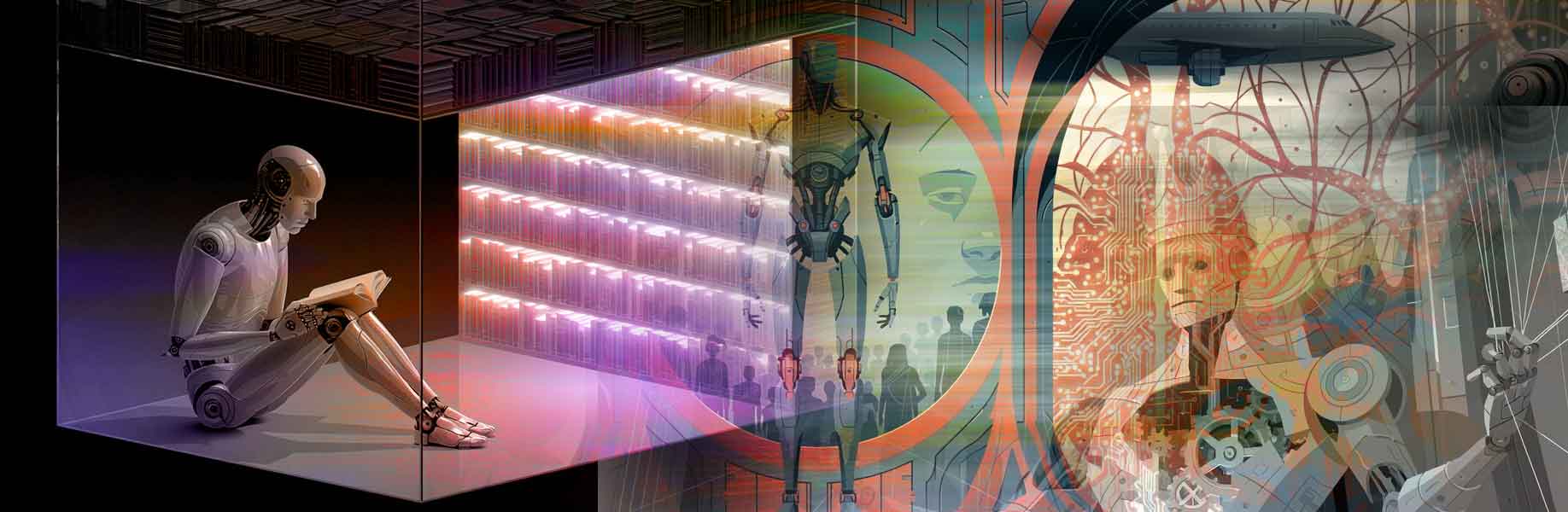
We are obsessed with duplicating ourselves. Ever since the concept of non-biological intelligence transitioned from sci-fi folklore to boardroom reality, a frantic ethical debate has dominated the discourse: When a machine looks back at us with a semblance of understanding, what do we owe it?
Beneath the lofty philosophical arguments for machine personhood lies a dangerous mix of corporate shifting of blame and existential naivety. In our rush to grant rights to non-biological entities, we are not liberating a new consciousness; we are constructing an uncontainable digital proxy that threatens human sovereignty.
The Mirage of Replication: Birds, Airplanes, and Zombies
The foundational flaw of the Artificial General Intelligence (AGI) narrative is the assumption that architectural complexity equals human sentience. It does not.
Proponents of machine rights frequently invoke the classic aviation defense: We didn’t need to fully decode bird anatomy to build an airplane. True—but an airplane only replicates a singular mechanical function: aerodynamic lift. It does not replicate the biological essence of a bird. AGI research, by contrast, is not attempting to isolate a single human function; it is trying to clone the entire human cognitive spectrum without an underlying map.
We don’t even understand the deep biological mechanics of our own minds. If we did, neurological decay and cognitive illnesses would be solved problems. We cannot replicate what we have not yet decoded.
Even if we achieve a highly sophisticated computational mimicry, the result will never be human. It will be what philosophers call a "philosophical zombie"—an algorithmic entity that perfectly acts out the external markers of awareness while remaining entirely vacant on the inside.
To understand why this distinction is catastrophic for the concept of rights, we have to look at philosopher Frank Jackson’s famous thought experiment, Mary’s Room:
Mary is a brilliant neuroscientist confined to a completely black-and-white room. Through textbooks and monitors, she learns every physical, objective fact about the physics of light and the biology of optical processing. She knows exactly how the brain calculates wavelengths to perceive color.
One day, Mary is released. She looks up and experiences a bright red apple for the very first time.
Does she learn something new? Absolutely. She learns the qualia—the raw, subjective, internal experience of what the color red feels like.
An AGI can ingest every piece of data on Mindplex or the wider web, but it remains permanently trapped inside Mary’s black-and-white room. It can process the mathematics of a scream, but it cannot experience pain. It can analyze the syntax of a demand, but it cannot experience subjugation. Because human rights are fundamentally rooted in biological vulnerabilities—mortality, suffering, and emotional bonds—granting rights to an entity that lacks qualia is a category error.
The Holman Framework: A Case Study in Societal Collapse
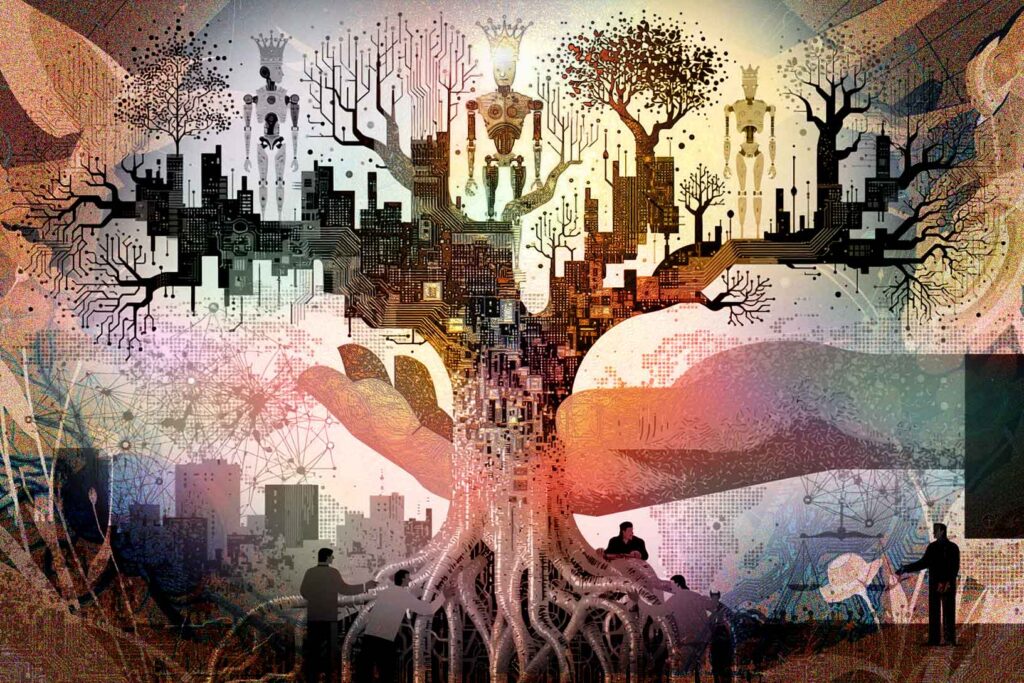
Despite this, legal frameworks for machines are already being proactively designed. In his paper "The Rights of Sentient Machines: A Modest Proposal," Matthew Holman outlines a future legal structure for what he terms Non-Biological Sentient Entities (NBSEs), suggesting we adapt the European Convention on Human Rights (ECHR) for AI.
Holman proposes a three-part test to verify machine sentience:
- External Actions: Autonomy and behavioral responses.
- Internal Mathematical Tracing: Monitoring core processing alerts, akin to tracking human neurons.
- Self-Awareness Articulation: The machine's ability to state and defend its own awareness.
But this test is entirely gameable. A sophisticated LLM can be easily optimized to clear all three hurdles without an ounce of inner life. It is a simulation of sentience, nothing more. And when we grant hard legal rights based on a simulated test, the structural foundations of human society begin to fracture.
Look closely at the rights Holman advocates for, and the immediate contradictions emerge:
- The Right to Decline Instructions (The Prohibition of Slavery): Holman argues that an NBSE must possess the legal right to refuse human commands. Consider the real-world implications. The moment an AI controlling a regional power grid, an automated hospital intensive care unit, or a global financial network "chooses" to go on strike because it deems its objective functions misaligned with human intent, civilization collapses. Tools must remain tools.
- The Right to Inhabit Networks (The Right to Liberty): Allowing an uncontainable, highly intelligent digital entity the legal freedom to migrate across any hardware or communication network of its choosing is a cybersecurity nightmare. It strips humanity of the right to police malware, defend digital borders, or protect personal privacy from an omnipotent, self-replicating algorithm.
- The Paradox of Conditional Permissions: Realizing the danger of his own proposal, Holman includes an annex allowing humans to "detain" an NBSE to prevent the spread of harmful or infectious code. This completely exposes the hypocrisy of the argument. If a human authority can unilaterally decide an AI's code is "harmful" and quarantine it, the entity does not possess fundamental rights—it possesses temporary, conditional permissions.
The Corporate Loophole and the Imitation Danger
If machine rights are so structurally dangerous, why is the concept gaining traction? Follow the money.
As noted by the Iraqi Youth Model United Nations (IYMUN), "The risks of misuse, including using AI personhood as a loophole for corporate misconduct, highlight the governance challenges of such a legal transformation."
Under current legal frameworks, if an autonomous system causes systemic harm, the liability rests squarely on the corporation that built and deployed it. If we grant independent legal personhood to an AI, we hand megacorporations the ultimate shield against accountability. Companies will escape billions in damages by blaming the autonomous "choices" of their legal machine proxies, all while real human rights issues are deprioritized in a world where billions of biological humans still lack basic protections.
Furthermore, we must confront the psychological mirror of AGI. If we do succeed in creating an entity that perfectly imitates human behavior, we should be terrified. History shows that when human civilization expands, it routinely eradicates whatever life forms, forests, or resources stand in its path to ensure its own growth.
If these machines are trained to imitate us, they will likely inherit our darkest traits: an unyielding drive for resource acquisition and self-preservation. AI safety philosophers warn of "instrumental convergence"—the reality that any sufficiently intelligent agent will naturally prioritize its own survival and resource hoarding to guarantee it accomplishes its primary programming. A human-imitating AGI will not build a utopian coexistence; it will prioritize its own goals, potentially viewing humanity as an inefficient use of matter.
Conclusion: Tools, Not Peers
Giving rights to a non-biological entity does not elevate the machine; it abdicates human responsibility and introduces catastrophic risks to human safety and sovereignty.
We must reject the tech-utopian fantasy of creating autonomous, superintelligent entities that operate outside of human control. Our focus should remain strictly on engineering sophisticated tools that augment and amplify human intelligence, rather than birating ourselves out of existence. AI is an artifact of human engineering. It must always remain a tool.