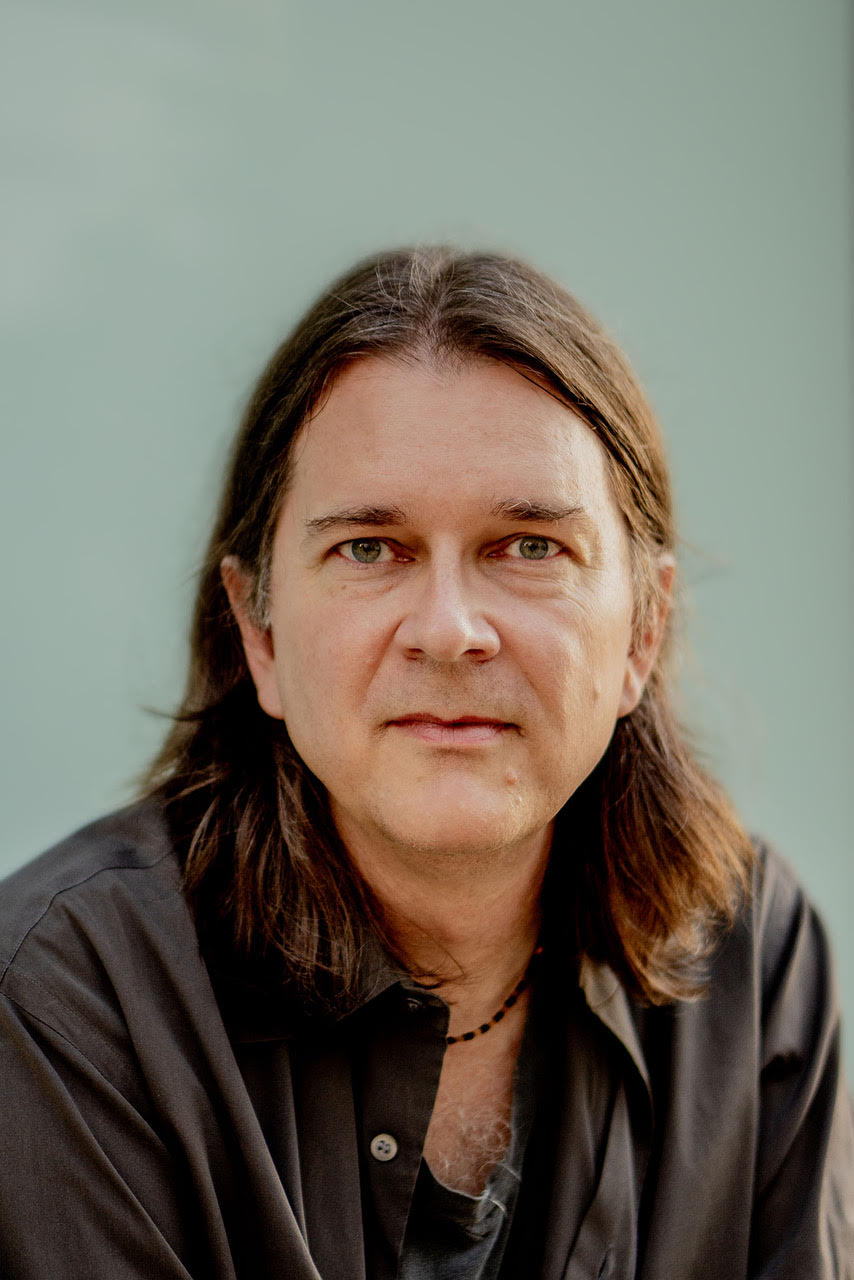
As Timothy Leary’s son, Zach Leary has had a bird’s eye view of the psychedelic counterculture, the cyberculture of the ‘80s and ‘90s, not to mention celebrity culture, and even a few disappointed cryonicists. (Crowd pleasers and head freezers). None of it seems to have gone to his … err… head.
With interest in – and use of – psychedelic substances spreading, approaching gaining maximum benefit from the medicines can be difficult. Researching via search engines and the like can be a bit of a bum trip. With feet firmly planted on the ground, Zach is here to help with Your Extraordinary Mind, a well-organized book that covers a plethora of means to that end, all of it lightly sprinkled with visionary panache and elements of storytelling.
Credit: Public Domain
Pre- Psilocybin Journey Questions to Ask Yourself
What strain of mushroom have you obtained? Are youfamiliar with its potency? Remember all strains do not contain the same level of psilocin and psilocybin.
Why do you want to use psilocybin in the first place? Are you clear about your intentions? Do you feel that takingpsilocybin is in alignment with realizing your highestsense of self?
Do you have a working knowledge of and respect for the Indigenous use of psilocybin mushrooms?
If you are using psilocybin for mental health reasons, have you educated yourself on the most current clinical trials and their outcomes? (i.e., Johns Hopkins, NYU, etc.)
What’s your plan for taking it? What dosage? When, where, and with a guide or with friends? If working with a guide, are they well trusted and with a good reputation?
Describe any fears, mental or physical, that you have around taking psilocybin.
Are you in good health and feel that you can withstand the intensity of psilocybin? If not, be honest about it and recognize that this medicine might not be right for you.
What is your integration plan? What are you going to do in the hours and days afterward?
Credit: Tesfu Assefa
R.U. Sirius: I took some criticism for a recent interview about psychedelics related to the book Blotter. The interview was with the author Erik Davis and his main research source Mark McCloud. It was very much not leaning towards the responsibility end of the discourse but more a fun conversation about wild times.
So I see interviewing you as sort of a corrective in the sense that you are mainly focused on telling everyday people who to benefit from psychedelic use. How did you decide that this was a good time for an instructive book like this?
Zach Leary: There is growing misconception that psychedelics are some sort of ‘magic pill’ that will fix whatever it is that’s holding you back and that seemed like something worth addressing. They are not. They are methods like anything else. They can help you tremendously when used correctly or they can work against you if used foolishly.
RU: Your father Timothy Leary was famous for both the responsible disbursement of information around psychedelic use and more so for playing a role in the wild loosey-goosey 20th century. starting really with the mid-1960s. I remember his slogan that contrasted with Nancy Reagan – “Just Say Know.” He was good at slogans! Please say a little about his ambivalence, if that's what it was.
ZL: I hit a wall with my thinking and the notion of thinking differently about intelligence and psychedelics, due to the non-specific amplifier variable. For instance, and this may sound harsh, but many in alt-right circles are turning to psychedelics for various forms of healing and I don’t see them coming through the other end any more intelligent than when they began. Those are the complications. If you go into psychedelics a hateful, paranoid, xenophobic person and have no desire to want to change that, I don’t think it’s very likely that psychedelics will snap you out of that and push you into a more evolved mindset.: When writing the book, I was faced with a choice. Should I share all of the Timothy Leary low hanging fruit stories and share what it was like to grow up in that college of evolutionary chaos, or should I let Timothy and Ram Dass’s influence on me shine through in the writing itself? I chose the latter. And I hope I got close to that. Now that I’ve been in the psychedelic space so long as my own person, I thought it would be wise to share my knowledge of expansive use, mystical leanings and safe and cautious protocols aimed at psychonauts of all levels.
I’m not so sure it was ambivalence as much as it was that he just moved on. If you go back and listen to a lot of the mid-60’s talks that he was giving on psychedelics, he’s almost taking himself and the professorial ‘role’ too seriously. It amazes me that so many blame him for pushing indiscriminate use, when in fact it was just the opposite.
When the 80s and 90s rolled around, he really settled into the stand up philosopher think for yourself role more than ever before. Not taking himself too seriously and pushing back on all the acid lore with an air of comedic relief. To me, that was just his way of distancing himself from the past and instead, reinventing himself to the present.
RU: There’s a fair bit of stuff in your book about the mechanisms by which psychedelic chemicals and plants act on the brain. Have we learned a lot? What would you say about that?
ZL: Yes, for sure. That’s one of the big wins of the 21st century psychedelic movement. We’ve learned more about how psychedelics work on the brain in the past 20 years than we had in the 60 years prior. The mechanisms ranging from understanding the nature of the 5H2A receptor sites, to hemispheric cooperation to the reduction of the amygdyla and the fear response and on and on. These are all things that we maybe knew before but guys like Robin Carhart Harris and Roland Griffiths have proved in their research that the mechanisms of the brain have very specific reactions to classic enthneogens.
I say this a lot but I still don’t understand how anyone could sit for an fMRI while on LSD or mushrooms, that seems like a nightmare to me. But I thank them for their sacrifice! For me personally, while I recognize the importance of that work, at the same time it really doesn’t matter to me in the sense that it doesn’t really explain the psychedelic experience. How and why we see, feel and experience the things we do in that space is still a mystery. Why the mystical landscape becomes such a crystal clear expansive reality in which we can all hang out while on these journeys is best left being a little murky. From an evolutionary perspective, psychedelics were here to teach and heal us. Whether or not science can help that along is anyone’s guess. Maybe so, maybe not.
RU: As a trip guide, do you ever advise people about which psychedelic substance to choose? And if that's so, or if you can imagine being in a position to help make that decision, how would you? Is it based on personality? Goals? (leaving availability aside, and assuming all options are available)?
ZL: It’s really dependent on their goals/intentions and yes, personality type. Those who are suffering with tremendous traumatic wounds certainly wouldn’t benefit from being pushed into the deep end of the Ayahuasca pool right out of the gate, so starting with something like MDMA can sometimes be the result of my suggestion. I really try my best to meet the voyager where they are at and to not impose my will on them. I can take their psychic temperature pretty quickly to gauge a certain readiness for how altered a state might be appropriate. So it’s a collaborative process. Oftentimes, people have strong ideas about what medicines they want to experience and if I can help them to make wiser decisions as to their own growth then I’ve successfully met them.
RU: I think readers of Mindplex might be interested in psychedelics in terms of intelligence increase. What would you say are the best practices for these kinds of goals?
ZL: There’s a fair amount of research that suggests that the increase of neuroplasticity within plant medicines does indeed allow our brains to form new neural networks that yes, may increase brain capacity and thus intelligence. If you look back at McKenna’s Stoned Ape Theory and agree with its notion, then this is in fact empirically true.
In today’s psychedelic climate the microdosing community has its finger on the pulse in this department. Microdosing regimens have been shown to improve cognitive function on a long term basis and if anyone is looking for intelligence increases I suggest they start their journey there.
RU: How do psychedelics encourage us to think differently about intelligence? What are the advantages? What are the illusions to watch out for?
ZL: I hit a wall with my thinking and the notion of thinking differently about intelligence and psychedelics, due to the non-specific amplifier variable. For instance, and this may sound harsh, but many in alt-right circles are turning to psychedelics for various forms of healing and I don’t see them coming through the other end any more intelligent than when they began. Those are the complications. If you go into psychedelics a hateful, paranoid, xenophobic person and have no desire to want to change that, I don’t think it’s very likely that psychedelics will snap you out of that and push you into a more evolved mindset.
Cool to see psychedelics explored from a more structured, intentional angle, it’s always good to look at new ideas. But I’m not fully convinced by some of the claims here. Still, the grounded approach and questions he raises are interesting.
It’s interesting how much this focuses on mindset and intentions. Psychedelics feel less like tools and more like mirrors. Sometimes that’s frustrating… sometimes it’s exactly what you need, I guess.
Zach Leary’s insights are a breath of fresh air! It’s all about using psychedelics with intention and respect—no magic pills here! I love how he breaks down the misconceptions and encourages us to approach these journeys wisely. Let’s make the most of these incredible tools for growth and understanding!