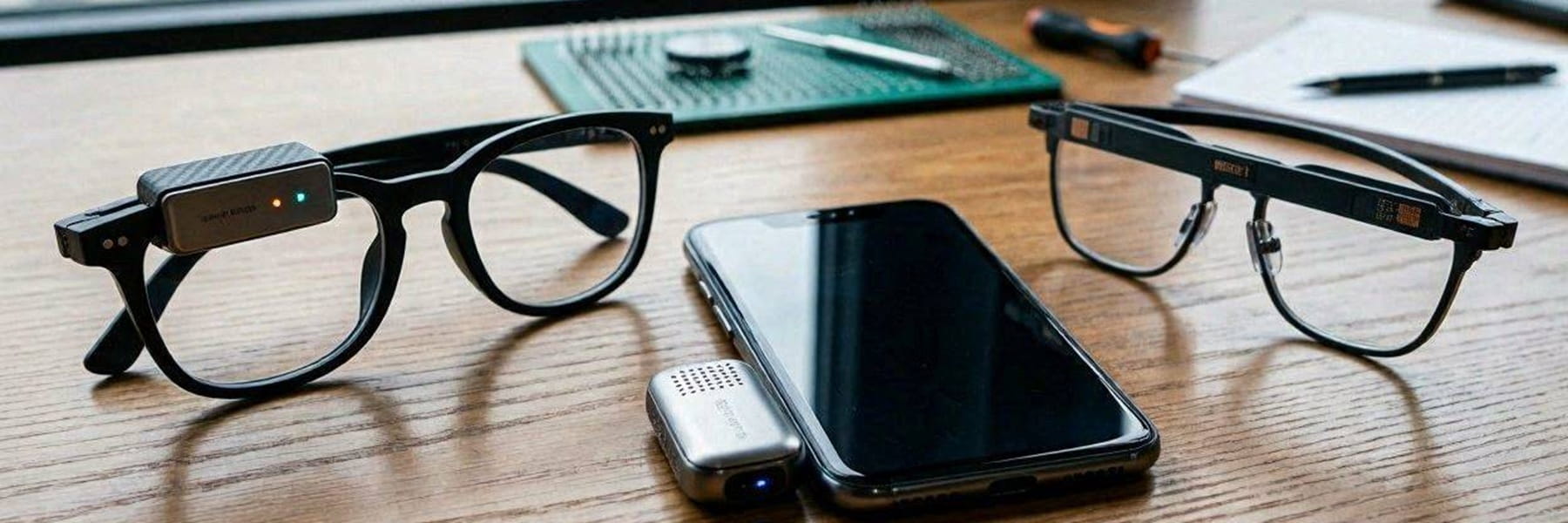

Researchers at Zhejiang University have published LightMem-Ego, a lightweight streaming memory system designed to give AI assistants on phones and wearable glasses the ability to recall a user's past experiences [1].
The system continuously captures egocentric visual and audio streams, aligns them on a shared timeline, and organizes them into three tiers of memory: current, short-term, and long-term. When a user asks a question, a routing mechanism selects the appropriate memory tier and retrieves relevant information.
Target use cases include finding misplaced objects, recalling recent conversations, summarizing daily activities, and discovering long-term habits and routines. The system is designed to run on resource-constrained mobile and wearable devices rather than relying entirely on cloud processing.
The paper, posted on arXiv on July 13, addresses what AI Weekly described as the "missing piece" for wearable AI: not the vision or language model, but the memory layer that makes an assistant genuinely useful in daily life. Code has been released publicly on GitHub under the ZJUNLP lab. The authors acknowledge the work is ongoing and does not yet include benchmark numbers or latency comparisons against baselines.