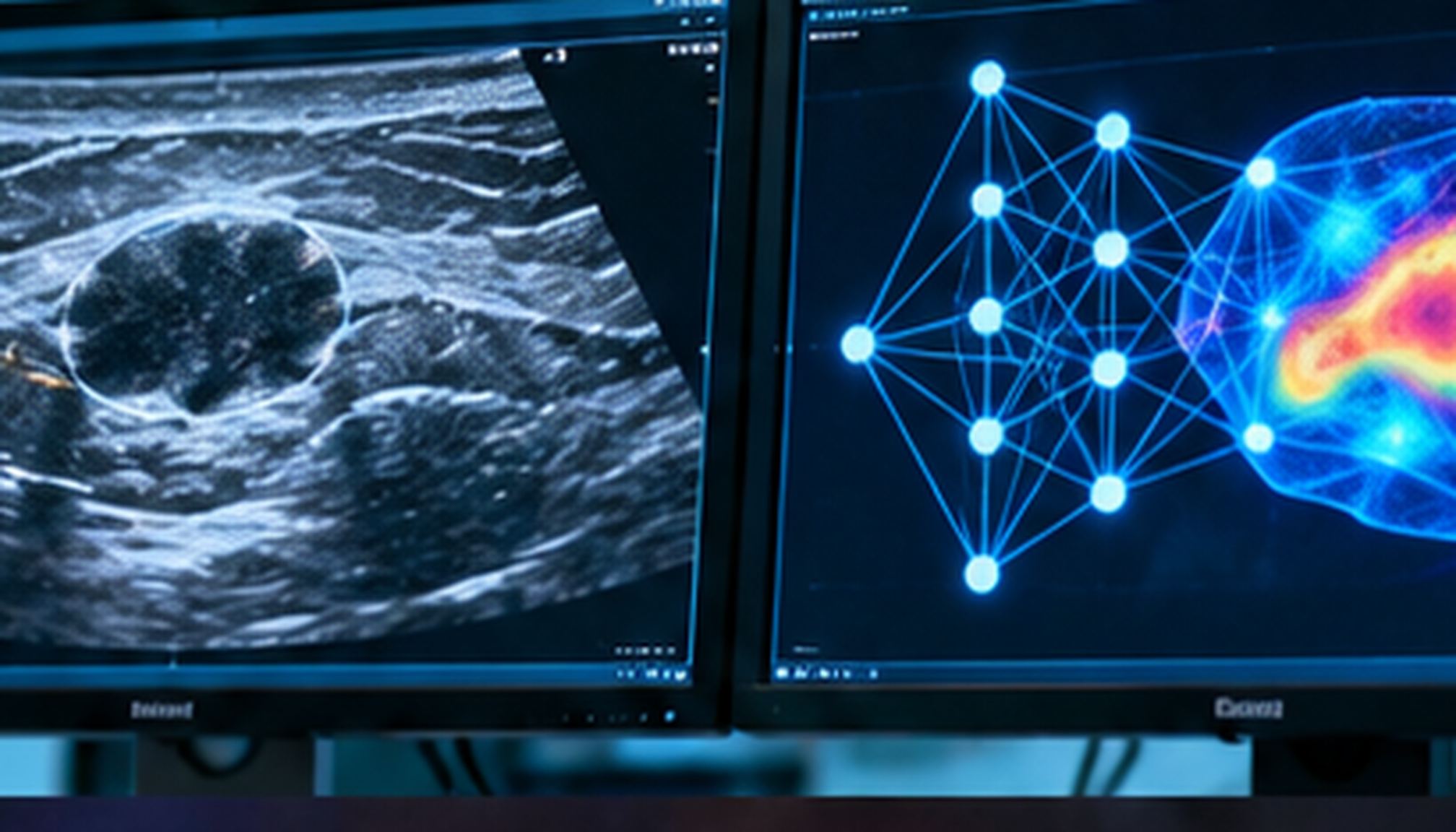

Researchers in South Korea have developed an artificial intelligence system capable of identifying breast masses using signals from a single-element ultrasound sensor, potentially simplifying future breast-imaging devices.
Conventional ultrasound produces detailed two-dimensional images using arrays of sensing elements. The experimental approach instead analyzes simpler echo signals, collected as a handheld sensor moves across breast tissue.
The researchers studied 200 patients, including 192 with malignant lesions and eight with benign or borderline abnormalities. Data from 131 patients supported model development, while the remaining 69 were used for additional validation.
The strongest reported model achieved a 96.3% region-level area under the receiver operating characteristic curve, a measure of how well it distinguished regions containing masses from normal tissue. This does not mean it detected 96.3% of all cancers.
The work complements earlier AI advances in breast MRI, although the technologies operate differently.
Researchers found that pretraining on ultrasound images improved results compared with conventional image-based initialization.
Importantly, all participants already had known breast lesions. Testing among women without known abnormalities is essential before the technology could be considered for screening.