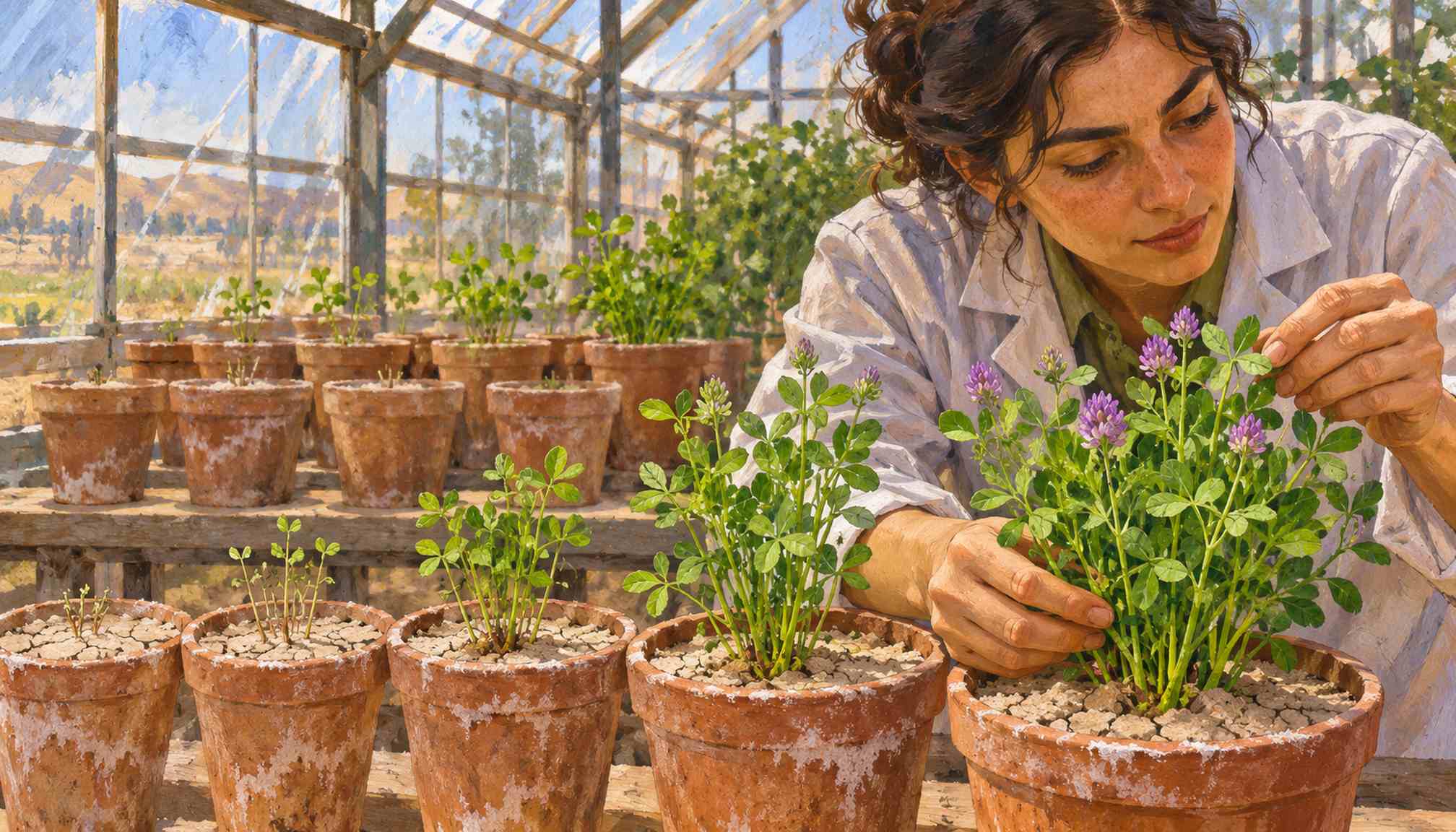

Machine learning has helped researchers assemble five bacterial strains that improve alfalfa growth in salty, alkaline soil, with benefits demonstrated in both pots and field experiments.
Published November 20 in The ISME Journal, the study began with a collection of 327 root-associated bacterial strains able to tolerate these harsh conditions. Researchers narrowed that collection to 20 complementary strains, then tested 134 assembled microbial communities using seed germination assays.
Random forest models and elastic-net regression helped identify five strains for a community called SP3. This combines experimental screening with predictions about which microbial partners work effectively together.
In pots, SP3 performed better than treatments containing one or two strains. In field experiments, it increased alfalfa aboveground dry biomass yield by 48.1% compared with untreated controls.
The result brings work on AI and bacterial behavior into a practical agricultural setting: selecting useful combinations from a large pool of candidates.
The findings support further development of microbial treatments for difficult soils. However, one successful community for alfalfa does not establish equivalent benefits for other crops, climates or soil types. Broader testing will determine where the approach remains dependable outside the reported experiments.