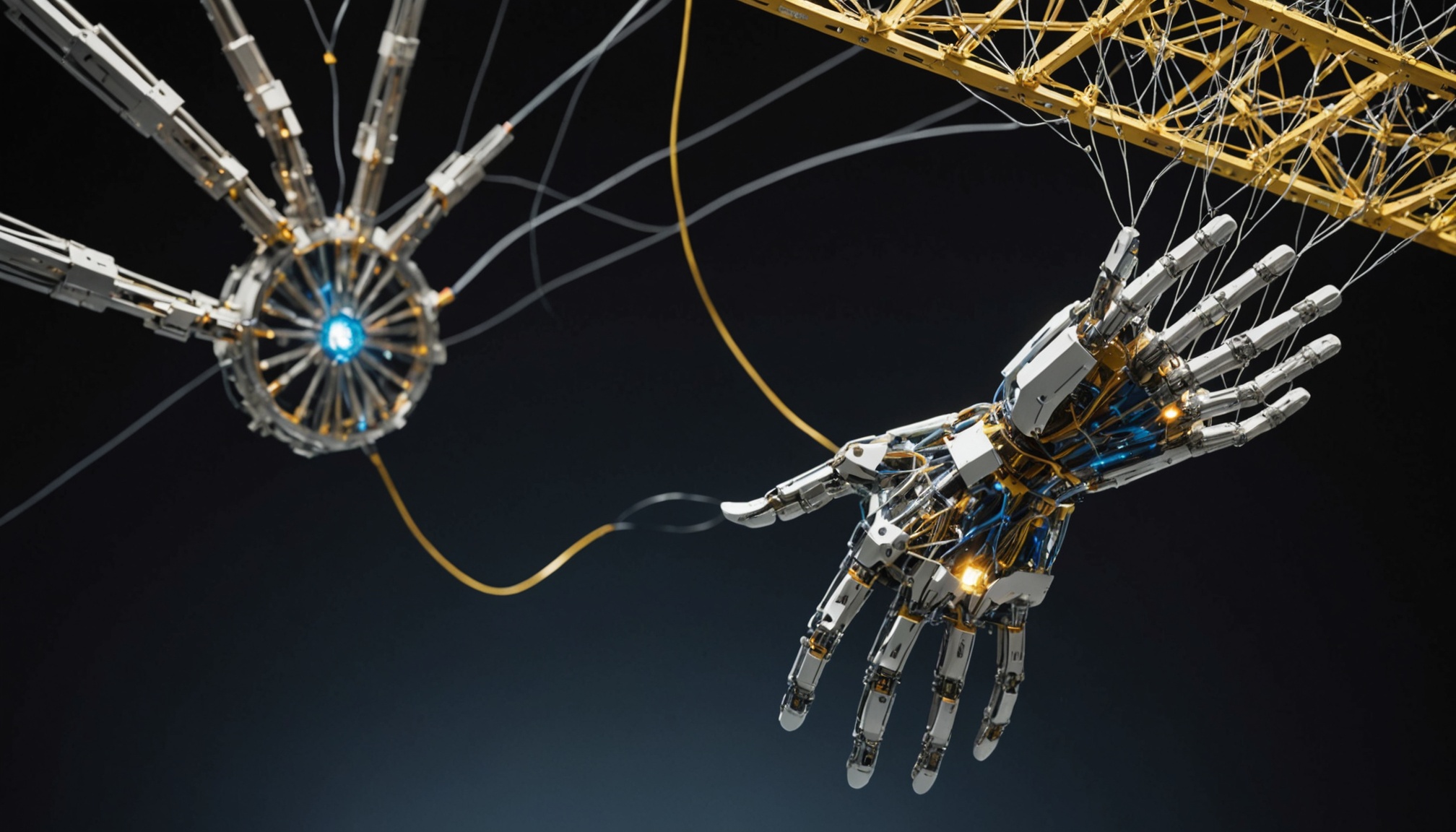


Robots that walk and roll are a common sight in research labs. Teaching them to align gears, connect cables and assemble small parts is much harder. At this week's Conference on Robot Learning (CoRL) in Austin, Texas, NVIDIA and its partners presented new open tools that let robots rehearse such delicate work in simulation, meaning realistic virtual worlds where mistakes cost nothing, before attempting it on real hardware.
The centerpiece is GR00T 2, an open world action model. This is a kind of AI system that predicts both how a scene will change and which movements will bring that change about. Because it is trained partly on human video, it can pick up skills by watching people and transfer them between different robot bodies. NVIDIA reports that GR00T 2 completed 40 of 50 evaluated tasks at least once without any task-specific demonstrations, and that its average success across the 50 tasks rose from 71 percent with one demonstration per task to 95 percent with five.
Practicing thousands of times in parallel
Much of the training happens in Isaac Lab, an open source framework that runs thousands of simulated robots at once. Its latest release works with Newton, an open source physics engine able to model soft objects such as cables and cloth, and in one dexterous manipulation benchmark this pairing trained up to 2.5 times faster than the previous version. A companion tool, Isaac Lab-Arena, then tests trained policies across thousands of varied conditions and identifies which conditions cause failures. Two new open benchmarks, DexBench and VABAR, use it to measure dexterity on industrial-style tasks.
The work matters because robots still struggle to leave the laboratory. Precise handling of objects is central to manufacturing, yet gathering real training data is slow and costly. Fast and faithful simulation, combined with shared benchmarks, could shorten the path from laboratory demos to factory deployment. Foxconn is already applying GR00T 2 to server manufacturing, Siemens is evaluating industrial uses, and University of California, Berkeley, researchers are using AI agents to link robot skills into programs that engineers can review before deployment.